

Audio By Carbonatix
Switzerland has a strong and ancestral dairy farming and cheese-making tradition. The rugged nature of the country makes approximately 80% of the agricultural land unsuitable for cultivation and, hence, mainly exploited for cattle and sheep farming. This mode of exploitation has forged a large part of the Swiss landscape, in the Alps, the Jura, and on the Swiss Plateau.
A Symphony of Tradition and Nature
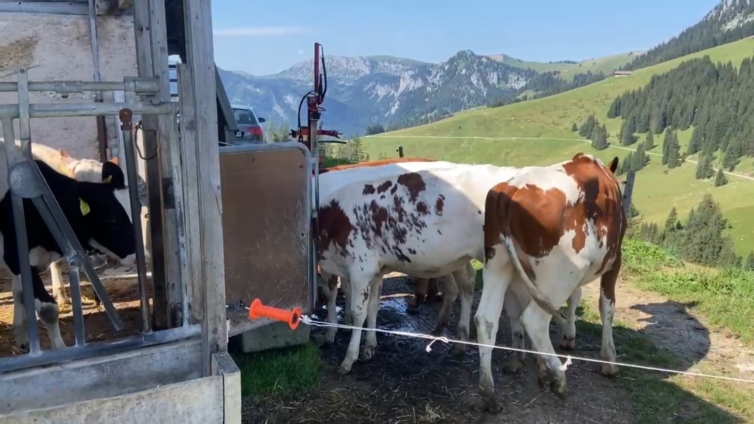
A trip to the Alps makes one wonder whether the Beatles' song “Till There Was You”, with its lyric line “There were bells on a hill,” was inspired by a visit to the Alpines in Switzerland. Once in the Alps, one cannot escape the sound of bells around the necks of cattle. Here, the rhythm of life revolves around the harmonious bond between humans, animals, and the environment.
Among those dedicated to preserving this tradition are Jürg and Hanspeter Iseli, twin brothers who operate a farm and small-scale cheese factory in the Berner Oberland, perched at 1,750 meters above sea level. Hanspeter offers a glimpse into the art of cheese-making:
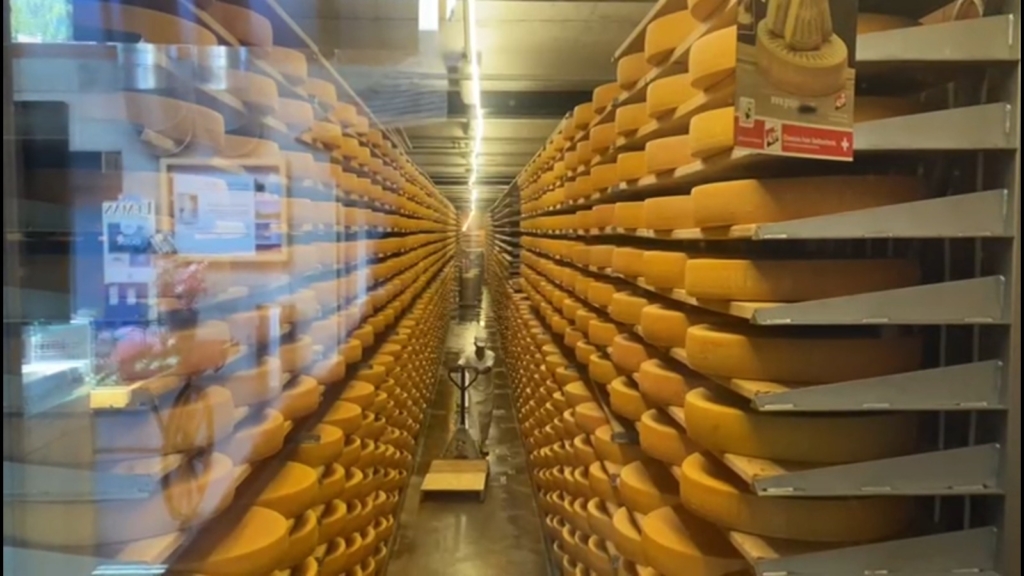
“The goal of cheese making is to control the spoiling of milk into cheese. Cheese is made by bringing milk in the cheese vat to a temperature required to promote the growth of the bacteria that feed on lactose and thus ferment the lactose. During the fermentation process, once sufficient lactic acid has been developed, curdled milk is added to cause the casein to precipitate. Once the cheese curd is partially dehydrated, the water is released. The curd is then cut into desired shapes and the temperature is raised to approximately 39 °C (102 °F) to solidify it”.
Gruyère: A Legacy of Excellence
The region of Gruyère in Switzerland has been known for its cheese production since the 12th century. However, there was no trade protection until the company, Le Gruyère AOP was granted a Controlled Designation of Origin at the national level in 2001.
“This certification ensures that we maintain the quality, traceability, and authenticity of Gruyère while promoting it globally,” explains Philippe Bardet, Marketing Manager at Le Gruyère AOP.
This recognition safeguards the traditional recipe, unchanged since 1115, and reinforces the global reputation of Gruyère as a symbol of Swiss culinary excellence.
Supporting Alpine Farmers
Cheese is considered to be part of Switzerland's national heritage. It has become, together with chocolate, an archetypal Swiss food product. Hence, the Swiss government plays a vital role in sustaining Alpine farming. Farmers like the Iseli brothers receive subsidies to graze cattle in high-altitude pastures, keeping the Alps vibrant and productive year-round.
“In Switzerland, the government pays farmers that move their activities to the Alps. For every cow kept in the Alps for 100 days, we earn 600 Swiss francs,” says Jürg. “This is an initiative not to only motivate farmers but also to help preserve the landscape and its biodiversity.”
Tradition Meets Innovation
Meanwhile, a third-generational dairy farmer, William Macheret believes that mechanising the milk extraction process will expedite the cheese-making process and reduce the workload. However, others believe that would alter the traditional recipe.
“Using robots in dairy production expands the possibilities of finding innovative ways to work in this field. The concerns raised are normal because there’s the fear that using machines to milk the animals will take away the traditional effect of the cheese, which happens to be one of the strongest marketing messages,” he highlighted.
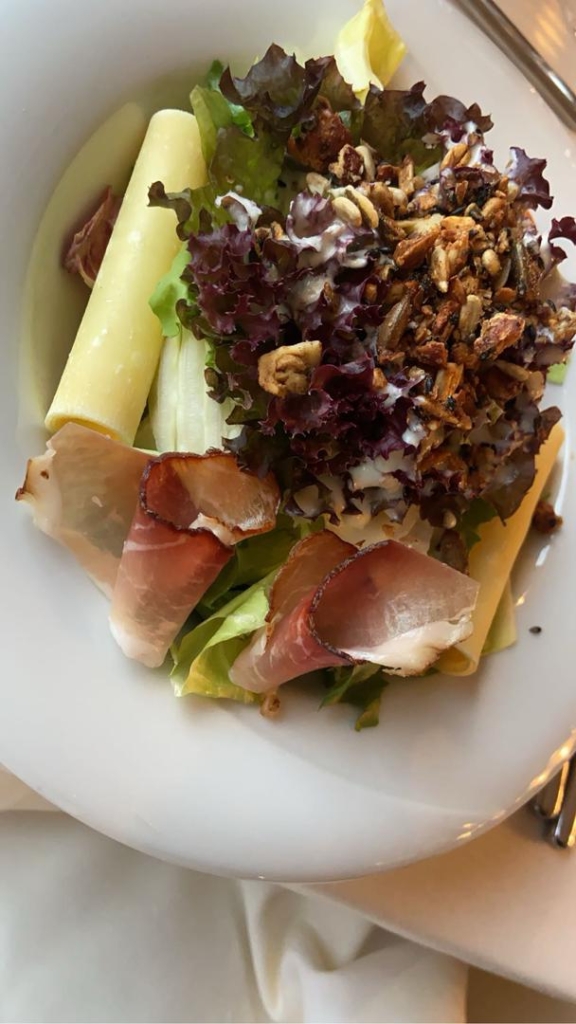
Swiss milk production represents about $2.3 billion per year, more than 20 percent of total agricultural production. The dairy industry is thus the most important branch of the Swiss food industry. Switzerland’s cheese-making heritage is more than an industry; it’s a reflection of its people’s resilience, ingenuity, and reverence for nature. As farmers, artisans, and policymakers work together to honor tradition while embracing innovation, the story of Swiss dairy excellence continues to inspire—and delight—the world.
Latest Stories
-
Ghana’s Starlets step up training ahead of second friendly with Morocco
29 minutes -
COCOBOD says $1.4bn domestic funding is a strategic shift, not market exclusion
1 hour -
Richmond Quarcoo appointed Ghana’s Chef de Mission for 2028 Olympics
2 hours -
‘Our missing players are more important’ – Gambia coach fires shot at Ghana
3 hours -
Today’s front pages: Tuesday, September 29, 2026
3 hours -
Ghana ‘showing up differently’ on global stage – Joyce Bawah Mogtari
3 hours -
Ghana’s tuna industry in crisis as 20 hook-and-line vessels collapse
4 hours -
South Tongu MP launches apprenticeship programme for 159 young people
4 hours -
The Pusiga connection behind Gertrude Atongi’s work in New York
5 hours -
Teachers took promotion exams in December to beat government clearance deadline – GNAT
5 hours -
NPA launches 2026 staff welfare week with focus on teamwork and employee wellbeing
5 hours -
Ghana, Saint Kitts and Nevis sign labour deal to strengthen protections for Ghanaian nurses
5 hours -
Delayed promotions put teachers’ retirement benefits at risk – GNAT
5 hours -
No ‘Bawumia candidates’ in NPP executive elections – Anthony Karbo
5 hours -
Over 3,000 displaced as flooding overwhelms Hohoe communities
5 hours