

Audio By Carbonatix
The current implementation rate of the Ghana Agricultural Sector Investment Programme (GASIP) is 86 percent.
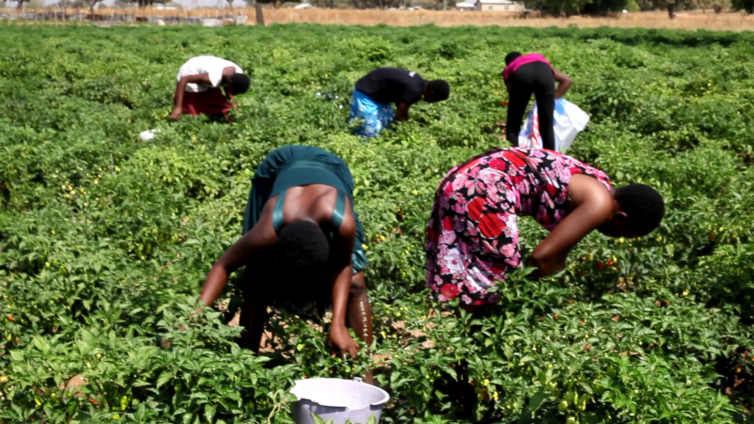
This was accomplished by assisting smallholder farmers and fostering shared values and possibilities throughout the rice, maize, soya, and vegetable value chains.
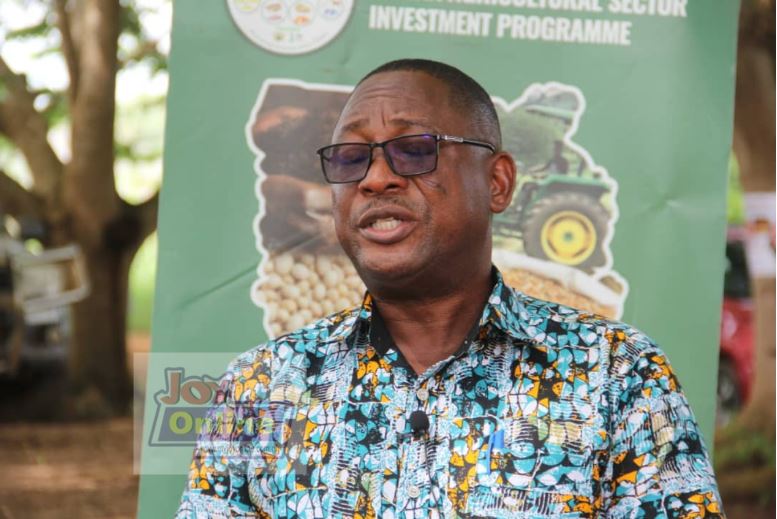
According to the National Programme Coordinator, Klutse Kudomor, GASIP also invested in capacity building and training of smallholder farmers in good agricultural practices and climate change resilient technology.

Through the provision of appropriate technology, rural infrastructure, and gender transformation, including equal participation of women, youth, the GASIP design leverages private sector resources and expertise to make smallholder farmers more competitive by increasing their efficiency and resilience to climate change.
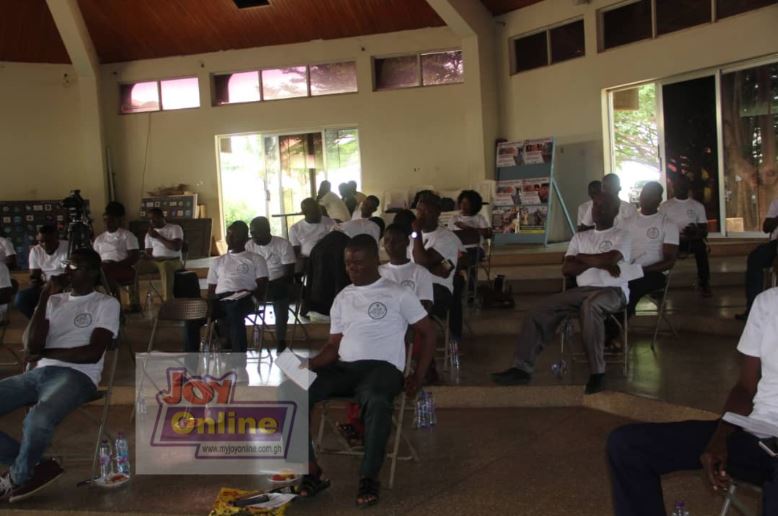
Mr. Kudomor was speaking at workshop on the theme "Building Champions in Agribusiness Value Chains for Climate Change Resilience."
The four-day workshops at Nkawie in the Ashanti Region will prepare them to become ambassadors who will engage and sensitise stakeholders, particularly farmers, about climate change and environmental sustainability in their organisations, communities, schools, and faith-based organisations.

The Ministry of Food and Agriculture is implementing the Ghana Agricultural Sector Investment Program (GASIP), which is funded by an IFAD loan of USD 36 million and a USD 10 million Adaptation for Smallholder Agriculture Program (ASAP) grant.
IFAD's primary climate-channeling initiative is the Adaptation for Smallholder Agriculture Programme.
"GASIP over the last two years has achieved some remarkable successes which need to be emphasized," Mr. Kudomor said.
According to the National Program Coordinator, GASIP has made significant investments in rural infrastructure, including providing access roads to connect farmers to markets, solar-powered boreholes for dry-season vegetable production and weather stations to provide accurate and timely weather information.
According to him, the program has constructed 600 hectares of rice-growing irrigation land and provided tractors, power tillers, and handheld rice harvesters to 628 smallholder farmer organisations.
According to the National Programme Coordinator, GASIP has heavily invested in rural infrastructure - providing access roads to link farmers to markets, providing solar-powered boreholes to communities for dry season vegetable production and installed weather stations to provide accurate and timely weather information.
He said the program has developed about 600 Ha irrigation land for rice production and provided tractors, power tillers, and handheld rice harvesters to 628 selected smallholder farmer organisations.
"GASIP has also supported over 150,000 smallholder farmers with production inputs, training in good agricultural practices, climate change resilience, food safety and food quality, business operational excellence, food processing among others."
GASIP is also collaborating with agribusinesses to give smallholder farmers with market access by signing them up to receive market price information from the Ghana Commodity Exchange.
"During the outbreak of the COVID-19 pandemic in 2020, IFAD nested a new Project, the Emergency Support to Rural Livelihoods and Food Systems Exposed to COVID-19 (ESRF) under GASIP. Through the ESRF, GASIP has distributed improved seeds and fertilizers to more than 20,000 smallholder farmers across the country."
According to him, a total of US$1.85 million has been disbursed to the Gender Ministry and the World Food Programme for highly vulnerable farmers, including people living with disability, from the country's nine lowest regions.
GASIP's goal is to eliminate poverty in rural Ghana by enhancing agribusinesses' and smallholder farmers' profitability and climate change resistance.
The implementation status of GASIP in the first four years (between 2015 and 2019) was barely 12 percent, causing IFAD to stop the program prematurely due to non-performance.
Mr. Kudomor says, in less than a year after the current management took control in 2019, the performance increased from 12% to 76 percent by February 2020.
As a result, the IFAD reclassified GASIP's implementation status from "non-performing" to "performing."
Latest Stories
-
Feeding Hungry Pupils: 38-year-old female teacher initiates food bank to promote teaching and learning at Abankoro
5 minutes -
Education Minister announces 2027 start date for Jomoro College project in Western Region
7 minutes -
‘Sit us down and explain ‘it’—Customs agents raise alarm over new GRA AI system
17 minutes -
Gov’t commits GH¢25m seed fund to Ghana Defence University project
22 minutes -
Fighters condemns PAC Chair Abena Osei-Asare over Agbana comments; renew call for inclusive politics
24 minutes -
72 Days to Mundial: Ghana’s risky gamble after sacking Otto Addo
28 minutes -
Health Ministry boosts cardiovascular care with new guidelines, GH¢6m equipment support
34 minutes -
OmniBSIC Bank delivers 104% profit growth, assets and deposits double in 2025
53 minutes -
Ghana month donation drive ends on high note as NPA donates GH₵1m to GMTF
55 minutes -
Prudential Africa CEO working visit to Ghana sets pace for business excellence and agency expansion
55 minutes -
Salman residents call for halt to illegal mining activities
57 minutes -
Goaso Municipal Hospital decries NHIS arrears, staff and equipment shortages
1 hour -
Two dead, one critically injured in domestic fire at Kodjonya
1 hour -
No start date yet for Ghana–Dangote fuel deal — Gov’t
1 hour -
GWL attributes Kokomlemle water crises to rationing, localised faults after JoyNews report
1 hour