

Audio By Carbonatix
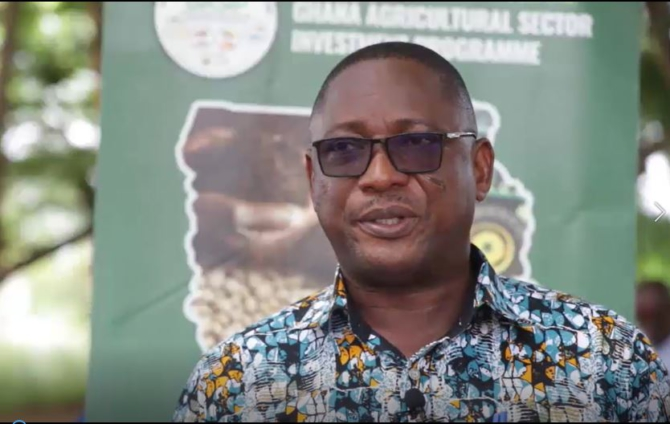
In a thought-provoking commentary on Ghana's economic challenges and opportunities, Klutse Kudomor, an agribusiness consultant and development advocate, has laid out a blueprint for revitalizing rural economies, with a specific focus on agriculture, fishing, and women-led industries.
Speaking passionately about the potential to revamp the economy, Kudomor emphasized the need for strategic investments in natural resource management and industrial development.
Kudomor pointed to the deteriorating state of fishing communities across areas such as Sogakope Savietula, Anloga among others as a pressing issue. "The waters are drying up," he lamented, emphasizing the urgent need for engineering interventions to connect sea and river waters to dried-up waterways. According to Kudomor, reviving these water bodies would not only bolster the fishing industry but also create avenues for agriculture.
"The entire areas you see here are fishing communities. There’s the need for us to do some engineering work, opening the seawater into these rivers so that they become viable fishing grounds," Kudomor explained. He underscored the potential of such initiatives to provide sustainable livelihoods for residents and revitalize local economies.
In addition to the challenges facing fishing communities, Kudomor highlighted the impact of water scarcity on agriculture in areas such as Akatsi. He explained that formerly fertile farmlands have been rendered unproductive due to the drying up of water sources.
“Waters have dried up, so they are unable to produce food. In my village here, what we need, first of all, is to revamp the fishing industry and support farmers,” he stated. Kudomor emphasized the need for deliberate policies to restore farmlands and support rural farmers, who are the backbone of Ghana’s food production.
Kudomor also drew attention to the potential of women-led industries such as mat weaving, which he described as an underutilized resource. “There are women here who weave mats. They need to be supported so that they turn the mat weaving into a complete industry,” he said.
He advocated for exploring innovative uses for locally-woven mats, such as using them for roofing ceilings, which could create a broader market for the product. Kudomor urged policymakers to invest in developing this industry to empower women economically while preserving traditional craftsmanship.
Turning his attention to national industrial policy, Kudomor criticized the government’s One District, One Factory (1D1F) initiative, describing it as poorly planned and misaligned with local economic realities.
“How do you build a watermelon factory at Bawku? It can’t function,” he remarked, highlighting the inefficiencies in the programme’s implementation. Kudomor acknowledged the potential of the initiative but called for a reassessment and harmonization of operations to ensure that factories serve their intended purpose.
“We don’t have to abandon it completely, except that it was not a well-thought-through plan. There’s a need to re-look at that project and see how it can be turned around,” he advised.
Reflecting on Ghana’s political leadership, Kudomor expressed optimism about the National Democratic Congress (NDC) and its ability to deliver transformative policies. He encouraged leaders to draw on past experiences as a guide for future decision-making.
“My advice to him, if I can humbly say, is he should look at his own experiences in the past. Let that be an important judge in terms of how he goes into this new role again,” Kudomor stated.
He also emphasized the importance of inclusivity in leadership, particularly the role of women and youth. Kudomor acknowledged the appointment of Ghana’s first female vice president as a positive step and urged the NDC to leverage the expertise of young people in governance.
Klutse Kudomor’s vision for Ghana’s economic revival is both ambitious and practical. From engineering solutions to reviving water bodies and farmlands to empowering women through industrial development, his proposals offer a roadmap for sustainable development.
As Ghana navigates its economic challenges, Kudomor’s call for strategic, inclusive policies serves as a timely reminder of the potential to transform local economies and improve livelihoods.
Latest Stories
-
SWAG calls on GFA leadership to fix Ghana football or step aside
15 minutes -
Gender Ministry launches breast cancer campaign, pushes support over stigma
21 minutes -
Feed Ghana Programme cuts food import dependence
25 minutes -
Mahama welcomes Global Mercy Hospital Ships back to Ghana
29 minutes -
Tourism Minster calls for improved maintenance, consistent storytelling at tourist sites
35 minutes -
Katamanso Police Station appears complete outside but unfinished inside – Aidoo
41 minutes -
COMAC wants fuel taxes frozen to ease pressure on consumers
59 minutes -
COMAC pushes for crude oil revenue windfall to support struggling downstream sector
1 hour -
Gold slips before US payrolls data, set for second weekly loss
2 hours -
New Mexico wants Meta to pay up to $40 billion in penalties after data privacy trial
2 hours -
Oil rises slightly as market weighs mixed supply signals
2 hours -
Jordan ‘Last Dance’ jersey sells for £9m
2 hours -
Nigeria charges man with running fictitious government agency
2 hours -
COMAC renews call for full deregulation of fuel prices
2 hours -
Putin warns West that Russia is ready to use every weapon to protect Kaliningrad
3 hours