

Audio By Carbonatix
The nationwide strike by the Ghana Association of University Administrators (GAUA) continues to disrupt university activities, affecting admissions and delaying the reopening dates of the universities.
The strike has left thousands of prospective students in limbo, while university administrators demand equitable treatment from the government.
Students and parents awaiting university placements will have to brace themselves for more uncertainty as GAUA's demands remain unmet.
At the Kwame Nkrumah University of Science and Technology, major administrative and academic activities have been affected.

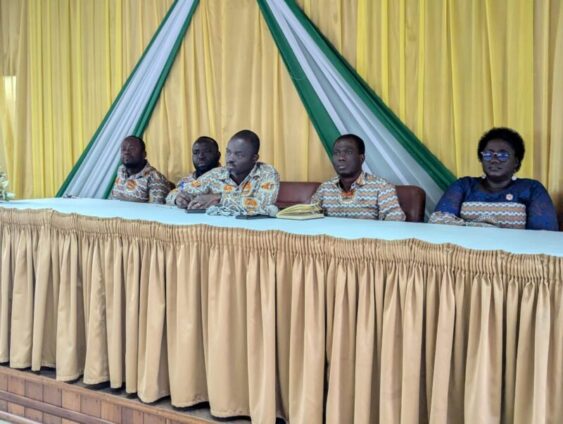
At an emergency meeting, the KNUST chapter of GAUA, led by its President Festus Nyame, acknowledged the strike and will have dire implications, particularly in the upcoming academic year.
Background of the strike
GAUA declared its strike after failed negotiations with the government over the payment of negotiated and approved allowances.
According to Festus Nyame, although the government approved new rates for allowances, many university administrators were still paid old rates, while others received no payment.
This situation has led to frustration within GAUA, as members feel the government has been unfair and slow in addressing their concerns.
"We were simply asking the government to extend the new rates to us. Some of our colleagues on our campuses have received the new rates, but we haven't, and even the old rates aren't being paid consistently to all our members. We need the government to be fair with us," said Festus.
He explained the government promised to resolve the issue, but there was no serious commitment when they met the Minister of Education.
"The Minister of Education wanted us to take his word that the allowances would be paid without any letter to that effect, but in this era, nobody enters into an agreement without concrete evidence," he said.
Lack of progress in negotiations
Mr. Nyame indicated that other unions within the university system have signed a Memorandum of Agreement with the government, but GAUA did not.

"The MoA signed by the other unions did not address our specific concerns as university administrators. The government has made no firm commitment to us, and as long as that remains the case, we cannot call off the strike," he said.
He explained that GAUA members, as the managers of the universities, cannot accept an agreement that fails to address their concerns.
Impact of the strike
The ongoing strike has already had repercussions at KNUST and other universities nationwide. Delays in salary payments, interruptions to IT services, postponement of academic activities such as reopening dates, graduation schedules are some of the immediate consequences.
With many universities postponing their reopening dates due to the strike, Festus mentioned its broad impact on students, especially those awaiting admissions.
"Graduations are being postponed, and admissions processes are delayed. Senior High school graduates expecting to enrol in the various public universities will have to wait longer because the strike has slowed down the entire admission processes," he explained.
Festus Nyame further warned that if the strike continues, it could lead to the postponement of academic board meetings, Council Meetings and other functions that are essential to the smooth running of the universities.
Government's response
While the government has reportedly made some progress in addressing the concerns of other unions, GAUA members feel their issues have not been given the necessary attention.
Festus stated that GAUA members, who are responsible for managing university operations, cannot delegate their duties to other staff who are not equipped to handle these roles.
"Even if the government thinks it has reached an agreement with other unions, without the administrators and professionals, universities cannot function effectively. We assign work to the other staff, and without us, nothing can be done," he said.
He urged the government to address GAUA’s concerns to avoid further disruptions in the tertiary education sector.
"We are not asking for much except what is due GAUA members. If the government is paying fuel and its related allowances to one union, it is only logical that the same is extended to us, since these are common allowances," he demanded.
Outlook
The continuation of the strike threatens to further disrupt the academic calendar, particularly as admissions and university reopening dates are delayed.
Latest Stories
-
Imprisonment should be rehabilitative, not punitive – Ghana Prisons boss at UNGA
4 minutes -
Ga Adangbe traditional priests petition Mahama over McDan aviation licence revocation
15 minutes -
Anti-LGBTQ Bill: NDC’s arrogance is worrying – Hassan Tampuli
26 minutes -
Let’s give OSP time to mature, not to scrap it – Hassan Tampuli
30 minutes -
Nigeria convicts 386 Islamist militants in mass trials
35 minutes -
Djibouti president wins election with 97.8% of vote, state media says
39 minutes -
We don’t have mandate to deduct tax from rent allowance of security services personnel – Interior Ministry clarifies
53 minutes -
Ablakwa receives Presidential Special Envoy on Reparations to advance global agenda
1 hour -
Christina Koch becomes first woman to travel around the moon on Artemis II
1 hour -
Epstein survivors’ calls to meet King Charles and Queen harder to ignore as US visit approaches
1 hour -
UN Secretary-General names Ghana’s Anita Kiki Gbeho as South Sudan envoy
1 hour -
Mali withdraws recognition of Sahrawi Republic, backs Morocco’s autonomy plan
2 hours -
Gov’t distributes over 8,500 laptops to One Million Coders project
2 hours -
Julius Debrah, ‘man to beat’ as NDC’s James Agbey dismisses Musah Dankwah’s polls
2 hours -
GPRTU in Savannah Region to protest alleged eviction in Damongo
2 hours