

Audio By Carbonatix
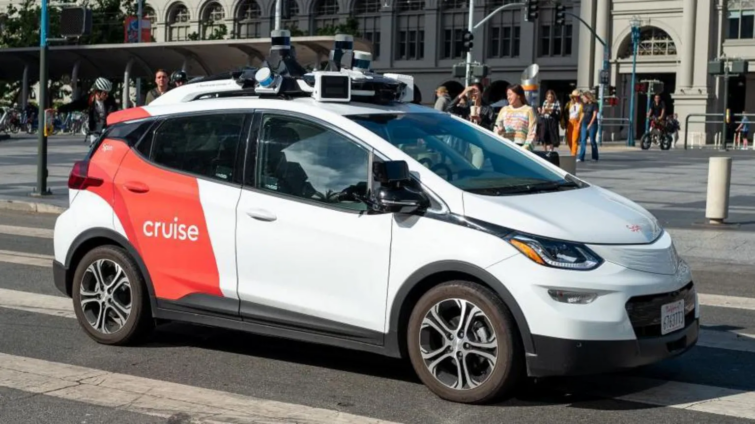
General Motors has announced that it will stop funding the development of the Cruise self-driving taxi.
The company says it will now "refocus autonomous driving development on personal vehicles".
GM also pointed to the increasingly competitive robotaxi market as a reason for the move.
In October, Tesla boss Elon Musk unveiled the electric car giant's long-awaited robotaxi, the Cybercab, at the Warner Bros Studios in Burbank, California.
GM attributed the change of strategy to "the considerable time and resources that would be needed to scale the business".
The company did not say how many Cruise employees could be moved over to GM.
GM, which owns about 90% of Cruise, said it has agreements with other shareholders that will raise its ownership to more than 97%.
In December 2023, Cruise said it would cut 900 jobs, about a quarter of its workforce.
Cruise had earlier pulled all of its US vehicles from testing after California halted its driverless testing permit.
In October 2023, one of its vehicles hit a pedestrian and dragged her for more than 20ft (6m), leaving her seriously injured.
Cruise admitted to submitting a false report to the National Highway Traffic Safety Administration in connection to that crash, resolving a criminal investigation last month.
Federal prosecutors said Cruise employees did not include a description of the pedestrian being dragged as part of their account on the morning after the incident.
Cruise co-founder Kyle Vogt left the company a few weeks later.
On Tuesday, following GM's announcement, Mr Vogt posted on the social media platform X "In case it was unclear before, it is clear now: GM are a bunch of dummies."
The Detroit-based manufacturer's chief executive Mary Barra has previously predicted that the Cruise business could generate $50bn (£39bn) in annual revenue by 2030.
Rival motor manufacturing firms have also struggled with projects to build autonomous vehicles.
In 2022, Ford and Volkswagen announced that they would shut down Argo AI, their self-driving car joint venture.
Meanwhile, the emerging robotaxi industryhas long attracted major players.
As well as Tesla, competitors to create self-driving cabs include Waymo, a subsidiary of Google's parent company Alphabet - and technology giant Amazon.
Latest Stories
-
3 Co-wives, 5 children perish in canoe disaster – Maritime Authority insists life jackets use mandatory for all water transport
3 minutes -
Iran war lands ‘triple blow’ to flood-ravaged Sri Lankans
37 minutes -
Gunmen kill at least 11 people at Afghanistan picnic spot
50 minutes -
Woman, 25, in court for stealing baby at Bogoso
51 minutes -
Trump unveils giant gold-accented victory arch design for US capital
54 minutes -
We spoke to the man making viral Lego-style AI videos for Iran. Experts say it’s powerful propaganda
59 minutes -
Hungarians vote in big numbers on whether to end Orbán rule and elect rival
60 minutes -
At least 30 feared dead in crush at Haitian tourist site
1 hour -
Boxing: Abdul Ahmed wins WBA Africa Cruiserwight title after dispatching Nigeria’s Eradeye
1 hour -
Nearly 2,000 displaced, schools damaged as windstorm wreaks havoc in Gushegu
2 hours -
Ghana’s Derrick Kohn to work under Marie-Louise Eta as she becomes first woman to coach men’s Bundesliga team
2 hours -
Accra Open Championships conclude with strong performances ahead of African Championships
2 hours -
Ghana to begin camping with 12 athletes after Accra Open Championships – Bawa Fuseni
2 hours -
Anthony Joshua declines showdown with Tyson Fury but admits they ‘probably’ clash next
2 hours -
Tyson Fury dominates Makhmudov, calls out Joshua next
3 hours