

Audio By Carbonatix
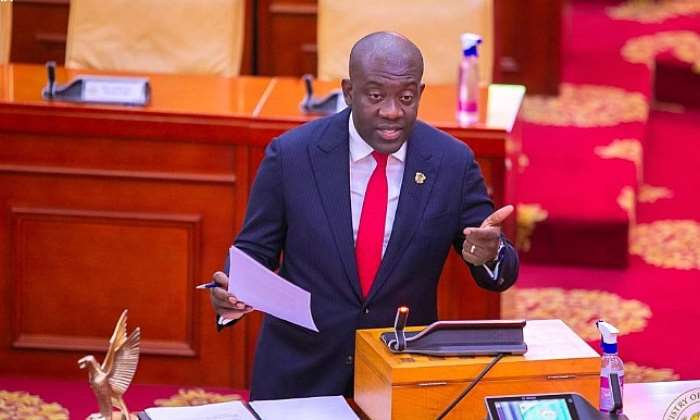
Member of Parliament for Ofoase Ayirebi, Kojo Oppong Nkrumah, says the recent surge in Ghana’s public debt by more than GH¢70 billion in just three months is evidence that the country’s economic fundamentals remain weak, despite earlier claims of improvement.
Speaking on Newsnite on Joy FM, the Ranking Member on Parliament's Economy and Development Committee cautioned against what he described as the government’s earlier celebration of temporary declines in headline debt figures.
He argued that those movements were driven largely by exchange rate effects and debt restructuring rather than meaningful fiscal or monetary reforms.
“You recall that we cautioned the government against celebrating temporary movements in headline numbers while ignoring the structural weaknesses that are still underneath the economy,” he said on Monday.
According to the former minister, the earlier slowdown in debt accumulation was not the result of changes in government spending patterns or revenue mobilisation, but rather two short-term factors, a sharp appreciation of the cedi and the impact of the domestic debt exchange programme.
“But nothing significantly had changed both on the fiscal or on the monetary side,” he stressed.
Mr Oppong Nkrumah argued that the recent 20 per cent depreciation of the cedi over the past three months has quickly reversed those gains, pushing the debt stock up by about GH¢70 billion.
He explained that about GH¢50 billion of the increase could be attributed mainly to exchange rate movements, which inflate the cedi value of Ghana’s foreign-denominated debt without any new borrowing.
“Just a small depreciation in three months and the debt stock has gone back up by about GH¢70 billion because the structure and the fundamentals have not changed,” he said.
Beyond currency effects, Mr Oppong Nkrumah pointed to additional factors contributing to the debt increase, including a US$360 million facility from the World Bank, which he said government attempted to present as a financing arrangement rather than a loan when it was brought before Parliament.
He also noted that about US$1 billion worth of restructured debt is now being capitalised and treated as new disbursements in the government’s accounting, even though no fresh funds have entered the economy.
“Even if you account for those two, you still have about a GH¢50 billion change in our debt stock, which is mostly because of the currency,” he added.
Latest Stories
-
Prioritise cocoa sector with better prices, timely payments-Annoh-Dompreh urges NDC
27 minutes -
Lands and Mines Watch Ghana endorses Heath Goldfields’ mining capacity
42 minutes -
Gbintiri residents protest alleged diversion of 24-hour market project
1 hour -
Justin Bieber headlines Coachella with nostalgia-fuelled set
1 hour -
Ukraine and Russia accuse each other of hundreds of ceasefire violations
1 hour -
Asha Bhosle: The sound of Bollywood dies aged 92
2 hours -
Fire destroys section of 4-bedroom apartment at Tantra Hill
2 hours -
Safe city: Unnoticeable protection
2 hours -
North East Regional Police Commander raises alarm over burning of checkpoints
2 hours -
Free Primary Healthcare Programme set for take-off — Health Ministry confirms readiness
2 hours -
3 co-wives, 5 children perish in canoe disaster – Maritime Authority insists life jackets use mandatory for all water transport
3 hours -
Iran war lands ‘triple blow’ to flood-ravaged Sri Lankans
4 hours -
Gunmen kill at least 11 people at Afghanistan picnic spot
4 hours -
Woman, 25, in court for stealing baby at Bogoso
4 hours -
Trump unveils giant gold-accented victory arch design for US capital
4 hours