

Audio By Carbonatix
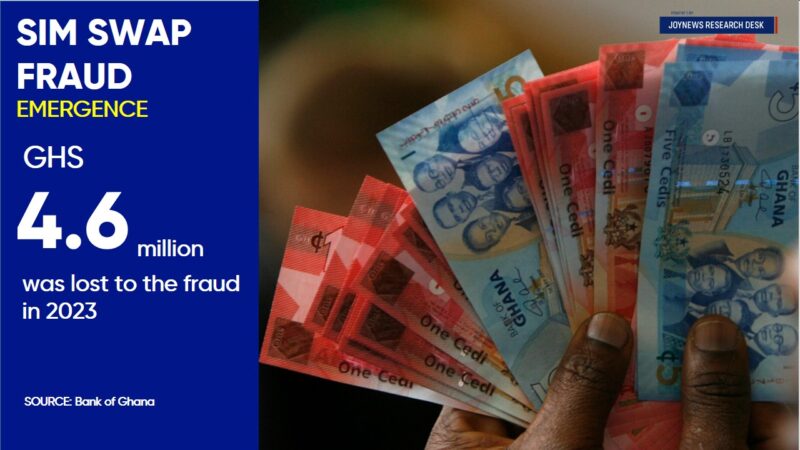
The Bank of Ghana has revealed a rapid emergence of SIM swap fraud targeting individuals with access to mobile banking channels. According to the apex bank, about GHȼ4.6 million was lost to this fraud in 2023, attributed to 15 recorded cases.

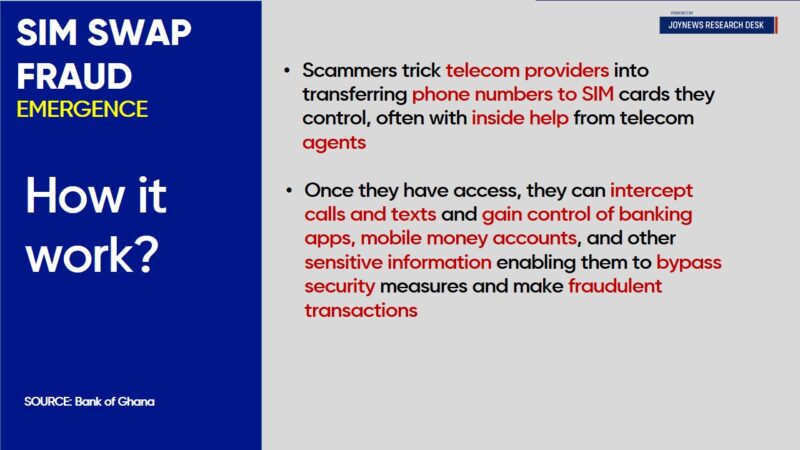
This type of fraud targets individuals with mobile banking access, including banking apps, WhatsApp banking, or any account linked to their mobile number. Scammers trick telecom providers into transferring victims' phone numbers to SIM cards they control, often with inside help from telecom agents.
Once they have access, they can intercept calls and texts and even gain control of banking apps, mobile money accounts, and other sensitive information, enabling them to bypass security measures and make fraudulent transactions.
Even in the event of cheque clearing, fraudsters can intercept mobile phone confirmations.
The threat extends beyond individuals to corporate institutions, where large sums of money can be stolen.
Ransford Nana Addo Junior, a Certified Fraud Examiner and Financial Crime & Fraud Lecturer at the National Banking College, says "It is not only individual accounts. When a SIM swap happens on corporate accounts, it's more dangerous. For instance, if the CFO of a hotel has his number swapped and a fraudulent transaction is initiated, the fraudsters will be the ones receiving the confirmation."
He also noted that SIM swap fraud extends beyond banking:
"It goes beyond just the mobile channels and even beyond banking. For instance, if somebody wants to intercept your medication information sent through SMS or your SSNIT records, it can be intercepted through SIM swap as well."
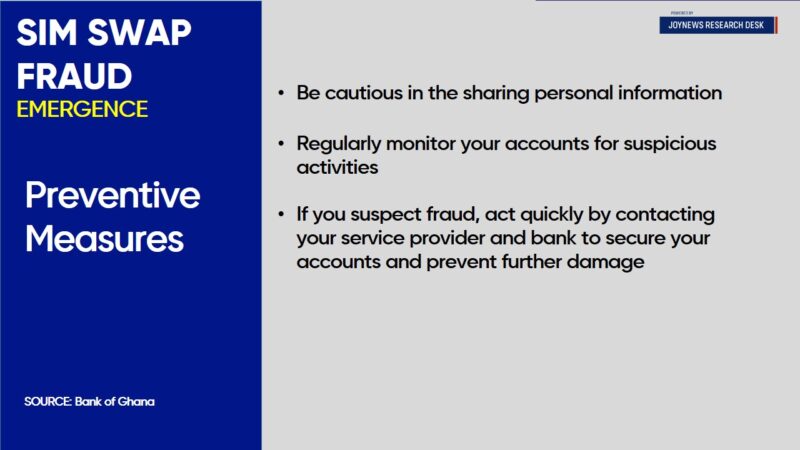
To protect yourself, be cautious in sharing personal information and regularly monitor your accounts for suspicious activities. If you suspect fraud, act quickly by contacting your service provider and bank to secure your accounts and prevent further damage.
For payment service providers, the Bank of Ghana has directed compliance with section 34(3)(a) and (b) of the Payment Systems and Services Act 2019 (Act 987). This requires the deactivation of a customer's electronic money account for two days when they swap or replace their SIM card. The account can be reactivated once the customer presents valid identification, mitigating SIM swap-related fraud.
Details of the report showed a 5% rise in the number of overall fraud cases reported leading to a loss of GHS 88 million in 2023.
Latest Stories
-
White House bars CNN from travelling with Trump on Air Force One
29 minutes -
Fennis wins second consecutive ITF J60 title in Accra
34 minutes -
Spain beat England in thriller after Kane penalty miss
40 minutes -
GPL 2026/27: Zaidan’s late goal ends Hearts of Oak unbeaten start
43 minutes -
CEOs demand clarity on pay harmonisation, board autonomy as FWSC engages SOEs bosses over IPEC transition
45 minutes -
2026 Women’s Super Cup: FC Savannah, Epiphany Warriors maintain top spots ahead of final group games
55 minutes -
‘Is EOCO responsible for determining lawyers’ fees?’ – Baffour Awuah
55 minutes -
David Beckles claims second J60 Accra title
1 hour -
No France cocaine suspect linked to Mahama, Vice President’s security details – NACOC
1 hour -
Anwelle Foundation launched in Jirapa to tackle poverty, youth unemployment
2 hours -
Joy Sports Editor Fentuo Tahiru Fentuo to moderate inaugural Music Meets Football Summit in Zambia
2 hours -
Court premises too volatile for Baffour Awuah’s attempted arrest by EOCO – Inusah Fuseini
2 hours -
Drug bust: Under no circumstances will NACOC leadership be compromised – Twum-Barimah
2 hours -
VIDEO: EOCO’s attempted arrest of Baffour Awuah was flawed beyond saving – Law Lecturer
2 hours -
Genuine Ghanaian exporters may face heightened foreign inspections over drug busts – Lawyer
2 hours