

Audio By Carbonatix
The International Monetary Fund has stated that Ghana breached the Debt Sustainability Analysis (DSA) thresholds, a situation that led the country into debt distress.
In a statement titled “Request for an arrangement under the Extended Credit Facility Programme”, the Fund said Ghana is in debt distress. It added that the country's debt level is also unsustainable.
“Given the ongoing debt restructuring and large and protracted breaches to the Debt Sustainability Analysis (DSA) thresholds, Ghana is in debt distress, and debt is assessed as unsustainable”.
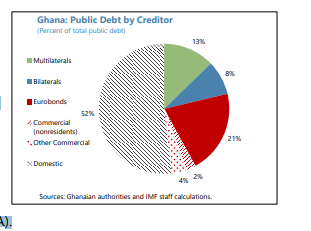
It pointed out that public debt increased to 88.1% of Gross Domestic Product by end-2022, almost evenly split between external (42.4% of GDP) and domestic (45.7% of GDP).
Again, the Fund mentioned that gross financing needs have reached about 19% of GDP.
“Under the proposed programmes baseline projections, which do not consider the possible outcome of the ongoing debt restructuring, the ratios of present value of public and external debt to GDP, and the ratios of external debt service to revenues and exports are and would remain above their LIC-DSF thresholds over the medium and long term”, it added.
Outlook subject to significant downside risks
The Fund further said that the outlook is subject to significant downside risks.
It explained that the baseline projections are predicated on successful programme execution and swift progress in implementing the authorities’ comprehensive debt restructuring and plans to address the large stock of domestic arrears, including to independent power producers (IPPs).
Notwithstanding mitigation strategies, it said that the domestic debt exchange presents significant risks to domestic financial sector stability, adding “exchange rate, credit, and liquidity risks further add to the vulnerabilities”.
“The authorities’ debt restructuring plans still leave a substantial need for T-bill [Treasury bills] issuance in the near term and expose Ghana to the uncertainty in domestic market conditions, though programme implementation and outreach may help mitigate financing risks. Domestic policy slippages represent a significant downside risk to the projections, further compounded by risks associated to the end-2024 general elections.”
Latest Stories
-
Mobile Money Merchants are driving fraud
9 minutes -
Alban Bagbin declines minority’s motion to investigate sale of gold reserves at BoG
9 minutes -
NACOC leadership tours drug testing centres in Accra
11 minutes -
OSP’s power to prosecute without AG’s authorisation unconstitutional – AG files at Supreme Court
14 minutes -
Seven African referees selected for World Cup 2026 as Ndala, Issa Sy miss out
32 minutes -
Why diaspora investors are using Accra real estate to hedge against global uncertainty in 2026
54 minutes -
GWL urges public support to stem water thefts
56 minutes -
Fire guts 2-storey apartment at Ashaley Botwe
57 minutes -
Come down and account, it’s a constitutional requirement – Martin Kpebu to Ofori-Atta
1 hour -
The power of the private courtyard: How regalia is redefining resort-style living in Accra
1 hour -
Beyond roads and bridges: Understanding the true role of your MP
1 hour -
UK says Russia ran submarine operation over cables and pipelines
1 hour -
NPRA recovers GH¢27m in 2025, 30% of defaulted pension contributions
1 hour -
Power fluctuations slash Ashanti region water production by 959,000 cubic metres in March
1 hour -
Beyond the festivities: Gomoa must turn visibility into development
2 hours