

Audio By Carbonatix
Ghana is said to be spending millions of dollars in importing iron rods which could be produced locally.
The worrying trend, according to Board Chair of Ghana Integrated Iron and Steel Development Corporation (GIISDEC), Farouk Aliu Mahama, could be reversed if local companies such as Fabrimetal Ghana Limited take up the challenge.
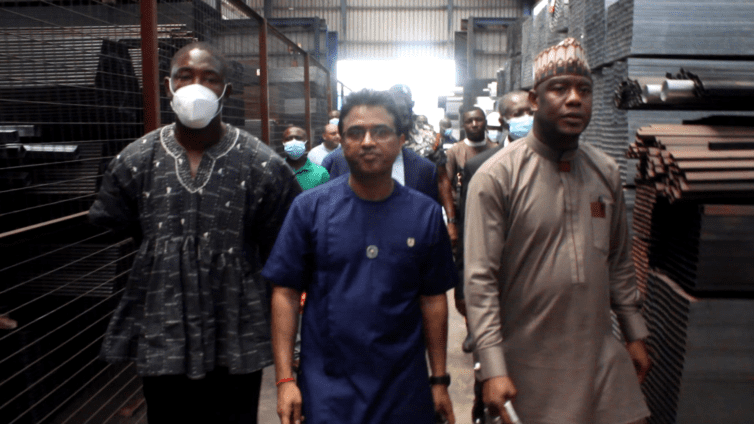
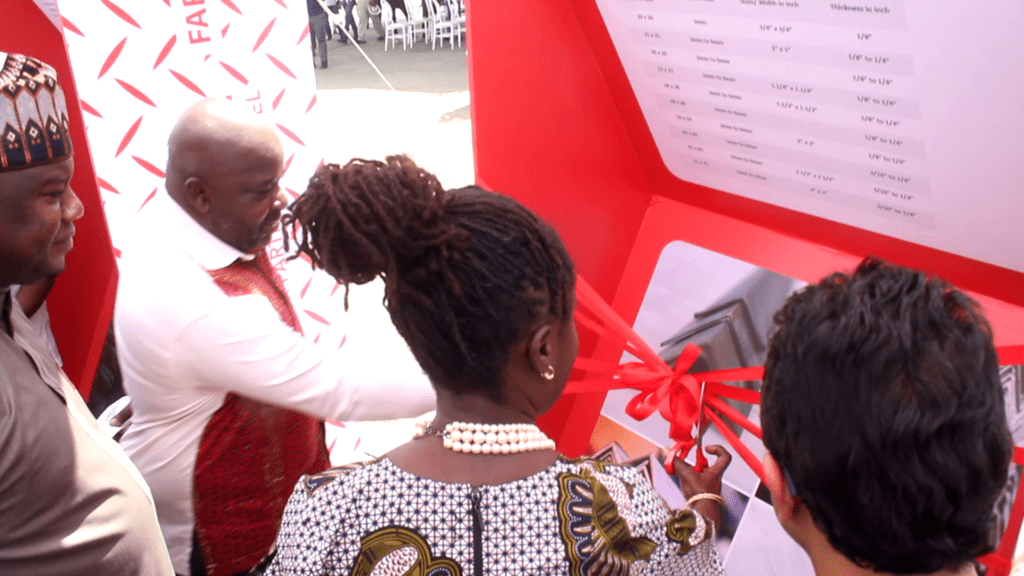
Speaking to Joy Business at the launch of a $10 million section mill by Fabrimetal at Tsopoli in the Greater Accra region, the Member of Parliament for Yendi, was impressed with the quality of products on display.
“First of all, we have to understand that the iron and ore industry is very interested in partnering with Fabrimetal. The country imports over $3 billion in iron rods”.
“We are here with the management of GIISDEC to witness samples of iron rods being manufactured. Why should we spend all this money on importation when we have a local company like Fabrimetal,” he asked?
Mr. Aliu Mahama encouraged the company to go beyond the downstream sector of manufacturing to upstream where it can mine raw material needed for manufacturing, which GIISDEC is ready to support.
Fabrimetal over the past few years invested $30 million in the local steel manufacturing industry bringing its investment to $40 million with the commissioning of the section mill to produce merchant bars.
The company continues to churn out high quality steel products which meet international standards due to investment in technology and workforce.
This has created great demand for these steel products locally serving as import substitution.
Deputy Trade Minister Michael Okyere Baafi was delighted at the attainment of Fabrimetal.
“The ministry’s main aim is to support public and private sector businesses to thrive. If they do, there wouldn’t be much pressure on government. If the private sector expands, it means they are going to employ a lot of people,” he explained.
Mr Okyere Baafi assured Fabrimetal of government’s support through the ministry.
Meanwhile, Managing Director of Fabrimetal, Rohit Raj said its new products will create jobs and help improve the country’s economy.
“With the launch, we’re manufacturing new set of products called angle, flat, channel and square bars. These products meet international standards as our products are known for,” he assured.
The company believes Ghana’s political stability, social environment aside other factors will contribute to its success.
Fabrimetal has since 2020 been supplying oxygen to health facilities to support Ghana’s response to Covid-19.
This year, the company also partnered with Forestry Commission under the ‘Go Green Initiative of government to plant over a thousand trees.
Other dignitaries, business partners, workers, police, among other stakeholders were present to support the company.
Latest Stories
-
Mahama Ayariga urges banks to take responsibility for beautifying public spaces
23 minutes -
Gold edges lower with focus on Fed minutes, rate path clues
1 hour -
Oil prices rise as storms and air strikes threaten supply
1 hour -
Nigeria nears 2,000 repatriations from South Africa after latest evacuation flight
2 hours -
‘How can an office…close at 5pm?’ – Abanga questions 24-Hour Economy
2 hours -
‘4 million is possible’ – Abanga unveils NPP’s youth-vote battle plan
2 hours -
‘I never gave up’ – Abanga Fusani reflects on journey to NPP Youth Organiser victory
2 hours -
World Bank maintains Ghana’s growth rate forecast at 4.8% in 2026
3 hours -
Cedi was worst African currency in quarter 2, 2026 – World Bank
3 hours -
US death row inmate Christa Pike awake and speaking after failed execution, lawyers say
3 hours -
AI gains can lift three times as many people out of poverty in Ghana – World Bank
3 hours -
Scammers target ECG customers with fake meter sales and MoMo payment calls
4 hours -
Abanga Fusani credits hard work and consistency for NPP Youth Organiser victory
5 hours -
We did not take security issues seriously – Abanga Fusani reflects on NPP’s 2024 election loss
5 hours -
Nigeria’s Dangote refinery aims to draw more retail investors than Aramco IPO, CEO says
5 hours