

Audio By Carbonatix
The Institute of Economic Research and Public Policy (IERPP) has called on the government and Parliament to withdraw the proposed National Petroleum Authority (NPA) Bill, warning that it could undermine the mandate of the Bulk Oil Storage and Transportation Company (BOST) if passed in its current form.
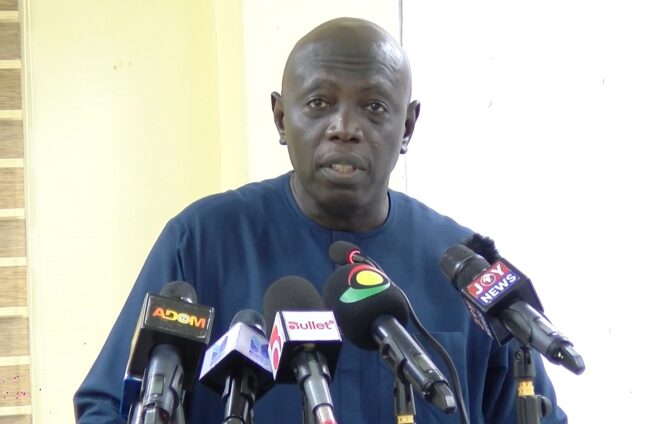
Executive Director of IERPP, Professor Isaac Boadi, said the proposed legislation could have implications for the management of Ghana’s strategic fuel reserves and the country’s broader fuel security.
Speaking on the proposed bill, Prof. Boadi also raised concerns about what he described as inadequate consultation with key stakeholders before the legislation was introduced.
“We’ve not had proper stakeholder consultation as far as this is concerned.”
He urged the government and Parliament to withdraw the bill and subject it to further consultation and review.
“We’re calling on government, Parliament to quickly withdraw the bill as early as possible and ensure we don’t pass the bill in its current state.”
Concerns over BOST’s mandate
Prof. Boadi argued that BOST plays an important role in Ghana’s fuel security by maintaining strategic storage capacity and serving as a source of supply during periods of disruption.
He expressed concern that proposed changes under the bill could affect BOST’s existing mandate and, in turn, have implications for the country’s ability to manage strategic fuel reserves.
He also raised concerns about the potential impact on jobs at BOST.
According to Prof. Boadi, about 689 staff could be affected by the proposed changes, with him claiming that approximately half could potentially lose their jobs if the bill is passed in its current form.
“If we allow it to be passed in its current form, about 50 percent of 689 staff will not have jobs anymore.”
He linked the concern to the government’s 24 Hour Economy initiative, arguing that changes that potentially reduce employment at an existing institution would be difficult to reconcile with efforts to expand job opportunities.
“We haven’t seen the result of the 24-hour economy yet if a bill in its current form [means] a lot of people will lose their jobs.”
IERPP is therefore urging Parliament to subject the proposed legislation to further review and consultation, with particular attention to BOST’s mandate, employment implications and the management of Ghana’s strategic fuel reserves.
The institute says any changes to the petroleum-sector regulatory framework should preserve Ghana’s fuel-security arrangements and ensure that critical national petroleum assets remain effectively managed.
Latest Stories
-
Chairman and fellow patriots – Irene Ponu-Brenyah writes to NPP
6 minutes -
Nothing Disappears: What Jamestown Beach reveals about Ghana’s styrofoam ban
8 minutes -
Court delays former NAFCO CEO trial to resolve access to seized gadgets
13 minutes -
Joy FM to offer free LPMs to Super Morning Show advertisers on Oct. 9 to mark Customer Service Week
17 minutes -
Sri Lanka’s ex-first lady arrested over alleged misuse of children’s hospital donations
24 minutes -
La Traditional Council kicks against redevelopment of La Pleasure Beach without consultation
26 minutes -
Some basic schools have just 2 or 3 teachers despite needing 9 – Right To Play
31 minutes -
Mahama to cut sod for SSNIT-funded Accra Convention Centre
32 minutes -
FAO calls for stronger REDD+ systems to unlock climate finance
33 minutes -
Illegal mining pushes Birim River turbidity to 50,000 NTU – Abuakwa South MP
33 minutes -
Bawumia’s opponent in 2028 will face nearly two decades of experience and preparation – Gabby Otchere-Darko
36 minutes -
Community 25 water shortage temporary, GWL assures residents
37 minutes -
‘Standing with teachers means supporting them in classrooms’ – NTC Registrar
40 minutes -
FAO urges innovation, technology to strengthen Ghana’s food security
40 minutes -
Haruna Iddrisu vows to resolve teachers’ strike within days
41 minutes