

Audio By Carbonatix
The Food and Agriculture Organization (FAO) of the United Nations (UN) is calling for stronger policy, institutional and technical systems across Africa to help countries access climate finance under the Reducing Emissions from Deforestation and Forest Degradation (REDD+) programme.
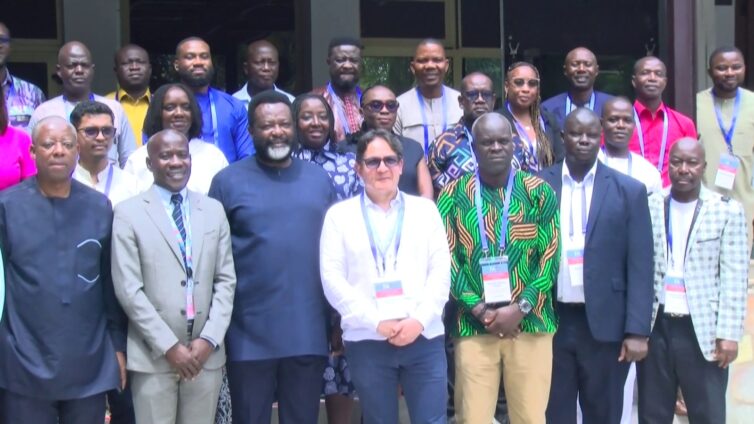
The call was made at a South-South Workshop on Accelerating REDD+ Readiness and Preparing for Results-Based Payments in West Africa, held in Ghana.
The workshop brought together representatives from Benin, The Gambia, Guinea, Guinea-Bissau and Sierra Leone to share experiences with Ghana and strengthen their readiness to access results-based climate finance.
FAO Representative in Ghana, Dr Meshack Malo, said countries must establish the right systems to ensure they can effectively benefit from carbon finance.
He identified policy, institutional arrangements and technical capacity as key requirements for accessing the funds.
“There is the policy mix that needs to be in place to ensure that the country is set to receive this fund,” Dr Malo said.
He added that institutions, including relevant government agencies, must be properly positioned to manage REDD+ programmes, while countries build the capacity needed for monitoring, reporting and verification of carbon reductions.
“There is a lot of monitoring, there is a lot of reporting, there is a lot of verification and the carbon is a market,” he said.
Meanwhile, Acting Director of the Climate Change Unit at the Forestry Commission, Dr Joseph Appiah-Gyapong, says protecting forests must also consider the livelihoods of communities that depend on them.
He said many farmers, particularly cocoa farmers, live around forest reserves and require support to improve productivity outside the reserves.
“We have to understand that the communities depend on the forest. So, we cannot take them out of that dependency,” Dr Appiah-Gyapong said.
He called for stronger collaboration between the Ministry of Agriculture, Ghana Cocoa Board and other stakeholders to promote climate-smart farming practices.
According to him, improving productivity on existing farmland will help farmers earn more without expanding farms into forest reserves.
“We need a lot of climate-smart interventions that will make sure that the same piece of land will be able to yield enough so the farmer can earn more,” he said.
The workshop is expected to deepen regional cooperation and help participating countries strengthen forest governance, protect forest resources and position themselves to access results-based climate finance.
Latest Stories
-
Black Queens Coach maps out preparations ahead of Olympic qualifying games
1 minute -
La Traditional Council demands SSNIT documents over Pleasure Beach land claim
1 minute -
African communities have solutions but lack access – Liberian envoy
6 minutes -
Minority calls for dismissal, prosecution of Sports Minister, GTA CEO over World Cup visa scandal
6 minutes -
Chairman and fellow patriots – Irene Ponu-Brenyah writes to NPP
15 minutes -
Nothing Disappears: What Jamestown Beach reveals about Ghana’s styrofoam ban
17 minutes -
Court delays former NAFCO CEO trial to resolve access to seized gadgets
23 minutes -
Joy FM to offer free LPMs to Super Morning Show advertisers on Oct. 9 to mark Customer Service Week
26 minutes -
Sri Lanka’s ex-first lady arrested over alleged misuse of children’s hospital donations
33 minutes -
La Traditional Council kicks against redevelopment of La Pleasure Beach without consultation
35 minutes -
Some basic schools have just 2 or 3 teachers despite needing 9 – Right To Play
40 minutes -
Mahama to cut sod for SSNIT-funded Accra Convention Centre
41 minutes -
FAO calls for stronger REDD+ systems to unlock climate finance
42 minutes -
Illegal mining pushes Birim River turbidity to 50,000 NTU – Abuakwa South MP
43 minutes -
Bawumia’s opponent in 2028 will face nearly two decades of experience and preparation – Gabby Otchere-Darko
45 minutes