

Audio By Carbonatix
Centuries ago, the Chɔra people of the Guan ethnic group who lived around where the Krachis currently live, wandered through thick forests and located a Vagla inhabited community of Sonyor (which, in Vagli dialect, means - sit and drink), who accepted them and gave them asylum to live with them.
Sonyor is located twenty minutes' drive east of Chorbaŋ in the Bole district of the Savannah Region.
Like other Vagla communities that have ties with other Vagla communities, Sonyor was birthed out of Chorbaŋ centuries ago, and to date, Sonyor regards Chorbaŋ as its elder.
When the Chɔra came to Sonyor, they brought with them special spiritual powers and energies, which the Vagla people viewed as being in right resonance with Vagla traditions and culture.
The Sonyor Kipo god
When the Chɔra came to Sonyor, they informed the Vagla natives about a deity that has powers such as: power to call rain, power to call fruits of womb, power to neutralise witchcraft, among other energies.
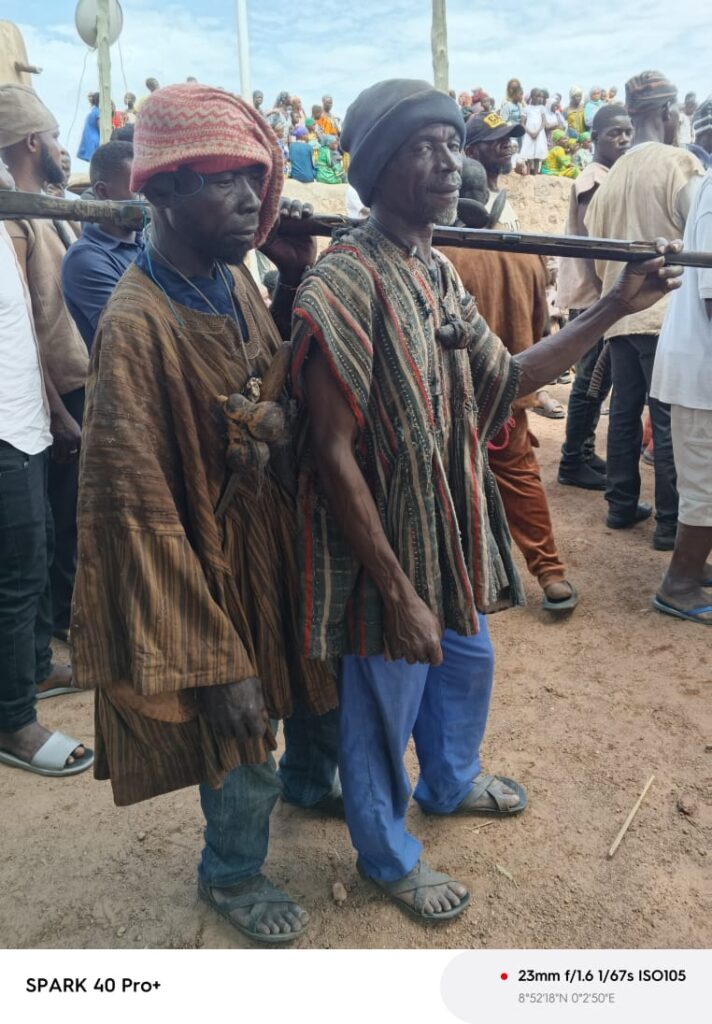
Although the natives Vaglas were informed about the energies of the Chɔra god, they did not initially involved the Chɔra god since they (the Vaglas) had their already existing foundational god, which was known as Kipo, whose supreme head is known as Kupo up till date.
They (the Vagla natives), however, provided every needed support each year to the Chɔra people every time they needed any form of support to worship the Chɔra Deity.
One fateful farming season, the Safalba people of Mwandari experienced drought, which was catastrophically leading to severe food insecurity. The elders of Mwandari, in consultation with the Vagla elders, visited the Chɔra Deity of Sonyor to seek rain for Mwandari.
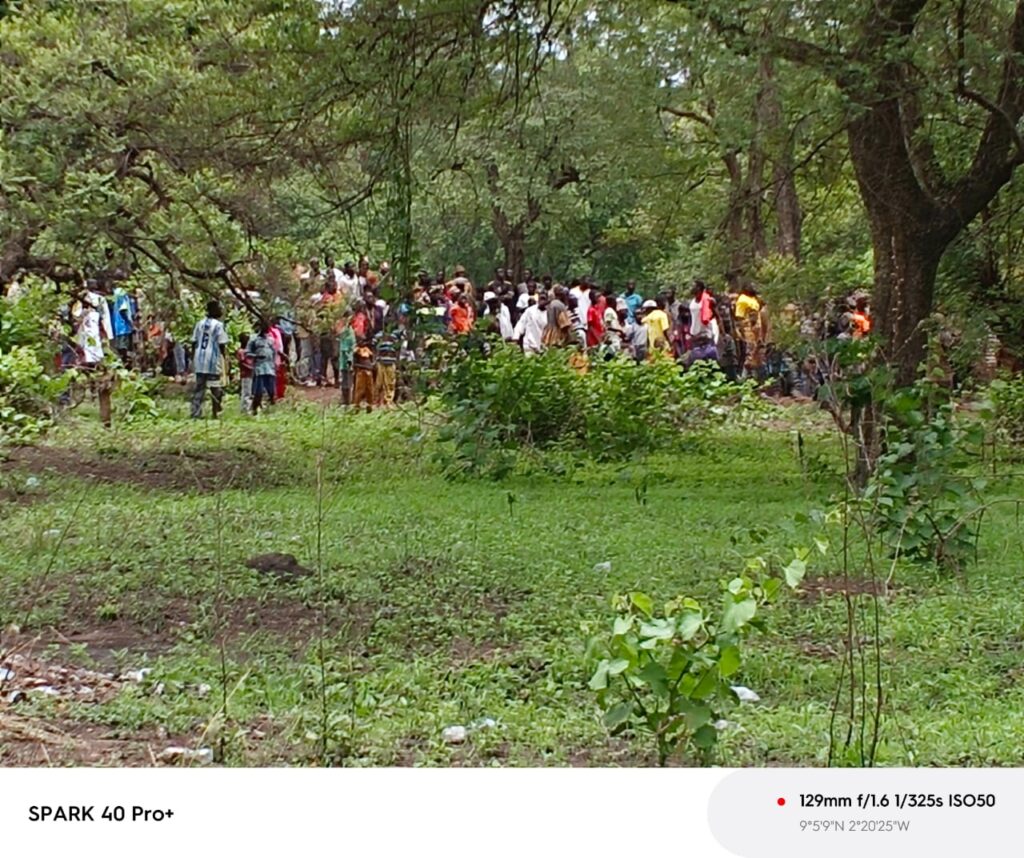
After Mwandari visited Sonyor, the Chɔra Deity sent rains to Mwandari, which led to bumper harvests.
The birth of Dɛng Festival
After Mwandari experienced good rains, they downplayed the great support Chɔra Deity offered to Mwandari, which led to the good rains and bumper harvests. The resulting effect led Mwandari once again to another drought, this time with repercussions extending to livestock.
Mwandari elders, on realising their mistake, made their way back to Sonyor. This time, they went to the Chɔra Deity through the head of the indigenous Vagla people of Sonyor, who is known as Kupo.
Kupo led the petition and pleas of the Mwandari people and handed it over to the Vughin (owner of the Chɔra god). The Vughin who saw Kupo as his most loyal ally to the worship of the Chɔra Deity accepted the plea of Mwandari and led sacrifices, which resulted in rains and bumber harvests again.
After the second successfully answered prayers of rains, Mwandari elders informed the Vughin of their intention to support the Sonyor Vughin and Sunyor Kupo with entertainment which in Safalba means (Dɛng) when Sonyor climaxes her annual five to six month season of Vughin and Kupo abstinence from the closing season's harvests.
While Kupo is shaved a few months before Vughin, the spiritual year does not begin until Vughin shaves and paves the way for the two traditional heads of the Chɔra deity (Vughin & Kupo) to distotem new harvests.
When it was time for Vughin to take his turn and shave to begin the new season, Mwandari came with an entertainment (Dɛng) described as Zingɔ, a dance they inherited from the Kollon tribe of Pebi in modern day Ivory Coast.
With time, Zingɔ dance became integral entertainment (Deɛng) of the Vughin's annual shaving ritual.
When it's time for Vughin to shave to begin the new season, Vaglas, led by various Vaglikoora across Vaglihɛri gather at Sonyor to support Vughin in offering needed prayers and intercessions for people of Vaglihɛri communities.
Succession to Vughin
During a vacancy of Vughin, a Tughin assumes the role of Vughin up until a substantive Vughin assumes duties. A new Vughin only assumes role after final rites of a deceased Vughin is performed.
Dɛng as a moment of fortifying young ones, offering sacred prayers to dreams and businesses
Each year during Dɛng, families and individuals across Vagla communities in the Savannah Region and beyond visit Sonyor to seek various solutions and prayers.
Remarkably, barren women are specially prayed for during this season. Women who need husbands and men who need wives are spiritually assisted during the festival and at any time of the year if the need be.
The Vaglas, through their various foundational gods such as Sonyor Kipo, Chorbang Kungi, Tuna Gbalbii, Soma Yorggor, Jam Dum, Mankuma Gbolo, and Manful Gbolo etc. They are capable of reverting badly conceived fruits of a womb into better conceptions.
The next time you come across a name with Kipo, Gbolo, Gbalbii, Yorgar, Dum, Tingbani/Tungbani, etc. know a foundational god resulted in the birth of such a child.
Annual Dɛng program lineup
For centuries now, Dɛng Festival activities are as follows: the festival begins with the arrival of individuals, families, and communities.
Zingɔ dance is performed on the arrival night until dawn.
The day after arrival is Chooma Woori (a search for a rabbit). While warriors and all men who came for Dɛng join forces in search of the ritual rabbit, women prepare fire, grind ritual crops and grains and tidy ritual foodwares in preparations for ancestral fufu using specific internal organs of the ritual rabbit (s).
When the warriors and men succeed in getting a rabbit in the search, they wait at the outskirts of the community, while delegation from the team of warriors inform Sonyor elders of the success.
Sonyor elders receive the rabbit(s) and hand the rabbits over to elderly women who no longer see their menstrual cycle to prepare a Vug Kabila (Deity fufu in Vagli dialect).
When the fufu is ready, the warriors and all men who joined the rabbit search are signalled to come to the community square where elders than them for their team spirit and dedication.
The Vug Kabila is used as offering to the Deity, while part is given to specified community members to feast.
After Woori and Vug Kabila, the main event comes on the day of the festival.
The third day is when elders journey to Koo dubbed Koo laŋŋaa (Koo laŋŋaa in Vagli implies going to farm).
At this event, Vughin is shaved, and his taboos lifted for the season.
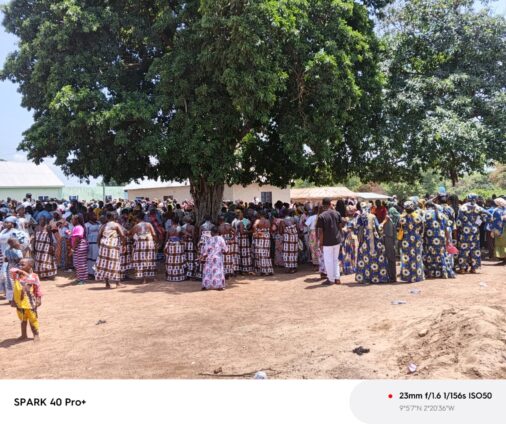
While Vughin and Kupo and elders perform Koo laŋŋaa, Sonyor women showcase their unity of purpose by dressing in same fabrics amid funfair in wait of the return of Vughin who was accompanied by Kupo to his shaving and lifting of ban on his feast of past season's harvests.
Participants of the festival start departing after the fourth day. One departs after being satisfied with his or her prayers to Sonyor Kipo or after drinking a ritual liquid of fortitude against negative energies and again inhumane spirits.
In summary, Dɛng is a five day activity packed festival. It comes off between late April and mid-May each year, depending on the ritual citing of the crescent of the season.
This year's Dɛng Festival is highly exceptional
For the 4th year running, indigenes of Sonyor with support from the Vagla Youth Association (VAYA) have included a durbar of chiefs, politicians, and various opinions leaders to dialogue on ways to achieve economic growth and development within Vagla/Chora/Nomee/Safalba communities.
Mahama Donates Brand New Pick-Up To VAYA And Pledges More Development
The 2026 Dɛng Festival witnessed a major highlight as President John Dramani Mahama donated a brand new Zonda pick-up vehicle to the Vagla Youth Association (VAYA) and reaffirmed his commitment to supporting development projects in the area.The festival brought together various traditional groups and tribes, showcasing the rich culture and heritage of the custodians of the land on May 16, 2026.
The presentation was made on behalf of the President by the Member of Parliament for Bole-Bamboi and Deputy Minister for Lands and Natural Resources, Hon. Yusif Sulemana, during the celebration of the annual Deng Festival in Sonyo.Speaking at the event, Hon. Sulemana expressed gratitude to the leadership of VAYA and the traditional authorities for inviting him and President Mahama to participate in the festival.
He explained that the Deng Festival, which was previously centered mainly on dancing and singing has now expanded to include a durbar that serves as a platform for government officials to account for their stewardship while also giving community members the opportunity to present their concerns and development needs.
According to him, the initiative has strengthened engagement between the government and the people and created a more meaningful celebration for the community. Hon. Sulemana disclosed that the government is already working to resolve the telecommunication network challenges in the area.
He noted that although the network had recently been restored, technical adjustments were still needed to improve internet accessibility. He revealed that a technical team had recently visited the area to assess the situation and help improve connectivity.He also assured residents that the Bole-Sonyo-Gurbol (Gurpe) road project remains a priority for government and indicated that work on the road would commence soon.
Touching on water challenges affecting the community, the Deputy Minister acknowledged the inadequate water supply in the area and assured residents that plans are underway to provide a major water project in the near future.He described President Mahama as a listening leader who remains committed to ensuring development reaches every community.
Hon. Sulemana further announced that President Mahama had donated GHS20,000 to support the organization of the 2026 Deng Festival.He urged residents to continue maintaining peace, unity, and cooperation, stressing that development can only thrive in a peaceful environment.
The Deputy Minister concluded by assuring the people that they would continue to benefit from development interventions and support from President Mahama and the National Democratic Congress (NDC) government.
Long-term plan of Vagla Youth Association (VAYA) for Dɛng
The leadership of VAYA sees Dɛng as not only a sacred festival but a season each year to assist elders in reflecting the support the various Vagla foundational gods have granted indigenes and dwellers across our communities in the Savannah Region and beyond.
To this end, VAYA intends to continue to support efforts that improve economic developments, peaceful coexistence, and maintenance of standards and practises that define our heritage as people.
A cautious appeal towards peaceful coexistence
With Vaglas predominantly being farmers, it is prudent settlers such as Fulani herdsmen ensure their cattle do not trespass farms in order not to destroy crops and farmlands.
It is highly hoped that settlers such as Birfor/Lobi/Dagaaba will keep to practises such as offering sacrificial items (most fowl(s)) where necessary when their indigenous Vagla community informs them of purifications in preparations for the season.
The repercussions for any disregard to the above annual purifications can only be imagined but not wished for.
The invasions of the Abrahamaic religions (Christianity & Islam) should not lead anyone to disregard sacred practices of the Vagla people across Vagla traditional jurisdictions.
We thank Sonyor Kipo for the continuous protections and support all year round for the centuries of Vagla existence and after Vaglas are joined by others on their current and abandoned settlements (Dingelazi) while praying for more improvements and fruits for all Vaglas and especially for all who bring honour and dignity to Vaglihɛri.
-
The author, Bruce Bullu Liman, is a Regional Technical Support Officer of the National Identification Authority (NIA) & National Secretary for Vagla Youth Association (VAYA)
Latest Stories
-
We’re not demolishing Konkomba Yam Market – Accra Mayor dismisses Minority’s claims
21 seconds -
Nitiwul, Accra Mayor clash over Konkomba Yam Market demolition for 24-Hour-Economy market
10 minutes -
BoG urges digital asset businesses to build compliance into operations at Digital Assets Summit Africa
13 minutes -
NGIS Money Market Fund’s net assets rise 33.3% to GH¢11.78m
14 minutes -
Vaglas join Vughin to mark Dɛng Festival of Sonyor in Savannah Region
37 minutes -
Ghanaian model Eligere Di Merrebel attends 2026 Venice Film Festival
42 minutes -
“You can’t take our GH¢82m and run away to Nigeria” – Roads Minister fires Enchi–Elubo road contractor
44 minutes -
GCB Bank unveils GH¢1m unsecured loans to boost business growth at Kumasi MSME Caravan
47 minutes -
Education chanllenges: NPP not interested in gov’t failure, but we will hold them to account – Dr Kwabena Tandoh
53 minutes -
Kristo Asafo Bompata branch members allege post-funeral attacks
55 minutes -
‘Show up Friday or lose the contract’ – Roads Minister warns Top International over abandoned Enchi–Elubo road
55 minutes -
Customs revenue jumps to 450 million dollars monthly since AI introduction
1 hour -
There is policy divergence at Education Ministry – NPP Education Committee spokesperson
1 hour -
Police recover AK-47, 186 rounds of ammunition after gunfight in Accra
1 hour -
Three classrooms, two teachers, one community: The struggles of Bresuano MA basic school
1 hour