

Audio By Carbonatix
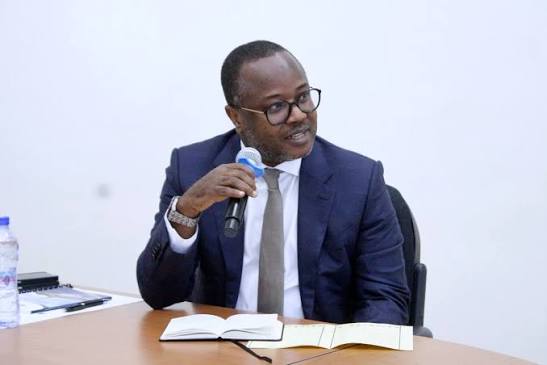
Ghana’s output expansion has been largely driven by factor accumulation - labour, capital, and extractives - rather than by efficiency gains or innovation, Dr. Maxwell Opoku-Afari, a former First Deputy Governor has disclosed.
According to him, this long-run decline in productivity raises fundamental questions about the durability, inclusiveness, and resilience of Ghana’s growth strategy.
He mentioned that between 2013-2024, agriculture remained broadly unchanged at around one-fifth of GDP, industry showed considerable volatility driven largely by extractive activities rather than manufacturing, and services consistently dominated the economy.
The absence of a decisive shift towards higher-productivity, export-oriented manufacturing, he said confirmed that economic growth was not accompanied by the structural changes necessary to broaden the tax base, diversify exports, enhance productivity, and improve debt-servicing capacity. “This disconnect helps explain why strong headline growth did not translate into stronger fiscal or external resilience”.
Dr. Opoku-Afari who is a Non-Resident Fellow of Finance for Development Lab pointed out that borrowing was frequently framed as financing for infrastructure and flagship programmes.
However, in practice, a significant share was absorbed by recurrent spending, weakened by cost overruns, or generated limited growth payoffs due to shortcomings in project appraisal, selection, and execution.
He added that petroleum revenues earmarked for priority infrastructure were also often diverted toward recurrent outlays and debt service, noting that as fiscal pressures intensified, higher government borrowing increasingly crowded out private-sector credit and weighed on investment and potential growth.
He made the expression that the crowding-out channel became increasingly evident over time with private-sector credit growth slowed, while elevated domestic yields raised the cost of capital and constrained investment.
According to him, this is consistent with a debt-overhang dynamic in which persistent fiscal imbalances and rising public financing needs dampen private-sector activity and weaken medium-term growth prospects.
Latest Stories
-
New York Times executive fatally shot allegedly by elderly in-laws
45 minutes -
Teacher Payment Crisis: GES races to protect academic calendar
54 minutes -
US prosecutors reopen case of alleged gang rape at Cornell University
1 hour -
Journalist to be crowned king in Uganda after bitter succession dispute
1 hour -
OpenAI scraps rollout of new model over safety concerns
2 hours -
Nigerian attempts to break world record by dancing non-stop for seven days
2 hours -
GES urges government agencies to end blame game over teacher payments
4 hours -
GES sets Oct. 5 deadline to resolve teachers’ payment dispute
4 hours -
GES working around the clock to get teachers back to class, says Daniel Fenyi
4 hours -
French PM warns against escalation of school protests after 164 arrested
4 hours -
UK tries to stop Trump’s diesel export ban
5 hours -
Late Olise goal gives France win over Belgium
5 hours -
Mancini enjoys first win since return as Italy boss
5 hours -
Interest payments to average a high 20% of government revenue over next 4 years
5 hours -
Anthropic warns AI may pose ‘existential risks to humanity’ in IPO filing
5 hours