

Audio By Carbonatix
Ghana’s public debt declined sharply from 70.3% of GDP in 2024 to 49% at the end of 2025, marking significant progress in efforts to restore debt sustainability, the World Bank has said.
World Bank Division Director for Ghana, Liberia and Sierra Leone, Robert R. Taliercio, said the reduction was among the key gains recorded under Ghana’s ongoing economic reform programme.
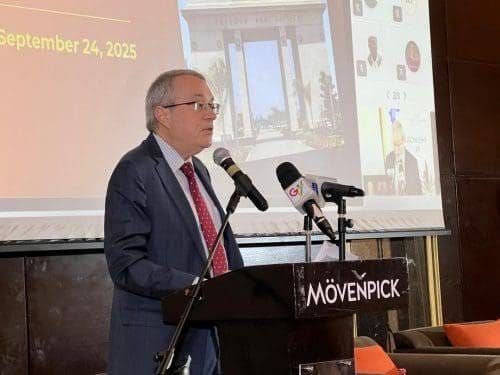
He was speaking in Accra at the launch of the World Bank’s Tenth Ghana Economic Update.
“Public debt declined from 70.3% of GDP in 2024 to 49% at the end of 2025, three years ahead of the expected IMF programme timeline,” he said.
Mr Taliercio said the improvement in Ghana’s debt position, together with gains in the fiscal and external sectors, reflected the impact of difficult economic decisions taken to stabilise the economy.
Ghana also recorded a primary fiscal surplus of 2.5% of GDP in 2025, exceeding the 1.5% target.
The development signals a significant improvement in the country’s fiscal position following years of rising debt and economic pressures.
Despite the progress, the World Bank cautioned that Ghana’s economic recovery remains “structurally incomplete”, with risks that could reverse some of the gains if reforms are not sustained.
Mr Taliercio said the country’s debt outlook would remain sustainable if fiscal discipline is maintained and the restructuring of Ghana’s external debt is completed.
“Growth is projected at 4.8% in 2026, converging to around 5% over the medium term, with inflation expected to remain within target and debt on a sustainable trajectory,” he said.
The World Bank said sustaining the improvement in public finances would require stronger domestic revenue mobilisation and continued efforts to address financial pressures in key sectors.
Mr Taliercio specifically cited persistent challenges in the energy and agriculture sectors as areas requiring attention.
He stressed that the reduction in the debt-to-GDP ratio should therefore not be viewed as the end of Ghana’s fiscal consolidation efforts, but rather as a foundation for further reforms aimed at maintaining debt sustainability and strengthening economic resilience.
Latest Stories
-
Tiptoe Lane’s tech takeover: The story behind Ghana’s booming informal phone market
1 hour -
Abanga vows to use social media to counter NDC messaging ahead of 2028 elections
1 hour -
Okai Mintah seeks Sabah Zita Benson’s support for NDC National Youth Organiser bid
1 hour -
Okai Mintah vows to strengthen NDC campaign machinery ahead of 2028
1 hour -
Mother of four and Jasikan teacher among new Telecel M’ahitti Promo winners
1 hour -
International Youth Shakers Conclave 2026 set to bring global young leaders to London
1 hour -
Gov’t is committed to addressing teachers’ conditions of service, deprived-area allowance – Education Minister
2 hours -
GoldBod’s structure encouraging galamsey – Afenyo-Markin
2 hours -
Tullow starts selling Jubilee, TEN crude to Ghanaian refineries
2 hours -
Local Government Service authorises rationalisation, redistribution of staff
2 hours -
PURC assures consumers of working to ensure quality services in Northern Region
2 hours -
Ghana develops US$4.28bn water financing framework
2 hours -
Christian Council calls for protection of mission schools’ religious identity
2 hours -
Mahama holds discussions with India’s External Affairs Minister
2 hours -
Even when you cough, they come after you — Abanga accuses Mahama govt of criminalising free speech
2 hours