

Audio By Carbonatix
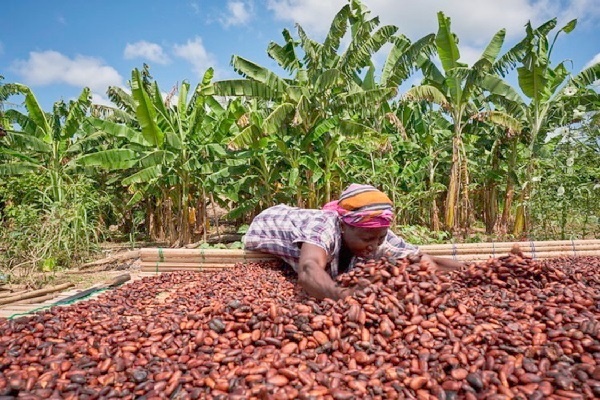
Kwame Mensah stands in his three-hectare cocoa farm in Ghana's Western Region, where his family has cultivated cocoa for three generations.
At 58, he's forgotten how the premium chocolate made from his cocoa beans tastes. "A suitable size bar costs twice what I earn from a kilogram of cocoa," he says with a wry smile.
"My father taught me everything about growing the finest cocoa, but he never imagined we'd be this poor."
Mensah's story echoes across Ghana, where 30% to 58% of cocoa farmers live below the World Bank's extreme poverty line of $1.90 daily.
This reality is stark: Ghana supplies 20% of the world's cocoa, yet its farmers can rarely afford the end products they help create. While global chocolate industry revenues exceeded $180 billion in 2023, the farmers who form its foundation struggle to make ends meet.
A System Frozen in Time
At the heart of this paradox lies the Ghana Cocoa Board (COCOBOD), established in 1947. Once a shield protecting farmers from market complexities, COCOBOD's colonial-era structure has become a barrier to progress.
While neighbouring countries like Côte d'Ivoire, Togo and Cameroon have modernised their cocoa sectors to become responsive to market dynamics, allowing farmers to earn higher producer prices, Ghana's farmers remain caught in a rigid system that excludes them from crucial decision-making.
The numbers tell a sobering story. Mensah is one of the over 700,000 members of the Ghana National Cocoa Farmers Association (GNACOFA) whose average holdings per member is 3 hectares and yields below 400 kg per hectare.
Typically, such a farming family earns approximately $3,600 annually compared to the estimated national median salary of about $10,000. Furthermore, rubber farmers receive rehabilitation support of GHC 100,000 ($6,250) per hectare, while cocoa farmers get merely GHC 1,000 ($62) – barely enough for basic maintenance.
This disparity extends beyond direct financial support. Ghana's cocoa farmers lack access to modern farming techniques, quality fertilisers, and improved seedlings that could dramatically increase their yields. In contrast, cocoa farmers in Ecuador and Colombia have embraced innovative farming methods, achieving yields of up to 1,000 kg per hectare through government-supported modernisation programs.
Climate Crisis Meets Governance Crisis
"Due to unpredictable rains, I will be fortunate to realise half of my crop," Mensah explains, pointing to sparsely podded trees and withered cocoa pods. Climate change has added another layer of complexity to Ghana's cocoa crisis.
The 2024/2025 major season starts in October and COCOBOD has repeatedly revised its preseason production forecasts due to extreme weather, yet farmers lack adequate support to adapt.
Recent studies by climate scientists predict that by 2050, up to 50% of Ghana's current cocoa-growing regions may become unsuitable for cultivation due to rising temperatures and changing rainfall patterns. Despite these alarming projections, COCOBOD's climate adaptation strategy remains largely on paper, with minimal practical support reaching farmers.
The challenge is compounded by illegal mining, locally known as 'galamsey'. Toxic chemicals from these operations poison water sources, while mining activities destroy productive farmland.
"We watch helplessly as our neighbours sell their land to miners," says Stephenson Anane Boateng, president of the Ghana National Cocoa Farmers Association (GNACOFA). "Without urgent change, we won't have an industry in five years."
Environmental experts estimate that galamsey has already destroyed over 40,000 hectares of cocoa farms, with the rate of destruction accelerating annually. The economic desperation driving farmers to sell their land to miners creates a vicious cycle that threatens both the environment and Ghana's cocoa heritage.
A Path Forward
The solution lies in transforming COCOBOD from within. The government of Ghana must restructure COCOBOD to align with modern business environment demands.
Success stories from agricultural reforms in Rwanda and Ethiopia demonstrate how modernizing traditional structures can revitalize farming communities. Rwanda's coffee sector transformation, which gave farmers a voice in policy-making and access to direct market relationships, offers valuable lessons.
The Vietnamese coffee sector's remarkable turnaround provides another instructive example. Through farmer-centric reforms and strategic international partnerships, Vietnam transformed from a minor player to the world's second-largest coffee exporter in just two decades, while significantly improving farmer incomes.
Three key reforms could reshape Ghana's cocoa industry:
- Inclusive Decision-Making: Give cocoa farmer groups, such as GNACOFA meaningful representation in COCOBOD's governance structure. When Vietnam reformed its coffee sector, farmer participation in policy-making led to a 200% increase in producer incomes over a decade.
- Modern Business Practices: Transform COCOBOD's operating model to embrace market responsiveness, business agility and innovation, and stakeholder engagement. This includes transparent pricing mechanisms, adoption of technologies in cocoa farming and diverse marketing channels. Digital platforms could enable direct farmer participation in price discovery and market access, similar to successful models in Kenya's tea sector.
- Environmental Resilience: Develop a Theory of Change for sustainable environmental resilience supported by continuous research, monitoring and evaluation. Implement a comprehensive climate adaptation strategy, including drought-resistant varieties and sustainable farming practices, backed by adequate financial support. Colombia's cocoa sector has successfully implemented climate-smart agriculture practices, providing a blueprint for Ghana.
Global Implications
The stakes extend beyond Ghana. As global chocolate demand surges and climate change threatens production, ensuring sustainable cocoa farming becomes crucial. The EU's recent focus on sustainable cocoa sourcing through bilateral agreements presents an opportunity for reform.
Recent market trends suggest a growing consumer preference for ethically sourced chocolate, with premium prices paid for products that guarantee fair farmer compensation. This shift in consumer behaviour creates an opportune moment for Ghana to reposition its premium cocoa in the global market while ensuring farmers benefit from higher margins.
"We don't want charity," Mensah emphasises. "We want a fair system that recognises our expertise and gives us a voice in our industry's future." His words resonate with a global movement for agricultural justice and sustainability.
The chocolate industry's future depends on Ghana's cocoa farmers. Without meaningful reform that empowers these farmers, we risk losing not just an industry, but a heritage. The time for COCOBOD to embrace change is now – before Kwame Mensah's generation becomes the last to tend Ghana's cocoa farms.
Author's Note: While Kwame Mensah is a composite character representing typical Ghanaian cocoa farmers, all statistics and institutional information are based on current data and verified sources.
The authors are agricultural policy specialists who focus on assisting West African producers to access regional and international finance and commodity markets. They have worked extensively with cocoa farming communities across Ghana and Sierra Leone. This piece was developed in consultation with the Ghana National Cocoa Farmers Association.
Latest Stories
-
Joy in Nayilifong as Farouk Aliu Mahama donates 100kVA transformer to improve power supply
22 minutes -
Chief Justice urges employers to tackle mental health stigma in workplaces
1 hour -
Analysis: Ghana’s yellow fever numbers reveal a gap between vaccination and protection
2 hours -
Education Ministry welcomes suspension of teachers’ strike
2 hours -
Vice Chancellors Ghana appeal to striking university administrators to resume work
2 hours -
KNUST postpones 2026/2027 academic year reopening indefinitely amid GAUA strike
2 hours -
Fire destroys mattress factory at Sokoban in Kumasi
2 hours -
ECOM-SMS Ghana launches ‘Agriculture Our Future Clubs’ to address threat of ageing farmer population
2 hours -
Nicholas Atsu Kumi
2 hours -
Cherif Sarr: Economic participation needs more pathways, not one prescribed route
2 hours -
Cyber Security Authority: Ghana led Operation Blackout, not FBI
3 hours -
GH¢800,000 goods destroyed as fire engulfs Kia Rhino truck on Apedwa-Kibi Road
3 hours -
Chief Justice calls for supportive workplaces to address mental health stigma
3 hours -
NVI CEO defends GH¢13m spending on training, workshops and conferences
3 hours -
Ghana targets first locally manufactured vaccine by 2027
3 hours