

Audio By Carbonatix
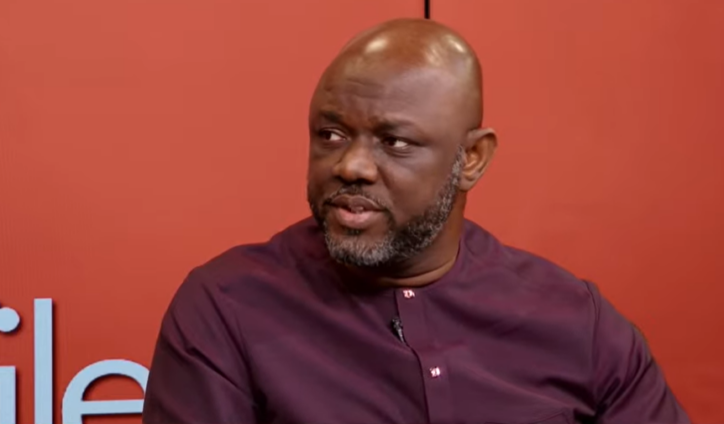
Executive Director of the Africa Centre for Energy Policy (ACEP), Ben Boakye, has urged the government to focus on improving the quality of education in every senior high school rather than placing too much emphasis on the categorisation of schools.
He said the current debate around the Senior High School (SHS) placement system should not be centred solely on which schools are classified as Category A, B or C, but on ensuring that all schools have the teachers, facilities and support needed to provide quality education.
Speaking on JoyNews' Newsfile on Saturday, September 12, during a discussion on the SHS placement crisis, Mr Boakye said there are short, medium and long-term issues that must be addressed.
“There are short-term, medium-term, and long-term issues that have to be addressed,” he said.
However, he questioned the value of maintaining a system where schools are placed into categories without doing enough to improve the quality of education across the board.
“But I don't see how we should lock ourselves into categories of schools and not improve quality of education at all levels,” he said.
“I don't think it makes sense.”
Mr Boakye said the government should instead ensure that schools across the country have capable teachers who can provide students with the education and training they need.
“We really have to make sure that the teachers that are, you know, assigned to all the schools can deliver,” he said.
He acknowledged that parents and students may continue to have strong preferences for certain schools, including emotional attachments to particular institutions.
“As for people categorizing and emotional attachment to schools, we can leave them to do that,” he said.
However, he said such preferences should not determine the government's education priorities.
According to him, the focus should be on ensuring that every secondary school is capable of delivering the skills and knowledge students need to become productive members of society.
“But the government should focus on making sure that every secondary school can deliver the kind of training and learning that students uh will need to build the human capital that we actually need,” Mr Boakye said.
The ACEP Executive Director also called for a broader approach to assessing students, particularly at the Junior High School (JHS) level.
He said the education system should prioritise ensuring that every child gets the opportunity to attend school and develop their abilities, rather than placing excessive emphasis on grades obtained at the JHS level.
“The problem we really need to face for me is that we need to make sure that every kid goes to school,” he said.
“We shouldn't be too busy about grades and judging kids by their grades at JHS level.”
Mr Boakye said that children develop at different rates and that strong performance at the JHS level does not necessarily determine how well a student will perform later in life.
“Because kids, you know, develop at different paces, right?” he said.
“Some will do better at JHS. They go to university, they do better than those who did well in JHS.”
He therefore called for an education system that gives students equal opportunities to develop regardless of their early academic performance.
“So we need to push to give people equal opportunity and ability to grow to become better citizens of our state,” he said.
Mr Boakye said improving the quality of education across all secondary schools should be a shared priority, particularly because most teachers are graduates and should be supported to deliver effectively.
“And I think that should be the priority for all of us in making sure that the schools can deliver,” he said.
He added that effective monitoring could also help ensure that schools are meeting the required standards.
“The teachers, and most of them are all graduates in the schools. In some instances, just monitoring to make sure that the schools deliver,” he said.
This comes amid an ongoing debate over the challenges facing the Computerised School Selection and Placement System (CSSPS), including strong competition for places in some of the country's most sought-after senior high schools.
Latest Stories
-
Ghana closer to terrorism threat than ever before – WACCE
3 minutes -
Gov’t must focus on quality everywhere, not categorisation of public schools – Ben Boakye
16 minutes -
Tanko Computer backs comprehensive review of 1992 Constitution
21 minutes -
2026 SHS placement crisis was caused by changes to established model – Former Dept. GES Director
22 minutes -
GMet forecasts thunderstorms, rain across parts of Ghana tonight
22 minutes -
GETFund to allocate GH¢250m to expand Category A SHS infrastructure
23 minutes -
From dream homes to mortgage plans: JoyNews-Repubic Bank Habitat Fair closes Day 2 on a high
24 minutes -
Afoko: Women’s inclusion key to NPP’s electoral comeback
29 minutes -
2026 U-20 WWC: Black Princesses suffer another group stage exit after defeat to France
41 minutes -
No policy to teach Arabic, Chinese in all public schools – Mahama
41 minutes -
Students’ academic freedom central to Africa’s democratic future – Prof Appiagyei-Atua
56 minutes -
Ɔdadeɛ Global Executives congratulate PRESEC on historic 9th NSMQ trophy
58 minutes -
Mahama announces maize processing plant for Sissala area to tackle glut
1 hour -
Ghana undertaking Africa’s largest road infrastructure programme – Agbodza claims
2 hours -
Prospective homeowners troop to Day 2 of JoyNews-Republic Bank Habitat Fair, engage experts on homeownership
2 hours