

Audio By Carbonatix
In a bid to promote the consumption of indigenous foods and encourage farmers to produce more chemical-free foods, appeals have gone to the government to lead with policies.
According to the Executive Director of Coalition for Maternal Health and Citizen Empowerment (CMCE), Mahama Salaam, such a move by the government, through the planting for food and jobs policy, would not only help the sector to produce quality healthy foods but reduce poverty and improve the lives of farmers, especially smallholder women.
He spoke at the International Rural Women's Day celebration at Kenyasi No.2 at the Asutifi North District of the Ahafo Region.
The celebration, organised by the CMCE, in partnership with Actionaid Ghana, was on the theme; “Preserve and promote indigenous food varieties to support rural women to cultivate good food for all”.
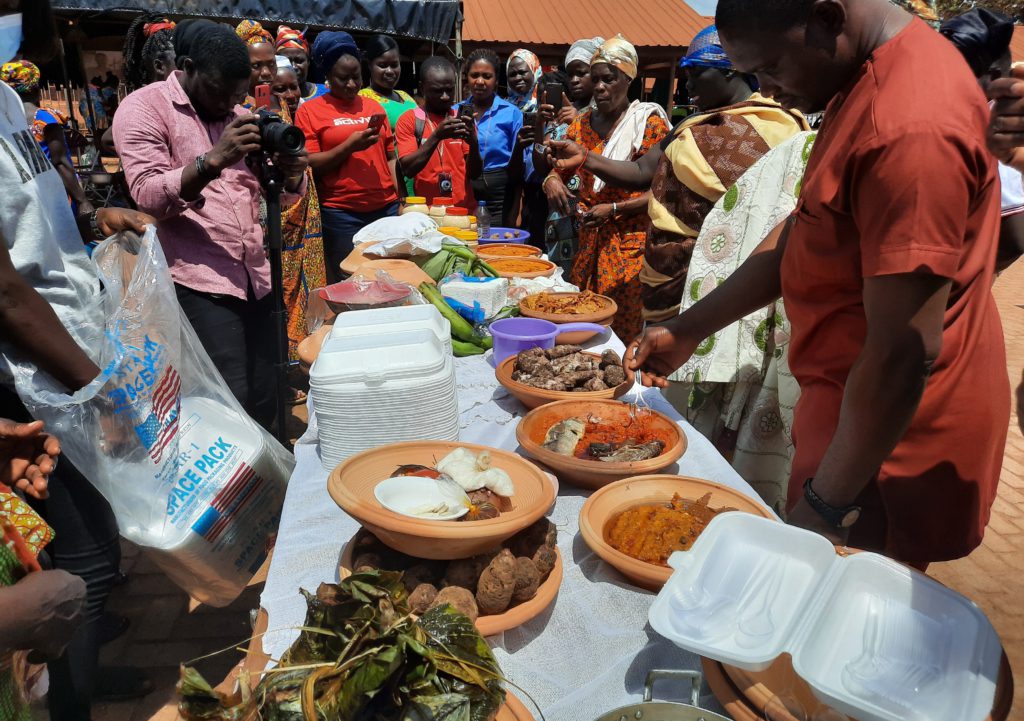
Varieties of indigenous foods were prepared by members of the smallholder women farmers drawn from communities such as Apotoyewa, Kenyasi No.3, Yawkrakrom, Oseikrom, Donkorkrom, and Obengkrom.
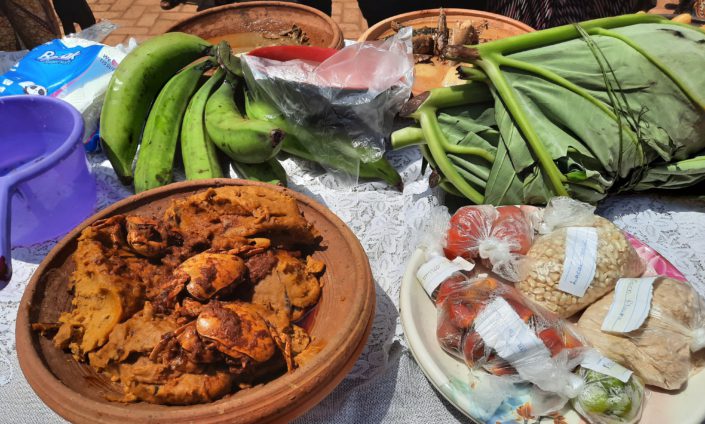
Some of the foods prepared are Apreprensa (maize, crabs, fish, vegetables, and legumes), Nu Huoo (Cocoyam, salted and dried fish, vegetables, and legumes), Adebi (maize, smoked fish, vegetables, and legumes), Akaw (Cocoyam) and stew, fufu with Weriweri soup, Rice with kontomire stew, and mportomporto.
The Executive Director of CMCE explained that these foods are more nutritious and do not contain chemicals, something the smallholder women farmers can produce more with the required support.
"A lot of chemicals have been applied to some of these crops that we are currently producing, but with the climate emissions, we want to promote what we call agroecology for a healthy life."

He, however, believes the government could adopt the promotion of these indigenous foods through the Planting for Food and Jobs programme and provide organic manure to the farmers to help reduce the chemicals, which makes most of these foods poisonous.
"If the government adopts it and comes out with policies that will inure to the benefit of farmers, then they can have the strength, energy, and resources they need to cultivate more healthy produce", he appealed.
Mahama Salaam said civil society organisations such as CMCE and Actionaid, also need resources to enable them to reach out to more farmers in the communities and help them produce more of the indigenous foods.
"Organic foods are expensive due to their nutritional values. So if the farmers get the resources and knowledge to produce, we can get a market for it and they also get income to reduce poverty and improve the living standards of the rural women farmers", Mr. Salaam said.
Ayivor Clementina, Secretary of the Ahafo Regional branch of the Smallholder's Women Farmers Movement, noted that it is important to bring back the foods cherished by the older generation since the supposed modern foods are injurious to their health.

She appealed to the District Assemblies and the departments under the Ministry of Food and Agriculture to incorporate into their yearly activities, how to help revive and promote the cultivation and consumption of indigenous foods.
She noted that as Smallholder women farmers, they are doing their best by encouraging people to plant more of such foods but their objectives could be achieved on a larger scale if the district assemblies and central government would come to their aid.
Bono, Bono East, and Ahafo Regional Programs Officer of ActionAid Ghana, Yaw Osei Boateng, said they would continue to support activities aimed at helping to mitigate the impact of climate change.

He noted that agroecology - including the cultivation of indigenous food seeds without chemicals - is one such activity to make the community resilient against the impact of climate change.
Mr. Osei Boateng, therefore, urged all stakeholders to put their shoulders to the wheel to help save the environment and live a healthy life by eating healthy foods.
Latest Stories
-
NDC Deputy National Organizer Aspirant Hamza Umar targets grassroots mobilisation
35 minutes -
Villarreal fight back to beat Napoli and end losing run
3 hours -
Tresoldi nets hat-trick as Club Brugge win Inter thriller
3 hours -
PSG’s Luis Enrique hopes Man City avoid sanctions
3 hours -
Lisandro Martinez issues scathing attack on Man Utd board – has he made things worse?
3 hours -
Saka responds to Arteta’s challenge with ‘huge impact’
3 hours -
Viking hold Bayern in thriller as Kane breaks Messi record
3 hours -
Gordon scores as Barcelona beats Galatasaray
4 hours -
Bumble bought for $1.3bn in ‘bet on the future of humanity’
4 hours -
Imagination Africa, Mentors Chess Academy to host second African Genius Chess Championship at Ghud Park
4 hours -
Paradigm Initiative steps up calls over digital rights, internet freedom in Africa
4 hours -
Saudi man charged with planting ‘sophisticated’ recording device in OpenAI office
4 hours -
Ghana wins UN Human Rights Council seat as calls grow for action against atrocities
4 hours -
Royal Mail losing 400 postal workers a week, says union
4 hours -
Techiman South MP ends decades of water struggle in Asutia
5 hours