

Audio By Carbonatix
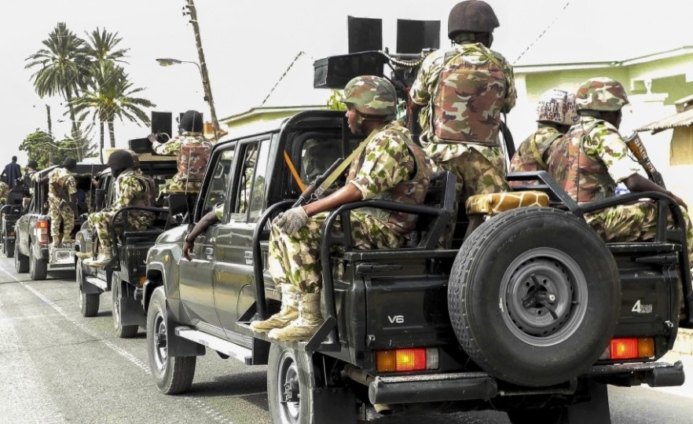
Gunmen in Nigeria kidnapped around 100 people, including women and children, in two-weekend attacks in Kaduna state, residents and police said on Monday.
Kidnappings by criminal gangs demanding ransoms have become an almost daily occurrence in Nigeria, especially in the north, with authorities seemingly powerless to stop them.
Kaduna police spokesperson Mansur Hassan confirmed the incident in Kajuru Station village on Sunday night but could not give a figure on those missing. He said security agents had been deployed to rescue the villagers.
Tanko Wada Sarkin, a village head, said 87 people were taken.
"We have so far recorded the return of five people back home who fled through the bush. This attack makes it five times that these bandits are attacking this community" he told Reuters by phone.
Residents said armed men dressed in army uniform arrived in the village undetected because they had parked their motorbikes away from the village.
Aruwa Yau, another resident, said he was captured but released by the gunmen because he struggled to walk due to poor health. He was receiving treatment at a local government clinic, he said.
Gunmen are known to force-march their victims deep into the bush, holding them for up to months while awaiting ransom payments.
The abductions come after an armed gang seized 286 students and staff from a school in early March in Kuriga in Kaduna state and gunmen seized 61 people on March 12 in Buda community.
In Dogon Noma, another community in Kajuru local government area, gunmen abducted 16 people from their homes in an attack on Saturday night, residents said.
Local resident Daniel Shamang said they had not heard anything from the abductors or the missing villagers.
Kidnappings at schools in Nigeria were first carried out by jihadist group Boko Haram, who seized more than 200 students from a girls school in Chibok in Borno state a decade ago.
But the tactic has since been adopted by criminal gangs without any ideological affiliation seeking ransom payments.
The kidnappings are tearing apart families and communities who have to pool their savings to pay the ransoms, often forcing them to sell prized possessions like land, cattle and grain to secure the release of captured loved ones.
Latest Stories
-
Only 14% of the world’s cities breathed safe air in 2025, new global report finds
24 minutes -
Ghana’s air quality improves for the first time since 2021; country places 11th in Africa – IQAir 2025 report
29 minutes -
Chad, DR Congo have dirtiest air in Africa; Réunion, Canary Islands cleanest, IQAir 2025 report
38 minutes -
Divine Mission Academy advances to finals of 2026 Luv FM VitaMilk Primary Schools Quiz
1 hour -
University of Ghana beat UENR to reach 2026 Honda Football Championship final
2 hours -
President Mahama urges international partners to respect Ghana’s position on LGBTQ issues
2 hours -
UDS edge UBIDS to reach 2026 Honda Football Championship final
2 hours -
Gender Minister holds first quarter ministerial advisory board meeting
2 hours -
Yirenkyi, Adjetey score lowest as Ayew tops ratings in Austria annihilation
2 hours -
Mahama courts diaspora support, highlights $7.8bn contribution to Ghana’s economy
2 hours -
President Mahama honoured with International Statesperson Award in US
3 hours -
Biggest winners from Ghana’s defeat to Austria
3 hours -
Gov’t working to address salary arrears of 2024 teachers – Education Minister assures
3 hours -
‘Democracy Is Not for Sale’ forum ends with strong calls to tackle vote buying, reform political financing
3 hours -
Parliament rejects Minority motion to investigate GoldBod losses
4 hours