

Audio By Carbonatix
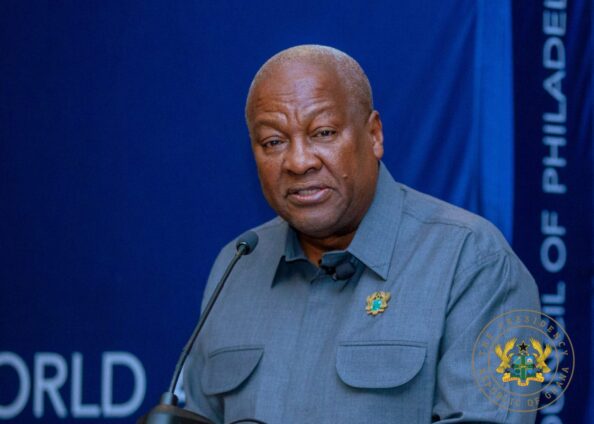
President John Mahama has called on international partners to respect Ghana’s position on LGBTQ issues, stating that public policy in the country is shaped by its legal traditions, cultural values, and societal consensus.
The President made the remarks while responding to a question during a ceremony in the United States, where he was honoured with an international award.
His comments come amid renewed global attention on Ghana’s stance on LGBTQ+ rights.
Addressing the issue, President Mahama noted that debates around LGBTQ rights remain complex and unresolved, not only in Ghana but across the world, including in the United States, where differing legal positions still exist.
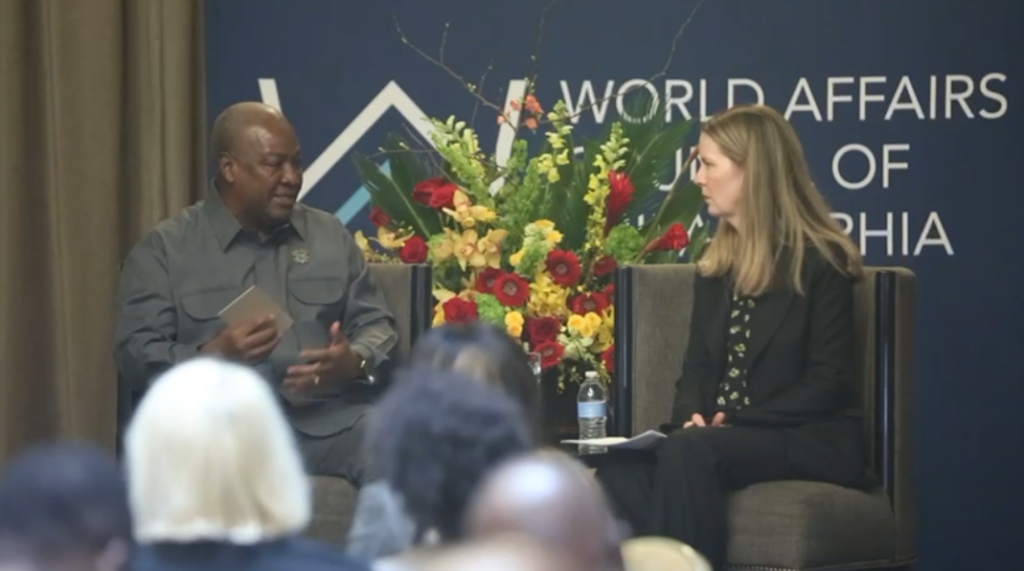
“The issue of LGBTQ rights is a motive, and they are not completely settled in terms of their nuances and arguments, not only in Ghana but all over the world.
"Even in the United States, you still have discourse on LGBTQ rights. There are still 26 states in America that have legislation that restricts LGBTQ rights," he said.
The President clarified that the controversial anti-LGBTQ bill currently before Parliament is not a government-sponsored legislation but a private members’ bill, and therefore remains under the control of the legislature.
According to him, Ghana’s democratic institutions are actively engaged in reviewing the matter, with memoranda being received from a broad spectrum of stakeholders, including civil society organisations.
He expressed confidence that the final outcome would reflect the will of the Ghanaian people.
“I swore an oath to uphold the Constitution. And so the representatives of the people will discuss the bill, and once they pass it, then it comes up to the presidency. And the Constitution gives various pathways for dealing with it.
"If I object to the bill, I can send it back to Parliament. If there are issues that need to be dealt with, we have the Council of State, which is a superior body. I can refer to the Council of State for advice,” he explained.
President Mahama stressed that Ghana’s approach to the issue must be understood within its unique national context.
“I believe that our international partners should understand that public policy is grounded in our legal traditions, in our cultural context, and in our social consensus, and all those issues are playing out as we speak,” he added.
His comments follow reports that Lincoln University withdrew plans to confer an honorary doctorate on him, citing concerns over his perceived stance on LGBTQ+ rights.
Latest Stories
-
BoG Governor, all MPC members voted to keep policy rate at 14%
4 minutes -
Richard Ahiagbah rejects Global InfoAnalytics poll, says delegates will decide NPP election
13 minutes -
Importers petition GRA over alleged unauthorised removal of 28 containers from Tema Port
22 minutes -
Creative Arts Agency Board seeks Lands Ministry’s support for welfare project
29 minutes -
Mahama and Kyrgyzstan Foreign Minister discuss AU-UN cooperation – Ablakwa
49 minutes -
Ghana, Kyrgyzstan explore cooperation in gold mining and trading
50 minutes -
Bono Region teacher unions back strike, demand action on outstanding grievances
52 minutes -
Strike still in force, stay home – GNAT, NAGRAT and PRETAG tell teachers
57 minutes -
Daily Insight for CEOs: Turning Q4 priorities into measurable results
1 hour -
Heartbreak Diet: Five foods to eat after a breakup or divorce
1 hour -
Health benefits of sweet potatoes
1 hour -
Farmers must be central to research – Prof Asare-Bediako
1 hour -
Nandom youth advocate urges end to political insults, rising drug abuse
1 hour -
Ho edition: Republic Bank-JoyNews Habitat Fair to offer financing from land acquisition to home completion
1 hour -
Three Chinese-operated massage spas shut down in Ashanti Region over licensing breaches
1 hour