

Audio By Carbonatix
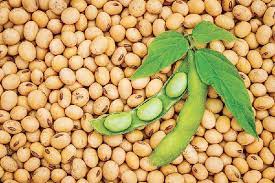
President of the National Poultry Farmers Association, Victor Oppong Adjei has bemoaned the hike in the price of soya beans on the market.
He lamented that the high price of the commodity is having a negative effect on the poultry industry and may end up collapsing the poultry industry if nothing is done about the situation.
Speaking on the Super Morning Show on Tuesday, he disclosed that previously, “Maize was sold at GH₵65 cedis per 60 kilo in the year 2020 but now it's GH₵180 cedis which, is about 277% increment.”
Also, “we were buying soya at GH₵150, its now GH₵305 and there’s no guarantee that the price is going to stabilize.”
“It is having a rippling effect on the poultry industry. Poultry is all about the feed so if we are missing soya it means we cannot prepare feed for the birds,” he explained.
He stated that the development "is collapsing the poultry industry. So, it’s no good to the country because poultry is contributing a lot to the economy and creating more jobs.
He said this on the back of the documentary, “The Broken Chain” which exposes the country's broken Soya Bean Value Chain and the shortfalls of government’s planting for food and jobs programme.
The documentary revealed that Ghana’s soya bean value chain is indeed broken, threatening the survival of the industry.
The market is currently dictated by foreign buyers and their agents who mostly pay for the beans above local market prices.
In an interaction with hosts Kojo Yankson and Winston Amoah, President of the Ghana Soyabean Association, Thomas Bello, blamed this on the government’s ‘Planting for Food and Jobs’ initiative.
“The success story of Planting for Food and Jobs has rather affected us negatively. What is happening is that it has increased the production of soya on the market and has attracted foreign buyers more and they buy everything off.
He stated that this in turn has affected local buyers who cannot compete with the foreign exporters in terms of pricing.
“Instead of us having a lot of beans on the market to buy, we end up not having any at all. We can't find the beans to buy. Indians are at the farm base competing with us,” he lamented.
He added that, “previously, the stock was not enough, but we could work a whole year but now for 2 years, we haven't been able to work effectively. We used to buy the soyabean between GH₵2500-GH₵3000 Ghana per tonne and the foreigners came in to buy above that and as at now, a tonne is at GH₵5000. We can't compete,” he added.
To deal with this, Mr. Bello suggested that “we need to control the system to make sure the local industries are fed before we send the surplus outside.”
Latest Stories
-
A source of excellence across generations – Vice President Opoku-Agyemang lauds Mfantsipim
1 hour -
(Photos) Mfantsipim School launches historic 150th anniversary
2 hours -
Knights and Ladies of Marshall group backs Catholic Bishops’ stance on anti-LGBTQ+
3 hours -
Bright Simons writes: All the Filla in the Ibrahim Mahama/E&P – Gold Fields Saga
3 hours -
Monetise Idiocy In Ghana
3 hours -
ECG kicks off Phase Two of transformer upgrades at Lashibi; brief outages expected
4 hours -
The Ghanaian prophet and the mysterious death of his scottish wife Charmain Speirs
4 hours -
Nearly 400 sentenced in Nigeria for links to militant Islamists
4 hours -
Ghana’s recovery supported by gold strength despite global oil price pressures – Standard Bank Research
4 hours -
Methodist Church hails Mfantsipim@150; calls for “fresh consecration” to excellence
5 hours -
‘Excellence is our inheritance’ – Nana Sam Brew-Butler hails Mfantsipim’s 150-year reign in leadership
5 hours -
Kwaku Azar writes: A-G vs OSP
5 hours -
Mfantsipim–Adisadel rivalry built excellence, not division – Sam Jonah
5 hours -
Vice President launches Mfantsipim’s 150 years of shaping Ghana’s greatest mind
6 hours -
I assure Otumfuo, Mahama will join him to commission KNUST Teaching Hospital by end of this year – Haruna Iddrisu
6 hours