

Audio By Carbonatix
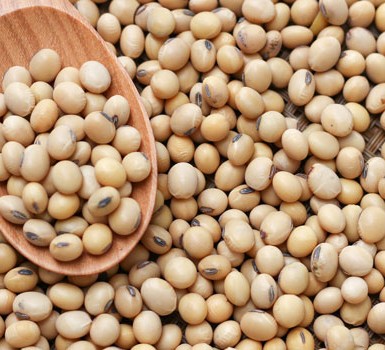
The Ministry of Trade and Industry has extended a ban on exportation of soya bean and other grains such as maize, and rice for the next six-months.
This comes after a JoyNews Hotline Documentary titled “THE BROKEN CHAIN” which shed light on the soya bean value chain, the challenges therein and impact on the poultry industry.
The one-hour documentary produced by Prince Appiah revealed more than 80 percent of soya bean processing factories have shut down because of non-available raw materials.
Some poultry farmers have also sold their birds to be able to stay afloat in the business.
The Ghana National Poultry Farmers Association, for instance, has had to release new prices of egg, with 30 percent increase after the Ramadan fasting.
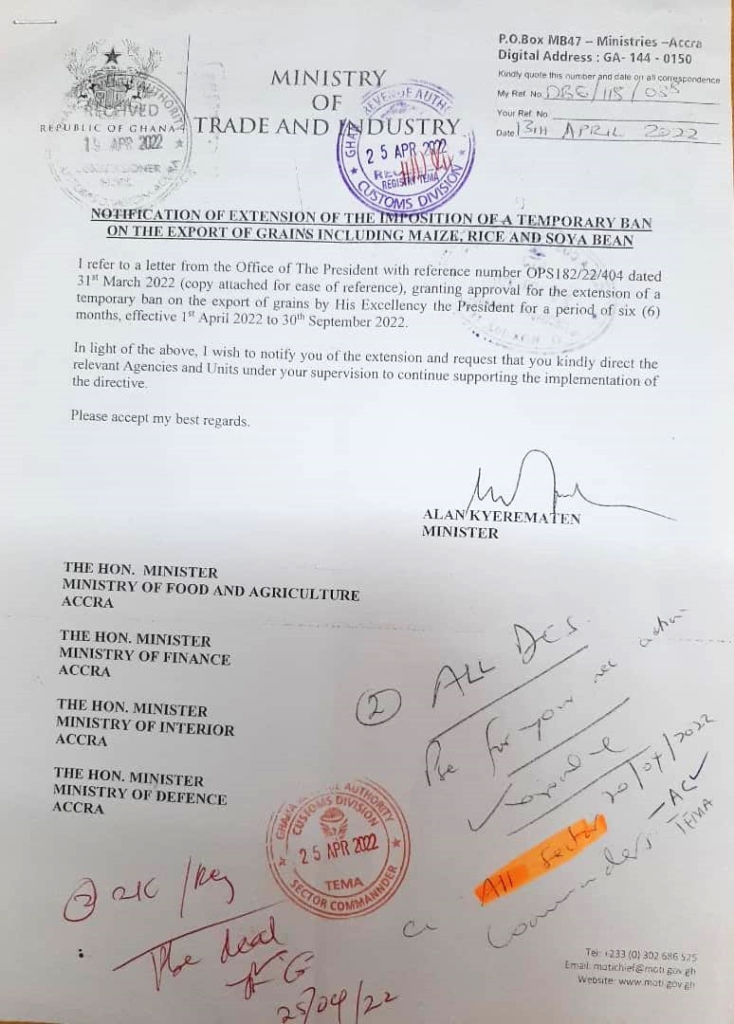
The letter dated April 13, 2022 by the Ministry of Trade and Industry copied to the Ministry of Food and Agriculture, Ministry of Finance, Ministry of Interior and the Ministry of Defence, puts a temporary ban on the exportation of the crop together with maize and rice.
It directs the relevant agencies and units under their supervision to support the implementation of the directive.
These crops are currently in short supply in the country impacting the various value chain drivers and industry.
Chairman of the Soya Value Chain Association of Ghana, Thomas Wabi Bello, says though they acknowledge the suspension, they believe more needs to be done.
“We acknowledge the suspension of the exportation of the soya for six-months, but it is not good enough because the Indians and other nationals will not stop buying. If they know it is six months and they can buy and hoard and wait for six-months and export, the problem will persist,” he said.
The Association has therefore suggested a two-year ban.
“We suggest there is a long-term suspension for at least two years. That will deter anyone going to buy from hoarding and exporting.
“We thank the President for his efforts but we need more; at least a two-year ban”.
Mr. Bello says in the future, these foreigners should be banned from going straight to the farms.
“If they want to buy, they should go to the Ghana Exchange Commodities and buy from them. We need to have a proper syndication for buying these beans for stocking and export, it is very important,” he stated.
Latest Stories
-
Vibes The Movie: Big Ghun’s Ghanaian film earns five nominations at 2026 REFFA
18 minutes -
MamaCare CEO warns unresolved conflicts among health workers could undermine maternal and neonatal care
42 minutes -
Health professionals urged to translate medical knowledge into practice to save mothers
49 minutes -
Conflicts among care providers linked to maternal, neonatal deaths – Expert
2 hours -
GIS marks 10th TIME conference, champions improved teaching practices
3 hours -
BRICS Or Balance? What Ghana’s bid really means
3 hours -
GPRTU wants full TRAFFITECH-GH implementation to start in 2027
3 hours -
Mahama announces plans to import electric wheelchairs for PWDs
3 hours -
KGL U17 Colts 2026: Western beat Prempeh Elite Academy to set up final final with Greater Accra Region
4 hours -
Late Solanke strike salvages 10-man Spurs draw at Man United
4 hours -
Gender Ministry to monitor welfare of Nana Akua Addo’s children amid domestic violence case
4 hours -
Benedict Okyere Yeboah: Ghana’s football problem goes beyond sacking a coach
4 hours -
GPL 2026/27: Darkwah Wiafe’s winner sees All Blacks beat Kotoko
4 hours -
ITF World Tour : Patel Wins Boys’ Singles Final at J100 Accra
4 hours -
Ghana must pursue BRICS partnership if it brings economic benefits – Kpebu
4 hours