

Audio By Carbonatix
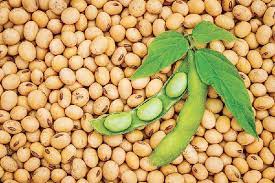
President of the National Poultry Farmers Association, Victor Oppong Adjei has bemoaned the hike in the price of soya beans on the market.
He lamented that the high price of the commodity is having a negative effect on the poultry industry and may end up collapsing the poultry industry if nothing is done about the situation.
Speaking on the Super Morning Show on Tuesday, he disclosed that previously, “Maize was sold at GH₵65 cedis per 60 kilo in the year 2020 but now it's GH₵180 cedis which, is about 277% increment.”
Also, “we were buying soya at GH₵150, its now GH₵305 and there’s no guarantee that the price is going to stabilize.”
“It is having a rippling effect on the poultry industry. Poultry is all about the feed so if we are missing soya it means we cannot prepare feed for the birds,” he explained.
He stated that the development "is collapsing the poultry industry. So, it’s no good to the country because poultry is contributing a lot to the economy and creating more jobs.
He said this on the back of the documentary, “The Broken Chain” which exposes the country's broken Soya Bean Value Chain and the shortfalls of government’s planting for food and jobs programme.
The documentary revealed that Ghana’s soya bean value chain is indeed broken, threatening the survival of the industry.
The market is currently dictated by foreign buyers and their agents who mostly pay for the beans above local market prices.
In an interaction with hosts Kojo Yankson and Winston Amoah, President of the Ghana Soyabean Association, Thomas Bello, blamed this on the government’s ‘Planting for Food and Jobs’ initiative.
“The success story of Planting for Food and Jobs has rather affected us negatively. What is happening is that it has increased the production of soya on the market and has attracted foreign buyers more and they buy everything off.
He stated that this in turn has affected local buyers who cannot compete with the foreign exporters in terms of pricing.
“Instead of us having a lot of beans on the market to buy, we end up not having any at all. We can't find the beans to buy. Indians are at the farm base competing with us,” he lamented.
He added that, “previously, the stock was not enough, but we could work a whole year but now for 2 years, we haven't been able to work effectively. We used to buy the soyabean between GH₵2500-GH₵3000 Ghana per tonne and the foreigners came in to buy above that and as at now, a tonne is at GH₵5000. We can't compete,” he added.
To deal with this, Mr. Bello suggested that “we need to control the system to make sure the local industries are fed before we send the surplus outside.”
Latest Stories
-
Power restoration fault suspected in Kumasi Central Market fire
42 minutes -
The 7-foot giant of Ngleshie Amanfro: Seven-foot Ghanaian Ephraim Saawa dreams of joining the national basketball team
1 hour -
Government promises support for Kumasi Central Market fire victims
1 hour -
Vibes The Movie: Big Ghun’s Ghanaian film earns five nominations at 2026 REFFA
2 hours -
MamaCare CEO warns unresolved conflicts among health workers could undermine maternal and neonatal care
2 hours -
Health professionals urged to translate medical knowledge into practice to save mothers
2 hours -
Conflicts among care providers linked to maternal, neonatal deaths – Expert
4 hours -
GIS marks 10th TIME conference, champions improved teaching practices
4 hours -
BRICS Or Balance? What Ghana’s bid really means
5 hours -
GPRTU wants full TRAFFITECH-GH implementation to start in 2027
5 hours -
Mahama announces plans to import electric wheelchairs for PWDs
5 hours -
KGL U17 Colts 2026: Western beat Prempeh Elite Academy to set up final final with Greater Accra Region
5 hours -
Late Solanke strike salvages 10-man Spurs draw at Man United
5 hours -
Gender Ministry to monitor welfare of Nana Akua Addo’s children amid domestic violence case
6 hours -
Benedict Okyere Yeboah: Ghana’s football problem goes beyond sacking a coach
6 hours