


Audio By Carbonatix
A high-school in the Chinese city of Shangqiu, Henan Province, recently attracted criticism for removing cafeteria chairs to motivate student to eat faster and dedicate more time to their studies.
Students returning from their summer break were shocked to learn that they would have to start eating standing up after their school’s administrators decided to remove the chairs and benches to deter students from lingering around after finishing their meal. A spokesperson for the Shangqiu school told reporters that management also plans to implement assigned spots for each student to stand in, to further discourage them from wasting time instead of studying.
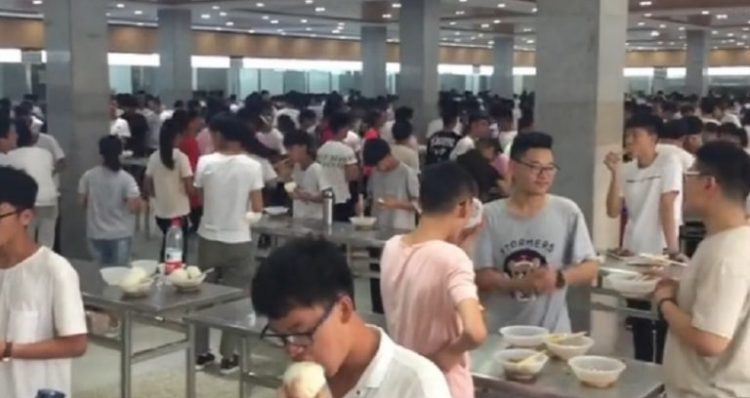
“Next, we’ll designate a lunch spot at the table for everyone to eat standing on their feet. On average, spending 10 minutes on lunch is enough,” a school employee says in a Pear video that recently went viral on Chinese social media.
The controversial move is believed to have been inspired by the draconian rules of “gaokao factories”, top Chinese high-schools infamous for using military-style disciplining techniques to prepare students for the Gaokao, China’s notoriously difficult college entrance exam. At some of these schools, classes start at 5:30 a.m. every day, and one of them even has two tanks installed at the entrance to motivate students.
Interestingly, a student from one of these gaokao factories commented that despite their grueling studying schedule, even they have cafeteria chairs.
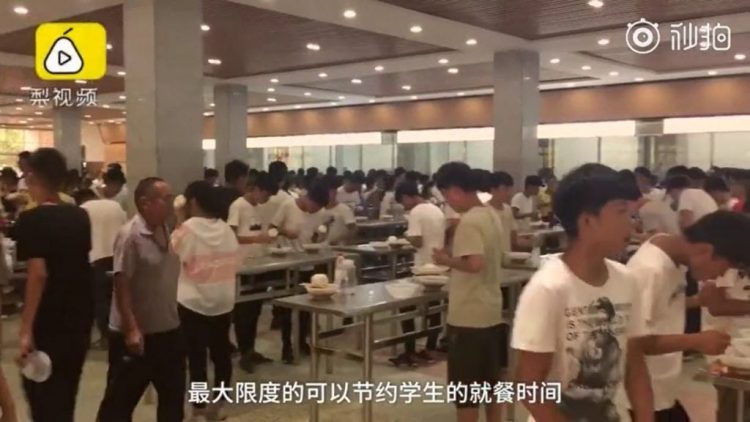
The move has drawn a lot of criticism online, with many people arguing that it will not influence students’ performance at all, and might even lead to unhealthy eating habits.
“They’ll probably shut down the dining hall in the second term at this rate because according to their logic, it’ll really improve productivity if no one eats at all,” one person commented on Weibo, China’s version of Twitter.
“Don’t prisoners sit while they eat?” another person asked rhetorically.
This is only the latest in a series of bizarre techniques Chinese schools have been testing in order to improve their performance. Back in May, we wrote about a school in Hangzhou that implemented face-reading technology to make sure students are paying attention in class.
Latest Stories
-
Mr President, Ghana was mentioned at the UN; why aren’t we talking about it?
4 hours -
Accra to convene Africa’s regulators and markets on tokenisation at AVAS 2026
4 hours -
Indian police accused of sexually harassing journalists at protest
4 hours -
Jeffrey Archer returns to his former school library
4 hours -
France to close up to 500 schools on Monday over student protests
5 hours -
The Paradox of Plenty — When every smartphone becomes a newsroom
5 hours -
Australia investigating Flydubai co-pilot’s links to country
5 hours -
GTA sensitises taxi drivers in ‘Know Ghana’ tourism campaign
6 hours -
Archbishop Agyinasare calls for responsible speech amid growing social media abuse
6 hours -
‘It will be inexcusable for gov’t not to honour payment of teachers’ arrears by 30th October’ – Haruna Iddrisu
6 hours -
Forbes’ World’s Best Employers 2026: No Ghanaian firm ranked among 900 companies
6 hours -
Electronic processing of teachers’ data: ‘The decision is the Controller’s’ – GES boss
6 hours -
Teachers’ Strike: Haruna Iddrisu questions paper-based processing of promoted teachers’ data
6 hours -
Savannah Region: Kunfusi bridge collapses again, leaving nearly 4,000 residents cut off
6 hours -
Teachers’ strike: GES targets Monday deadline to submit promotion data to Controller
7 hours