

Audio By Carbonatix
Renowned lawyer and Senior Partner at AB and David, Dr. David Ofosu-Dorte has attributed the country's high transport fare regime to the control of transport associations such as the Ghana Private Road Transport Union(GPRTU), Progressive Transport Owners' Association (PROTOA) and more.
According to him, the setting of transport fares in Ghana is not determined by the forces of demand and supply, rather by a 'cartel' of transport associations.
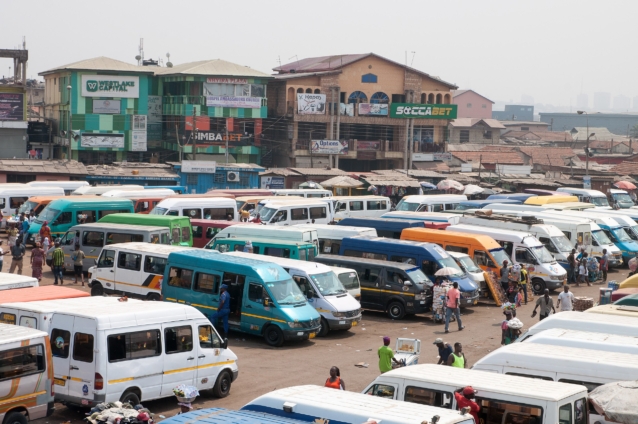
The cartel, he pointed out have hijacked lorry station terminals, popularly called “trotro stations” and arbitrarily determining prices for commuters.
Speaking on the Joy Business Economic Forum themed "Ghana at Risk: The Economic Fallout of a Distant Conflicts", Dr. Ofosu-Dorte explained that the control of transport terminals by the associations have contributed to their persistent influence in setting high prices.
"The truth is, transportation fares are not determined by market forces. What we have is a cartel, deciding how much to charge, and whenever there's a fuel price increase, they correlate it to fare increases, often unjustifiable," .
He criticized government's decision to hand over the control of transport terminals to private transport associations, arguing that the move has led to a lack of regulation in the industry.
Dr. Ofosu-Dorte further called for a change, to allow district, municipal and metropolitan assemblies to take control of lorry terminals.
"If you give the control of transport terminals to transport associations, you fail to control the country's transport system, including transport fares," he warned.
He argued that the consequences of the cartel-controlled system are far-reaching.
He expressed concerns that passengers are always left at the losing end with no choice but to pay the fares set by the cartel.
He disclosed that the modus operandi is being replicated in the transportation of foodstuffs causing food inflation to rise.
"Before, one trotro could do about six trips between Accra and Tema, but now they're doing only about two," Ofosu-Dorte reveals. "This reduction in frequency is a clear indication that the cartel is controlling the industry, and it's not just limited to transportation – they're also influencing food prices."
Dr. Ofosu-Dorte's assertions raise important questions about the need for regulation in Ghana's transportation industry.
Latest Stories
-
A source of excellence across generations – Vice President Opoku-Agyemang lauds Mfantsipim
18 minutes -
(Photos) Mfantsipim School launches historic 150th anniversary
41 minutes -
Knights and Ladies of Marshall group backs Catholic Bishops’ stance on anti-LGBTQ+
2 hours -
Bright Simons writes: All the Filla in the Ibrahim Mahama/E&P – Gold Fields Saga
2 hours -
Monetise Idiocy In Ghana
2 hours -
The Ghanaian prophet and the mysterious death of his scottish wife Charmain Speirs
3 hours -
Nearly 400 sentenced in Nigeria for links to militant Islamists
3 hours -
Ghana’s recovery supported by gold strength despite global oil price pressures – Standard Bank Research
3 hours -
Methodist Church hails Mfantsipim@150; calls for “fresh consecration” to excellence
4 hours -
‘Excellence is our inheritance’ – Nana Sam Brew-Butler hails Mfantsipim’s 150-year reign in leadership
4 hours -
Kwaku Azar writes: A-G vs OSP
4 hours -
Mfantsipim–Adisadel rivalry built excellence, not division – Sam Jonah
4 hours -
Vice President launches Mfantsipim’s 150 years of shaping Ghana’s greatest mind
5 hours -
I assure Otumfuo, Mahama will join him to commission KNUST Teaching Hospital by end of this year – Haruna Iddrisu
5 hours -
Barcelona dominate derby to extend La Liga lead
5 hours