

Audio By Carbonatix
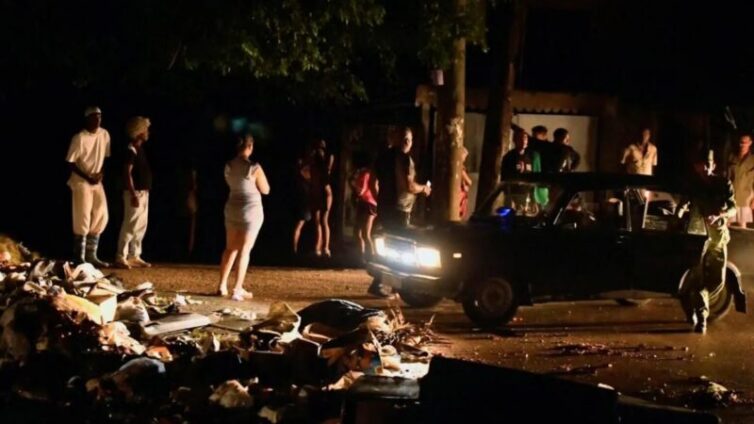
Hurricane Oscar has made landfall in eastern Cuba, packing winds of nearly 80mph (130km/h) on the third day of a nearly nationwide power outage.
On Friday, the island's main energy plant failed and knocked out electricity for 10 million people. Supply was partially restored on Saturday, before collapsing again.
Energy and Mining Minister Vicente de la O Levy said power would be restored for most by Monday night, while "the last customer may receive service by Tuesday".
The category 1 hurricane made landfall near the city of Baracoa at 17:50 local time (21:50 GMT), and could cause flash-flooding and mudslides in eastern areas, according to the US National Hurricane Center.
For many people since the outages began, it has been a few days with no air conditioning or fan. Food is now beginning to rot in fridges, and some families are having to cook with firewood. Many homes are without water as the supply depends on electric pumps.
Patience is wearing thin, certainly as expressed by many on social media.
It is an increasingly critical situation, with schools and businesses closed and fears for the continued functioning of hospitals.
There are fears that a significant storm would damage Cuba's creaking energy distribution infrastructure.
President Miguel Diaz-Canel said on Saturday that authorities in the east of the island were "working hard to protect the people and economic resources, given the imminent arrival of Hurricane Oscar".
Friday's total blackout came after the Antonio Guiteras power plant in Matanzas - the largest on the island - went offline around 11:00 local time.
The communist president has blamed the decades-long US embargo for preventing much-needed supplies and replacement parts from reaching Cuba.
Cuban Foreign Minister Bruno Rodríguez later echoed the president's words, posting on X that "if the embargo is lifted, there will be no blackouts. This way the US government could support the Cuban people... if it wanted to".
Cuba has also been hit this year by a drop in crucial fuel shipments from Venezuela.
On Friday, Cuban officials announced that all schools and non-essential activities, including nightclubs, were to close until Monday.
Non-essential workers were urged to stay home to safeguard the electricity supply, and non-vital government services were suspended.
"This is crazy," Eloy Fon, an 80-year-old pensioner living in central Havana, told the AFP news agency.
"It shows the fragility of our electricity system... We have no reserves, there is nothing to sustain the country, we are living day to day."
Bárbara López, 47, a digital content creator, said she had already "barely been able to work for two days".
"It's the worst I've seen in 47 years," she said. "They've really messed up now... We have no power or mobile data."
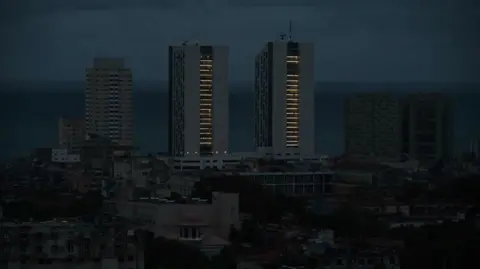
Prime Minister Manuel Marrero addressed the public in a televised message on Thursday, blaming deteriorating infrastructure, fuel shortages and rising demand for the electricity failures.
"The fuel shortage is the biggest factor," he said.
The head of the National Electric Union (UNE) Alfredo López Valdés also acknowledged the island had been facing a challenging energy situation, with shortages chiefly to blame.
Extended blackouts - particularly one this widespread - are always a tense time in Cuba.
In part, because the ability to keep the lights on represents a potential public order issue for the Cuban government.
In July 2021, thousands of protesters spilt into the streets in demonstrations sparked by days-long blackouts in much of the country.
The Cuban government has become increasingly aware that many on the island have lost a degree of fear over speaking out about the many daily problems they face.
Some are even prepared to take to the streets and chant anti-government slogans if conditions merit it.
In March, Hundreds of people in Cuba's second-largest city, Santiago, staged a rare public protest over chronic power blackouts and food shortages.
Latest Stories
-
Keta MP lays mother to rest
15 minutes -
We must put an end to cocoa politics – Victoria Bright
38 minutes -
There is a cabal in electricity sector determined to rip off Ghanaians – Prof Agyemang-Duah
51 minutes -
NSA pays January 2026 allowance to National Service Personnel
1 hour -
24-Hour Economy not just talk — Edudzi Tamakloe confirms sector-level implementation
1 hour -
Four arrested over robbery attack on okada rider at Fomena
1 hour -
NDC gov’t refusing to take responsibility for anything that affects Ghanaians – Miracles Aboagye
2 hours -
Parental Presence, Not Just Provision: Why active involvement in children’s education matters
2 hours -
24-Hour economy policy fails to create promised jobs – Dennis Miracles Aboagye
3 hours -
Ghana Embassy in Doha urges nationals to take shelter after missile attack
3 hours -
Government’s macroeconomic stability commendable, but we need focus on SME growth – Victoria Bright
3 hours -
Macro stability won’t matter without food self-sufficiency- Prof. Agyeman-Duah
3 hours -
How Virtual Security Africa is strengthening safety at Mamprobi Polyclinic
3 hours -
Ghana on right track macroeconomically, but structural gaps remain – Fred Dzanku
3 hours -
ADB MD honoured for impactful leadership at PMI Ghana engagement
4 hours