

Audio By Carbonatix
The IMANI Centre for Policy and Education (IMANI-Africa), has called for a bipartisan approach to solving the country’s recurrent energy sector challenges.
The call comes on the heels of government’s postponement of the implementation of the GHS1 energy sector levy from June 9 to June 16, aimed at addressing the country’s US$3.1 billion energy sector debt crisis.
Mr Felix Kwakye Ofosu, the Minister of State in charge of Government Communications, noted that it would be insufficient to clear the sector debt if the Electricity Company of Ghana collected 100 per cent of all revenue, hence the levy.
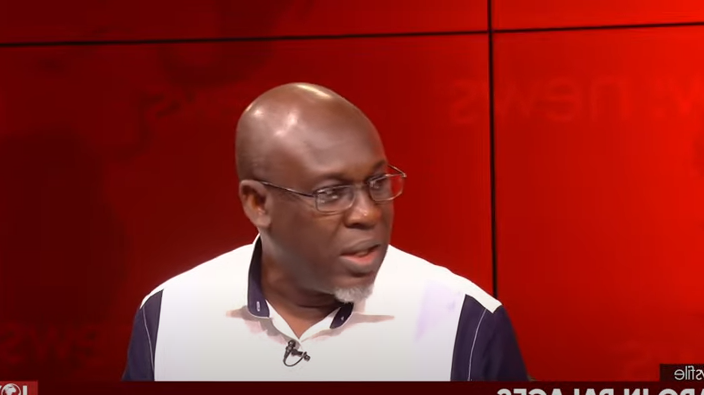
However, Mr Kofi Bentil, Senior Vice President of IMANI-Africa, said the longstanding debt was “a bipartisan problem of ineptitude,” that would not be solved through the imposition of taxes on Ghanaians.
Contributing to discussions on the country’s energy sector, he stated that for the past 20 years, Ghanaians had been constantly told by both political parties about the numbers, analysis of energy economics and fuel dynamics, yet no action had been taken to holistically solve the energy sector challenges.
The discussions centred on the introduction of a GHS1 levy, applicable to petrol, diesel and marine gas oil, heavy fuel oil, partially refined oil (naphtha) and liquefied petroleum gas.
“Before President Mahama’s first term, we’ve been coming towards ‘dumsor’ (intermittent power outages) and analysts warned that we’re going to hit a rock, [but] they sat down and made arguments back and forth,” Mr Bentil noted.
“We are suffering the effects of bad governance, and we are seeing it in our energy sector. If the same incompetence persists, I don’t see the changes we need to see to put the right people in the right places.”
The IMANI-Africa Senior Vice President, therefore, called for a bipartisan approach and the use of technocrats in finding lasting solutions to the challenges.
“The tax looks like it is necessary because somebody has to pay that bill. If we have a competent government, they will structure… we fought for deregulation. If they do their work well and tax us, we will pay on condition that these problems will not recur,” he said.
He lauded the Energy Sector Levy Act (ESLA), introduced in 2015, to consolidate several energy-related levies in the country and address various energy sector debts, including power and fuel supply liabilities.
Latest Stories
-
Gov’t sets 12%–12.5% guidance for 7-year bond as market re-entry gains momentum
12 minutes -
New political party to challenge dominance of two major parties
19 minutes -
Stroke survivors demand inclusive healthcare, urgent policy interventions nationwide
23 minutes -
China reaffirms unwavering ties with Ghana as Ambassador presents credentials
30 minutes -
Wrongful teacher postings undermine early childhood education in Upper East
35 minutes -
Five new envoys present Letters of Credence to Mahama
40 minutes -
BoG Governor says building buffers and lowering credit costs go together
46 minutes -
Fuel shock looms as petrol nears GH¢15.19, diesel GH¢17.85 from April 1
53 minutes -
From May to December, nothing works – Tomato traders reveal harsh reality for farmers
1 hour -
Ghanaian farmer can’t grow tomatoes because of lack of irrigation – Tomato Importers Association president
1 hour -
Social media firms must better enforce Australia under-16 ban, watchdog says
2 hours -
King Charles should meet Epstein victims, US lawmaker says
2 hours -
Belgian ex-diplomat appeals order to stand trial in Congo’s Lumumba murder
2 hours -
Cholera aid for African countries stalled by Iran conflict
2 hours -
The Oscars are leaving Hollywood
2 hours