

Audio By Carbonatix
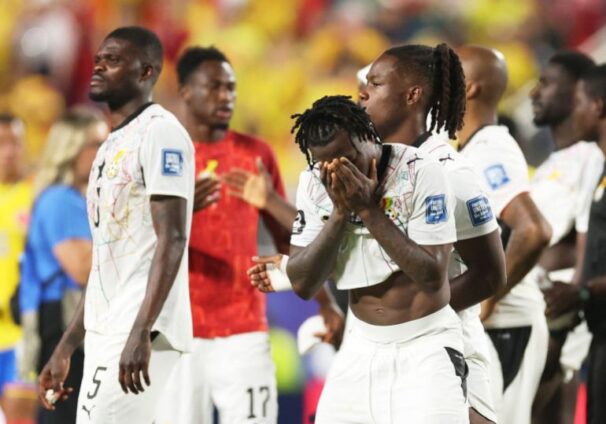
The fallout from Ghana’s 2026 FIFA World Cup elimination has exposed deep-seated frustration within the Black Stars camp. Players and leadership point to a mix of tactical vulnerability, offensive lethargy, and the difficult realities of a squad in transition. While the final 1-0 scoreline against Colombia suggests a narrow defeat, the post-match reaction indicates that systemic issues, rather than mere misfortune, sealed the team's exit. The result has ignited a sharp wave of critique from former national icons and current leaders regarding the team's trajectory.
Defensive Disruption and Structural Collapse
Head coach Carlos Queiroz identified an early injury as the catalyst for his team’s defensive unravelling. Marvin Senaya’s forced exit in the opening stages shattered the team's composure, leaving a gap that Colombia exploited.
"The moment Senaya came off, the team did not have the same discipline and organisation," Queiroz stated. "It took Alidu Seidu a few minutes to adjust, and they took advantage of that moment to score."
The defensive lapse proved costly when Luis Suárez, introduced after an injury to Jhon Córdoba, exploited space on the right flank. Suárez picked out the unmarked Jhon Arias at the far post, capitalising on a moment where teenage midfielder Caleb Yirenkyi lost his defensive assignment.
The manager emphasised that the emergency substitution prevented the side from stabilising during a critical phase. This tactical imbalance proved irrecoverable as the team struggled to regain its footing against a disciplined opponent.
Heavy Criticism Regarding Offensive Intensity
Former Black Stars captain Asamoah Gyan was blunt in his evaluation of the team’s failure to threaten the Colombian goal. He pointed to a lack of desire and tactical presence in the final third.
"Today's performance was below average, no sense of urgency," Gyan remarked. He argued that the team failed to commit enough players forward, stating, "We did not have men in the box."
The lack of creativity was particularly pronounced in the absence of Tottenham’s Mohammed Kudus. Ghana struggled throughout the encounter to pose a consistent threat, ultimately failing to register a single shot on target.
Gyan further highlighted the disparity in mindset between the two squads. While Ghana appeared stagnant, he observed that the South Americans pushed for a second goal rather than sitting on their lead. "Colombia were ahead but kept fighting to score more," he noted, ultimately concluding, "To summarise everything, Colombia deserved the win."
Appeals for Patience Amidst Transition
Captain Jordan Ayew has sought to shield the coaching staff from immediate backlash. He emphasised that the team is in the early stages of a fundamental shift. He argued that the two-month tenure of Carlos Queiroz is too short to expect a complete transformation.
"It's not good because we didn’t qualify," Ayew admitted. He urged the public to view the result through the lens of long-term development. "Don't forget we have a new manager. He just came two months ago and is trying to install his style, and now people are adjusting. We don't just adjust within one month or two months. Football doesn't work like that. You have to accept it."
Despite the disappointment, Ayew noted that the team’s defensive structure has shown progress under the new regime. He remains confident in the coach’s long-term vision. "The manager needs time; he's a very good manager. You need to give him time for him to do his job and hopefully, hopefully things will be better," the skipper added.
Fine Margins and Missed Chances
Defender Jerome Opoku echoed the sentiment that the match was decided by clinical efficiency. For Opoku, the frustration stems from the team’s failure to capitalise on their scoring opportunities, a recurring theme throughout the campaign.
"I'll just say the little details of the game. They took their chance. We had a couple of chances. We didn't take ours, and they won the game. So, that's really it," Opoku explained.
While the squad arrived with a singular ambition to win, Opoku acknowledged they failed to execute when it mattered most. "The game plan was to win against Colombia. We didn’t, so congratulations to Colombia," he said.
A Call for Strategic Consistency
As the Black Stars depart Kansas City, the challenge ahead lies in reconciling these calls for patience with the urgent need for competitive results. While individual defensive efforts and tactical adjustments remain works in progress, the national team must now navigate the difficult process of cementing an identity that can sustain them through the next qualification cycle. For a nation with such a storied footballing history, the road back to continental and global relevance will likely be defined by how effectively leadership balances this long-term restructuring with the high-stakes demands of international tournament football.
Pressure Mounts for African Renaissance
As focus shifts toward the upcoming Africa Cup of Nations qualifiers, the pressure on the Ghana Football Association and the technical team will intensify. For the passionate Ghanaian supporter base, the transition period must yield tangible progress in team cohesion and offensive creativity. The challenge is not merely tactical; it is psychological. Regaining the trust of the nation will require the Black Stars to demonstrate that they can adapt under pressure and transform their defensive foundation into the dynamic, attacking football that remains the hallmark of the country’s sporting pride.
Latest Stories
-
Bond market: Turnover declined by 28% to GH¢1.56bn
4 minutes -
Volta Region National Public Speaking contest advances drug prevention conversation
9 minutes -
New health training facility at Ampoma-Jema to address admission shortfalls, but Minister flags missing amenities
34 minutes -
Black Challenge unveiled with sights set on Amputee World Cup glory
54 minutes -
Pay striking teachers before expressway spending, Dr Kingsley Agyemang tells government
2 hours -
Customs intercepts assault rifle, two pistols and 610 rounds of ammunition at Tema Port
2 hours -
PKO boxers secure wins at Odwira Festival
2 hours -
South Tongu Records Rise in Teenage Pregnancy
2 hours -
Cabinet threw out US health compact faster than anything I’ve seen – Mahama
2 hours -
MoFA urges Finance Ministry to reverse World Bank food programme withdrawal over GH¢643m commitments
2 hours -
NAGRAT demands signed timelines before calling off strike
3 hours -
National Investment Quiz: West Africa SHS, St. Louis SHS advance to semi-finals
3 hours -
Shatta Wale appeals to Mahama for balanced framework to tackle social media abuse without stifling free speech
3 hours -
Education Ministry urges data-driven talks to resolve teacher impasse
3 hours -
‘What we wanted was money to buy medications’ – Dr Nawaane on US health support
3 hours