

Audio By Carbonatix
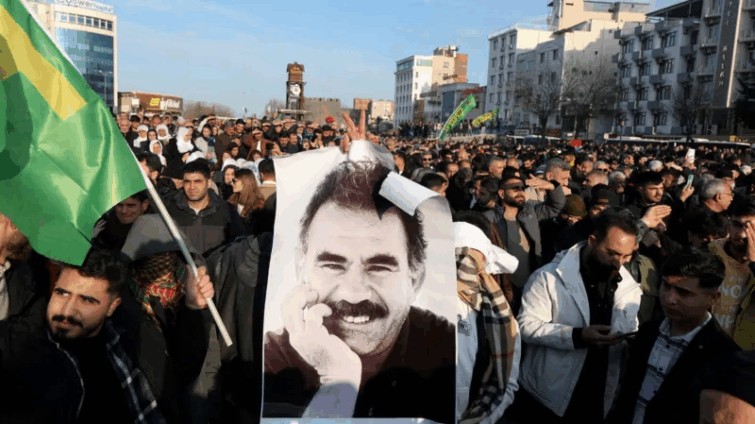
Outlawed Kurdish group the PKK, which has waged a 40-year insurgency against Turkey, has announced it is laying down its arms and disbanding.
The move followed a call in February by the group's jailed leader, Abdullah Ocalan, for the organisation to disband. The group is banned as a terrorist group in Turkey, the EU, UK and US.
The PKK insurgency initially aimed to create an independent homeland for Kurds, who account for about 20% of Turkey's population. But it has since moved away from its separatist goals, focusing instead on more autonomy and greater Kurdish rights.
More than 40,000 people have been killed during the conflict.
In February, Ocalan, 76, called on his movement to lay down its arms and dissolve itself. The PKK leader has been in solitary confinement in prison on an island in the Sea of Marmara, south-west of Istanbul, since 1999.
Ocalan wrote a letter from prison in February saying "there is no alternative to democracy in the pursuit and realisation of a political system. Democratic consensus is the fundamental way."
It is unclear what Ocalan and his supporters will get in return for disbanding but there is speculation that he may be paroled.
Kurdish politicians will be hoping for a new political dialogue, and a pathway towards greater Kurdish rights.
Both sides had reasons to do a deal now.
The PKK has been hit hard by the Turkish military in recent years, and regional changes have made it harder for them and their affiliates to operate in Iraq and Syria.
President Erdogan needs the support of pro Kurdish political parties if he is to be able to run again in Turkey's next presidential election, due in 2028.
The decision to disband was an important step towards a "terror-free Turkey", and the process would be monitored by state institutions, a spokesperson for President Tayyip Erdogan's AK Party said, according to Reuters news agency.
Winthrop Rodgers, from the international affairs think tank Chatham House, said it would take "a major democratic transition by Turkey" to accommodate demands from Kurdish political parties.
There has been "some goodwill" from some Turkish leaders in recent months, Rodgers said, which allowed the PKK disbandment to play out.
He added: "But whether that extends to the major changes needed to ensure full Kurdish participation in politics and society is far less clear.
"In a lot of ways, the ball is in Turkey's court."
Latest Stories
-
Trump tells the UK and other countries ‘go get your own oil’ from Strait of Hormuz
14 minutes -
Black Stars and the Art of Sacking: When the Coach Must Always Go First
23 minutes -
Ghana to roll out digital maps under new land sector reforms
30 minutes -
Ghana not fully ready for World Cup – Sports Minister
35 minutes -
NPA steps up “Stay Back, Stay Safe” campaign in Eastern Region
37 minutes -
Ethical Dilemma in Banking: The Case of a Teller in the Cash Cage
52 minutes -
Emceeing is 20% talk, 80% event management – Kafui Dey
53 minutes -
Supreme Court sets April 21 to hear Wesley Girls’ religious rights case
58 minutes -
UniMAC-IF holds workshop on Vertical Revolution: Mastering micro-dramas for African digital economy
1 hour -
Pan-African Progressive Front hosts landmark online conference ahead of Geneva Forum
1 hour -
Civil society is not an adversary of gov’t, but partners in nation-building – Mahama
1 hour -
Defeamekpor calls for interdiction of Land Ministry’s director of finance
1 hour -
Atebubu Paramount Chief visits NPA boss to strengthen ties
1 hour -
TGMA Group of the Year nominees to be announced this week – Robert Klah
1 hour -
Ex-Effia MP writes: Big Push for infrastructure, Small Push for people
1 hour