Government has moved to reassure investors that Ghana remains committed to maintaining a stable and predictable mining environment.
Minister for Lands and Natural Resources, Emmanuel Armah Kofi Buah, dismissed suggestions of a broader move towards nationalisation as debate over mining lease renewals continues.
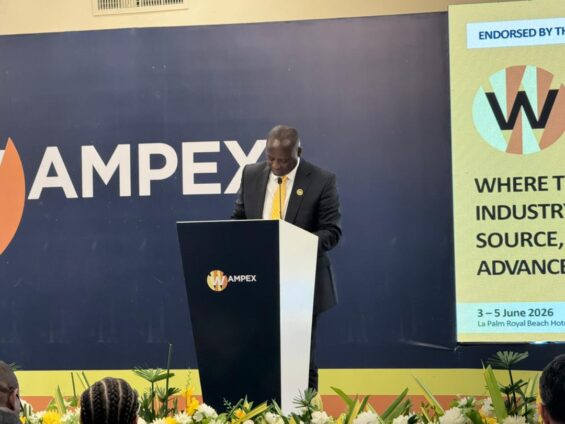
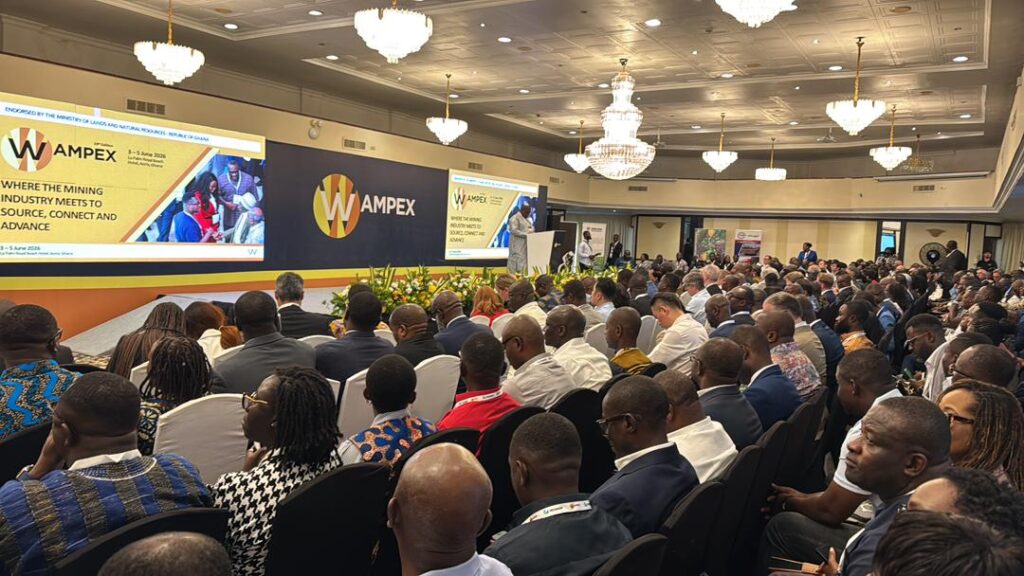
Speaking at the West African Mining and Power Exhibition (WAMPEX) 2026 in Accra, the Minister for Lands and Natural Resources, Emmanuel Armah Kofi Buah, said Ghana's mining sector remains anchored on transparency, legal certainty and responsible investment.
His comments come amid heightened discussions about the future of some mining leases and growing interest from investors seeking clarity on government policy toward the extractive sector.
Addressing industry players, Mr. Buah stressed that evolving expectations from communities, investors and global markets require governments and mining companies to adapt while prioritising environmental, social and governance standards.
“We must also recognize that the expectations of investors, communities, and global markets are changing. They are changing very fast, and what is required for us is to also change as fast as that, guided by environmental, social, and governance considerations,” he said.
According to the Minister, communities are increasingly demanding greater accountability and shared benefits from mining activities, while investors are rewarding jurisdictions that demonstrate stability, transparency and responsible governance.
“In this context, responsibility is not a burden; it's a competitive advantage for our partners and investors,” he stated.
Seeking to allay investor concerns, Mr. Buah reaffirmed government’s commitment to providing a conducive environment for mining investment.
“Ghana remains committed to providing a stable, predictable fiscal and legal certainty and transparent environment for investment,” he said.
“So, forget about all the noise you are hearing. You are hearing it from me. That is government policy. That is what we are focusing on.”
The Minister also rejected suggestions that government intends to nationalise mining assets, stressing that the administration is instead pursuing a collaborative approach that balances investor returns with national development objectives.
“Why investors get a good return on their investment and in return leave a lasting legacy of empowerment, value addition and expertise. It cannot be nationalism of minds to investment,” he said.
“We say partner with us in building value-added industries.”
Mr. Buah called for stronger collaboration among investors, policymakers and regional institutions to ensure that Ghana's mineral resources contribute to industrialisation, job creation and long-term economic transformation.
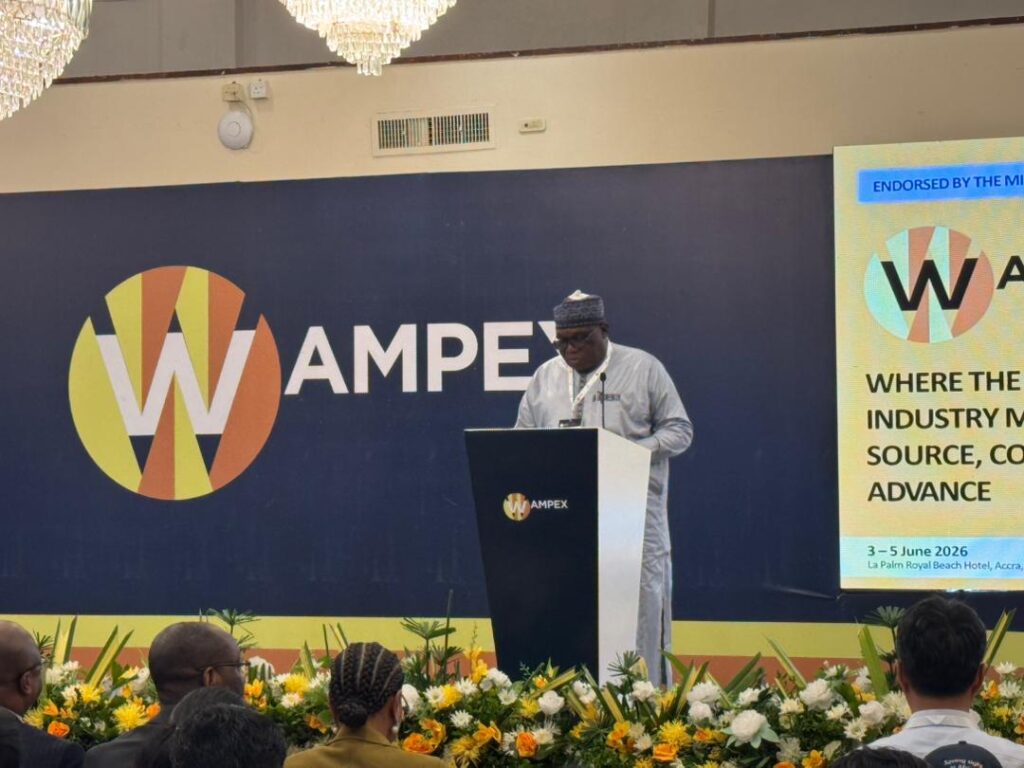
The call for greater investor confidence and responsible resource governance was echoed by Nigeria's Minister of Solid Minerals Development, who delivered the keynote address at the conference.
He noted that while West Africa is richly endowed with strategic minerals including gold, lithium, iron ore, bauxite and rare earth elements, the region has historically exported raw materials while value addition, manufacturing and industrial wealth creation took place elsewhere.
He argued that the global transition to clean energy, electric mobility and digital technologies presents a unique opportunity for West Africa to reposition itself within global value chains through responsible mining, local beneficiation and strategic energy development.
“This moment therefore presents a historic opportunity for our region to reposition itself not merely as a source of raw materials, but as an active participant in global value chains through responsible mining, local beneficiation, regional industrial integration, and strategic energy development,” he said.
The Nigerian minister further stressed that investors are increasingly seeking jurisdictions that offer stability, transparency, predictability and institutional credibility.
He called on governments across the region to strengthen regulatory frameworks, promote responsible mining practices and invest in reliable power infrastructure, describing these as essential pillars for attracting long-term investment and accelerating sustainable development.
“Investors seek stability, transparency, predictability, and institutional credibility. Governments therefore have a responsibility to create enabling environments that encourage long-term investments while safeguarding national interests and community welfare,” he added.
Running across two full conference days, the WAMPEX conference will be organized around the central theme: "How can responsible mining and power accelerate West Africa's sustainable development?" Sessions will address some of the most pressing questions facing the sector, including fiscal regimes and state ownership, critical mineral strategy, mine-to-market traceability, community development, security across the Sahel region, and the financing of West Africa's mining and energy sectors.
The programme includes panel discussions, keynote addresses, one-on-one sessions and sponsor presentations across three parallel conference halls, giving delegates the breadth to engage with the topics most relevant to their work.
DISCLAIMER: The Views, Comments, Opinions, Contributions and Statements made by Readers and Contributors on this platform do not necessarily represent the views or policy of Multimedia Group Limited.
DISCLAIMER: The Views, Comments, Opinions, Contributions and Statements made by Readers and Contributors on this platform do not necessarily represent the views or policy of Multimedia Group Limited.