

Audio By Carbonatix
The National Road Safety Authority (NRSA) has described the legalisation of motorcycles for commercial use as a positive step towards improving professionalism and addressing rider indiscipline nationwide.
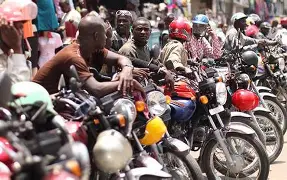
The Deputy Director of Planning and Programmes, Henry Asomani, told the Ghana News Agency in an interview that reckless practices by some motorcycle operators, including driving against traffic, running red lights, and using pedestrian walkways, had become a serious road safety hazard.
He said those behaviours were partly borne out of the past illegality of commercial motorcycle operations, which forced riders to avoid enforcement by skirting rules.
“Initially, the Okada business was illegal, so they tried to dodge, and that is why they use all these areas. They don’t stop at red lights; they cross at unauthorised places like pedestrian walkways, zebra crossings, etc. I've seen some motorcycle riders even using footbridges, which they are not supposed to use,” Mr Asomani said.
The newly passed Road Traffic (Amendment) Bill, 2025, formally legalises the use of motorcycles, tricycles, and quadricycles for commercial passenger transport once it is assented to by the President and gazetted.
The law also amends the Road Traffic Act, 2004 (Act 683), to accommodate these changes and update provisions on alcohol limits and vehicle safety standards.
The legislation is a culmination of years of discussions and regulatory reviews aimed at formalising one of the country’s most pervasive but formerly unlawful transport practices.
Authorities have been working to revise the Road Traffic Regulations 2012 (L.I. 2180), which previously prohibited motorcycles from carrying fare-paying passengers, to reflect the realities on Ghana’s roads and establish enforceable safety and licensing standards.
Mr Asomani said the legal shift could help reduce the tendency of riders to evade law enforcement and improve overall compliance with traffic rules.
He said when riders were properly licenced, identifiable, and regulated, enforcement became easier and more effective.
“We think that will also help them,” he said, adding that the forthcoming Legislative Instrument (LI) would outline procedures for training, licensing and operations under the new regime.
The NRSA and other road safety stakeholders are actively preparing this year to prioritise rider discipline under the new legal framework, with expectations that a regulated environment will foster safer behaviours among commercial motorbike operators.
Latest Stories
-
Kwaku Azar writes: A-G vs OSP
19 minutes -
Mfantsipim–Adisadel rivalry built excellence, not division – Sam Jonah
44 minutes -
Vice President launches Mfantsipim’s 150 years of shaping Ghana’s greatest mind
1 hour -
I assure Otumfuo, Mahama will join him to commission KNUST Teaching Hospital by end of this year – Haruna Iddrisu
2 hours -
Barcelona dominate derby to extend La Liga lead
2 hours -
Gov’t to roll out free special education for persons with disabilities from July 1 – Education Minister
2 hours -
Importers and Exporters Association declares full support for Publican AI port system
2 hours -
“We used it to test our officiating officials’ readiness” – Bawah Fuseini after CAA Athletics event
3 hours -
Volleyball emerges as Ghana’s fastest rising sport
3 hours -
National Sports Fund needs strong leadership from the top – Administrator David Wuaku
3 hours -
JoySports Exclusive: Steve McLaren in talks with GFA after expressing interest in Black Stars job
3 hours -
Fire guts auto parts warehouse at Bubuashie, one fire officer injured
3 hours -
I owe my victory to coach Ofori Asare – Allotey after winning WBA Africa Gold Super Flyweight belt
3 hours -
Church of Pentecost supports over 2,000 BECE candidates in Obuasi with career guidance seminar
5 hours -
Brandon Asante and Coventry all but promoted to Premier League despite Sheffield Wednesday draw
5 hours