

Audio By Carbonatix
The co-hosts are likely to put pragmatism above style under Javier Aguirre in a home atmosphere that can be both an inspiration and a burden
The plan
Mexico will arrive at their home World Cup carrying a strange mixture of excitement, pressure and the need to reconnect with themselves. Co-hosting the tournament alongside the United States and Canada spared them the grind of a long qualifying campaign, but it also removed the chance to build competitive rhythm. That is why their manager, Javier Aguirre, has turned friendlies and regional competitions into character tests.
El Vasco’s footballing idea is far more pragmatic than aesthetic. Mexico does not try to dominate through endless possession; they play with intensity, aggressive pressing, and quick transitions. Aguirre wants to make his team uncomfortable to face, something that became evident in the recent friendlies against Portugal and Belgium. As he puts it: “At a World Cup, the team that plays the prettiest football does not always win. The team that knows how to compete does.”
A flexible 4-3-3 that can become a 4-2-3-1 or even a 4-4-2 depending on the opponent is most often used. Edson Álvarez operates as the midfield anchor, Erik Lira acts as the silent worker who balances everything while Gilberto Mora, Brian Gutiérrez and Álvaro Fidalgo provide movement between the lines. Out wide, Alexis Vega and Roberto Alvarado bring pace and unpredictability, while Raúl Jiménez and Armando González alternate as attacking references.
Defensively, Mexico have more clarity. Johan Vásquez has established himself as the most reliable centre-back thanks to his Serie A experience with Genoa, while César Montes provides leadership and aerial dominance. At full-back, Jesús Gallardo and Israel Reyes maintain the profile of the modern Mexican defender: attack-minded, intense and constantly involved on both sides of the pitch, especially Reyes, who has adapted from centre-back to right-back.
Defensively, Mexico have more clarity. Johan Vásquez has established himself as the most reliable centre-back thanks to his Serie A experience with Genoa, while César Montes provides leadership and aerial dominance. At full-back Jesús Gallardo and Israel Reyes maintain the profile of the modern Mexican defender: attack-minded, intense and constantly involved on both sides of the pitch, especially Reyes, who has adapted from centre-back to right-back.
But the biggest storyline surrounding Mexico is still Raúl Jiménez. Beyond football, he represents resilience. The Fulham striker recently revealed the physical nightmare he endured before the 2022 World Cup in Qatar. “It was very difficult, because it started in 2019 … I played from September or October 2019 with pubalgia,” he told Claro Sports. The situation worsened after an injection caused an infection: “One night I woke up in a lot of pain … I practically couldn’t walk.” But he rejected suggestions he should skip the World Cup and focus on recovering properly. “After everything I had gone through, for someone to tell me: ‘You can’t,’ it was impossible for me to accept it,” Jiménez said.
Such resolve shows why Aguirre continues to value him so highly. Mexico may no longer boast the most talented generation of players, but they do have an experienced squad used to constant criticism and the pressure of playing at home. The biggest challenge will be psychological: turning the pressure of the Azteca into positive energy rather than anxiety.
The coach
Javier Aguirre will manage his third World Cup with Mexico after Korea/Japan 2002 and South Africa 2010. Few coaches understand the pressure surrounding El Tri better than him. With managerial experience in Spain, Japan and the Middle East, “El Vasco” has always been known as a pragmatic, direct and emotionally strong coach. He does not promise spectacle, he promises competitiveness. His return in 2024 was intended to restore character and stability after years of inconsistency. Aguirre emphasises a robust mentality: “You have to learn how to suffer,” he says. Rather than building a dazzling national team, he wants one that is resilient, uncomfortable to face and tough.
Star player
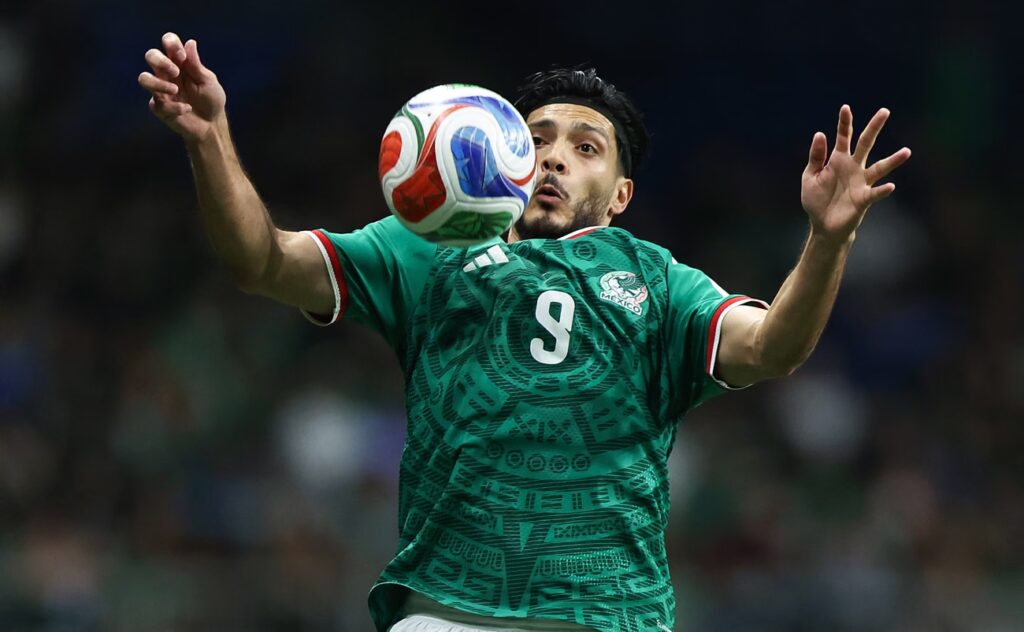
Raúl Jiménez remains the emotional face of the Mexican national team. The Fulham striker represents far more than experience and goals: he symbolises survival. After suffering a fractured skull in 2020 and battling the physical problems that shaped his road to Qatar 2022, many believed he would never truly return. Jiménez never accepted that idea, though. His ability to play with his back to goal, combine with teammates and deliver in key moments remains crucial for Mexico. Beyond football, though, Jiménez brings quiet leadership and a story that commands respect inside the dressing room.
One to watch
Armando González could become one of the surprises of the tournament. The Chivas striker exploded on to the scene after winning the Golden Boot in the Apertura 2025 and finishing runner-up in the scoring charts during Clausura 2026. His “La Hormiga” nickname came from a childhood story: he used to be afraid of ants, yet now he plays without fear: aggressive, relentless and constantly pressing defenders. His development has already attracted European attention, with clubs such as Borussia Dortmund and Feyenoord monitoring his progress. Young and imperfect, he possesses something difficult to teach: constant hunger and the personality to compete under pressure.
Unsung hero
Erik Lira rarely makes headlines, but has become a fundamental piece of the national team. He organises, recovers possession, balances the midfield and handles the invisible work that allows others to shine. Aguirre particularly values his tactical discipline and competitive mentality. After facing Portugal and Belgium, Lira said something that resonated with Mexico supporters: “Anyone who wants to come to the Azteca and win is going to leave dead.” He also said recently: “I raised my hand so Javier knows I’m another soldier ready for war.” That line captures him perfectly: he does not seek the spotlight, but he is always ready for the fight.
Probable starting XI
México: (4-3-3) Raúl Rangel - Israel Reyes, César Montes, Johan Vásquez, Jesús Gallardo - Álvaro Fidalgo, Erik Lira, Gilberto Mora - Roberto Alvarado, Raúl Jiménez, Brian Gutiérrez
What to expect from the fans
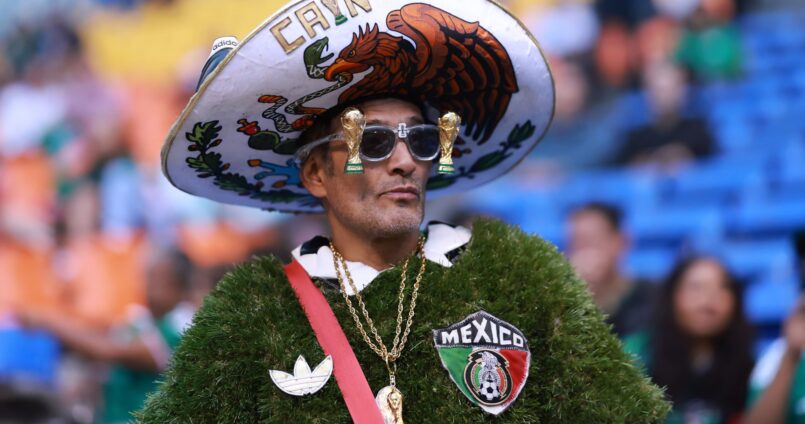
Mexico will have one of the largest and loudest fan bases at the World Cup, especially at the Estadio Azteca. The atmosphere is usually a mix of celebration, pressure and national pride: green shirts, oversized sombreros, flags and non-stop chants. But Mexico supporters can also be demanding and impatient. Against Portugal, sections of the crowd booed their own team and ironically chanted “olé” for the opposition when the performance failed to impress. The Azteca can become an emotional advantage or a psychological burden if the team start showing doubt. The relationship between the national team and its supporters has grown increasingly tense due to the lack of success at major tournaments.
This article is part of JoySports' collaboration with The Guardian. The cooperation enables readers to access team news, previews, and more from all 48 teams that qualified for the FIFA World Cup 2026.
Latest Stories
-
Stronger GTA-private sector partnership needed to grow tourism – GHATOF
4 minutes -
Amazon eyes Ghana for broadband expansion after talks with Mahama
49 minutes -
National Investment Quiz 2026: Six schools qualify for quarter-finals
1 hour -
‘Do not let Russia pay for its madness with lives of your people’ – Zelensky to Ghana, 46 other countries
1 hour -
6,079 promotion cases fully processed and paid – CAGD says amid nationwide teachers’ strike
2 hours -
Teacher unions to meet government Monday over nationwide strike
2 hours -
Photo story: Republic Bank-JoyNews Habitat Fair clinic wraps up after three days of housing solutions, expert engagement
2 hours -
National Peace Council urges investment in youth to sustain Ghana’s peace
2 hours -
Afenyo-Markin urges youth to speak up against injustice
3 hours -
CAF annuls Edo Queens victory, orders WAFU B final to resume from extra time
3 hours -
Interior Minister urges traditional authorities to enforce anti-bushfire bye-laws
3 hours -
3rd Republic Bank-JoyNews Habitat Fair Clinic ends on a high note after three days of strong patronage
3 hours -
Ten climbers missing after avalanche hits Himalayan base camp
4 hours -
NPP had more permanent fuel relief measures than current GH¢2 diesel cut – Amin Adam
4 hours -
Photos from the 3rd Republic Bank-JoyNews Habitat Fair Clinic
4 hours