

Audio By Carbonatix
Tax collection from Mobile Money operations amounted to ¢250 million last year, according to a report by the Ghana Chamber of Telecommunications.
At the same time, the telecom industry’s total tax revenue to government hit ¢3.6 billion in 2020, making it one the biggest contributing sectors to government revenue.
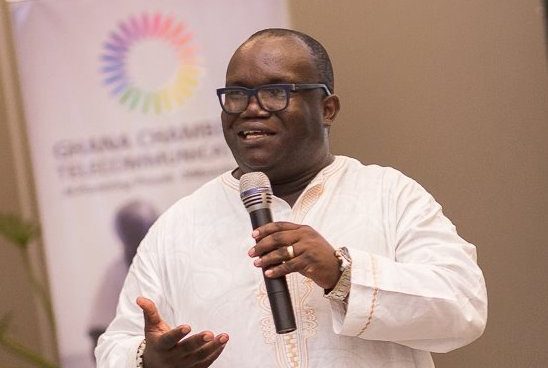
Speaking at a Knowledge Forum, Head of Research and Communications at the Chamber, Derick Laryea said the ¢250 million is separate from other taxes that the government collects from telecommunication firms.
Mr. Laryea therefore argues that the sector cannot be overburdened with direct taxes on Mobile Money since it is already paying such huge amount to government.
He said any direct tax on mobile money transaction will make it counterproductive.
“Based on the results of this study, the eight participating companies in 2020 made a total tax contribution of over ¢3.6 billion in the 2020 calendar year. This represents total taxes borne, collected and other payments and remittances made to central government and other allied agencies” he told the forum.
The report also indicates that, Top Tax Lines Corporate Income Tax (CIT) constituted the largest tax type paid. This tax relates to taxes borne by the members of the chamber.
Corporate income tax rate is 25% and the industry contributed in monetary terms ¢976 million, which represents approximately 26.8% of the TTC. Value Added Tax (VAT) was the second of the top tax lines of the industry, representing approximately 15.1% of the TTC, which in money terms was over ¢550 million.
This tax line, Mr. Laryea said although is a pass-through cost, and can be passed on to final consumers, puts an administrative obligation on the chamber members to correctly administer, collect and pay them over to government.
Communications Service Tax (CST) also stood as another of the top tax lines in the study, representing 14.5% of the TTC, which in monetary terms was over ¢525 million. This is an industry specific tax and was introduced in 2008 to raise additional revenue from communications services rendered by telecom operators to their customers.
In 2013, the law was amended to further expand the scope of services subject to CST to include interconnect services, and in 2020 the talk tax rate was reduced to 5%.
Other product taxes, regulatory fees and the Universal Service Fund (USF), which mainly consist of the 1% annual net revenue, required to be paid to the National Communications Authority (NCA) on a quarterly basis and an additional 1% of total revenue required to be paid into an electronic fund set up by the government (GIFEC) was approximately 3.8% of the TTC, representing ¢138 million. These statutory payments the study said are based on the top line of the businesses and are payable whether a business makes profit or not.
Speaking at the same event, Manager of Tax Audit at Auditing and Accounting firm, KPMG, Gordon Dardey called for a collaboration between government and the telecommunication firms to share cost for tax collection purposes.
According to him, this could be part of the digital drive to increase domestic revenue.
Latest Stories
-
Henderson scores twice as Chelsea thumb Bournemouth
5 minutes -
Photos: Mentapulse Africa convenes health and labour summit to address talent retention
17 minutes -
Mahama inspects Nkokɔ Nketenkete plant, eyes Bechem as chicken capital
24 minutes -
Ghana not seeking full BRICS membership, applying as Partner Country – Ablakwa
25 minutes -
Woman injures three people in third Poland school knife attack in a week
27 minutes -
Ghana should join BRICS as partner, not member – NPP Bono East Regional Secretary
27 minutes -
Ghana High Commission warns nationals in South Africa over protests in Johannesburg, Durban
28 minutes -
Mahama praises Roads Minister for keeping Big Push contractors on their toes
33 minutes -
World Cup Visa Scandal: ‘My client has not collected money for visas’ – Ampofo Ankrah’s lawyer
45 minutes -
US immigration officials defend ICE agents who shot man in same car as child
54 minutes -
Commentator Katie Zacharia picked as new White House press secretary
58 minutes -
Drone strike by Sudan paramilitary kills 41 near Ethiopian border, rights group says
1 hour -
King warns malicious online actors are evolving tactics
1 hour -
Several injured as Saudi capital airport reportedly hit again
1 hour -
Christa Pike discharged from hospital and returned to prison, her lawyers say
1 hour