

Audio By Carbonatix
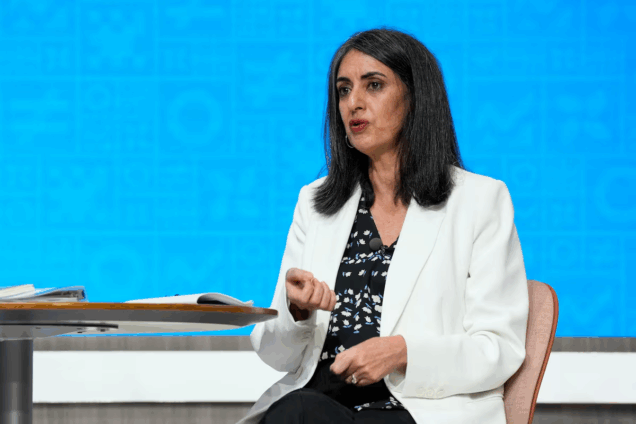
Morocco will adjust its upcoming budget to prioritise spending on health and education as well as allocate some additional funds to reduce regional inequalities, Finance Minister Nadia Fettah Alaoui told Reuters.
Youth-led protests spread across the kingdom in recent weeks, revealing deep-seated anger over poverty and public services behind a storyline of ambitious infrastructure projects and modern stadiums opening ahead of the 2030 FIFA World Cup.
"What we've heard from the youth protests is that they want a better education and health," Alaoui said earlier this week, speaking on the sidelines of the International Monetary Fund and World Bank annual meetings in Washington.
Alaoui said the government spends just under 9% of GDP on those two areas, and authorities would have to get better at communicating what they are actually doing.
But there was room in the budget to reprioritize upcoming projects, such as getting local hospitals up and running to ensure people don't have to travel long distances to get treatment.
"(We will) reallocate for short-term, quick wins, because people cannot wait for the reform to happen," she said, adding that exact details could not be provided ahead of the presentation of the budget to the parliament. The budget is usually presented and debated in parliament after late October.
It will also contain measures to support a push by King Mohammed VI to reduce regional inequalities by giving greater attention to the mountain and oasis regions, Alaoui said.
This effort would mean "probably some additional money, but much more focused on efficiency coordination and not putting at risk at all the macroeconomic balances," she said.
Asked about future plans for Morocco's foreign exchange regime, Alaoui said the ministry was first of all going to launch medium-term inflation targeting and disclose that target in late 2026 or early 2027, which she expected to be between 2%-3%.
Morocco currently publishes its inflation target only annually rather than projecting an aim further in the future.
"Floating (the currency) is another step," she said, adding that small and medium-sized enterprises in the country were not ready for that.
"They're not prepared - the big companies are prepared. The financial sector can be exposed, but we still need to keep the house in order for the smallest one and prepare them for this."
The dirham is pegged to a currency basket of 60% euro and 40% U.S. dollar, but allowed since 2018 to float in a 2.5% band on either side.
Asked about international debt sales, Alaoui said the government had no immediate plan to return to the market, though she expected Morocco would remain a regular issuer.
Latest Stories
-
Enforce surcharges, modernise audits to curb GH¢100bn losses – Audit Service urged
5 minutes -
Six persons denied bail in 3.9-tonne alleged cocaine case
13 minutes -
Court jails man 25 months for setting three vehicles ablaze
22 minutes -
Miner jailed 24 months for stealing GH¢4,300
31 minutes -
Father jailed for defiling 13-year-old daughter in Tarkwa
40 minutes -
Prosperity Architecture: Drawing II – Organising institutions for shared prosperity
49 minutes -
First female prime minister named in Morocco after winning elections
58 minutes -
Burkina Faso’s junta leader opens major gold refinery to keep mining profits at home
1 hour -
Nigeria’s Ben Dancer completes 168-hour dance marathon, awaits Guinness verdict
1 hour -
I’m now a minister of God – Actress Jumoke Odetola announces
1 hour -
Banks accounted for 86% total enquiries for credit in 2025
1 hour -
‘I paused for my mom’ – Kizz Daniel opens up on music break
2 hours -
Habib Iddrisu rejects argument that court cases bar Parliament from investigating drug scandal
2 hours -
Over 25m enquiries conducted by financial institutions for credit appraisals, others in 2025
2 hours -
Venezuelan man shot by ICE in Texas is charged with assault
2 hours