

Audio By Carbonatix
A majority of Ghanaians who believe the double-track System has reduced the quality of Senior High School (SHS) education support the government’s proposal to borrow funds to construct additional schools and phase out the system, a poll by the Institute of Economic Affairs (IEA) has found.
According to a report issued by the IEA on Tuesday, September 15, 60.8 per cent of respondents who said the double-track system had reduced education quality support government borrowing to construct additional SHS infrastructure.
However, 38.4 per cent of respondents in the same group oppose the proposal, reflecting concerns over Ghana’s public debt burden.
The IEA said the findings suggest that while many Ghanaians see infrastructure expansion as necessary to improve the quality of secondary education, there are also concerns about the financial implications of using borrowed funds.
“This finding suggests that a significant proportion of those dissatisfied with the quality of education see expanded infrastructure as an important means of improving the quality of secondary education,” the IEA said.
The institute, however, noted that those opposed to additional borrowing would prefer other ways of financing the construction of schools.
“For these respondents, expanding SHS infrastructure through additional borrowing could further increase pressure on public finances.
"They would therefore prefer the government to explore alternative financing mechanisms for the construction of additional school infrastructure,” it said.
The findings form part of a nationwide IEA poll on public perceptions of the double-track system and the government’s plan to borrow to construct additional SHS infrastructure and ultimately eliminate the system.
Overall, 64.7 per cent of the 1,062 respondents surveyed across all 16 regions said the double-track system had contributed to a decline in the quality of SHS education.
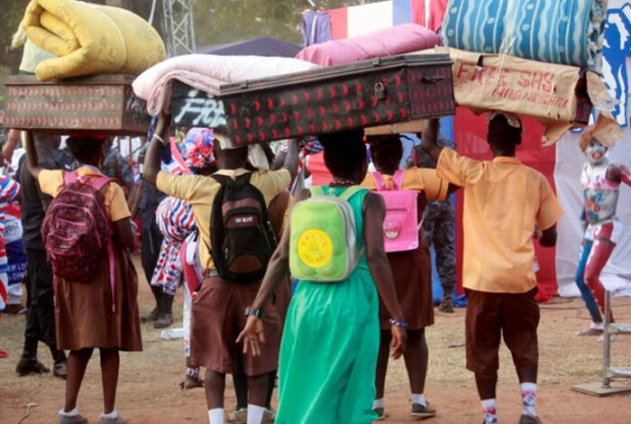
The system was introduced in 2018 after the implementation of the Free SHS policy led to a sharp increase in enrolment and placed pressure on existing school infrastructure.
Under the arrangement, students were divided into two groups that take turns attending school to enable more students to be accommodated within available facilities.
The IEA said the overall findings point to a public preference for expanding SHS infrastructure, but stressed the need for the government to carefully consider the fiscal implications of financing the expansion through borrowing.
Latest Stories
-
Trump says he will stop using taxpayer funds for ads after bipartisan pushback
51 minutes -
Nana Akomea explains why he ignored polls ahead of NPP election
1 hour -
‘Bamba’s message was clever, very clever’ – Akomea on NPP election upset
1 hour -
Nana Akomea reveals why he was disappointed after placing third in NPP election
2 hours -
Saudi Arabia urged to spare man sentenced to death over Facebook post
2 hours -
NPP to deliberately select candidates for orphan constituencies ahead of 2028 election
2 hours -
NPP wants early profiling of parliamentary candidates to avoid costly campaigns – Nana Akomea
3 hours -
At least 22 dead after two boats collide on Congo river, official says
3 hours -
Heavy rains lead to Senegal floods, government reports several deaths
3 hours -
FTBLRLIFE targets Ghana in expansion of global grassroots football network
4 hours -
NPP has secured the ‘blessing of time’ for 2028 election – Nana Akomea
5 hours -
NPP says early flagbearer selection has helped stabilise party reorganisation
5 hours -
Kennedy Agyapong disciplinary case awaits committee report, says Nana Akomea
5 hours -
Former ‘American Idol’ contestant sentenced to life without parole for wife’s murder
5 hours -
Education Ministry commends Ghanaian teachers on World Teachers’ Day 2026
6 hours