

Audio By Carbonatix
In the Bono East Region, your chance of surviving childbirth depends entirely on your location. While the regional leadership proudly touts a skilled delivery average of 67.6% at the 2026 Mid-Year Performance Review, the reality for women in the remote eastern corridors is nothing short of a public health emergency.
In Sene East, that figure plummets to a catastrophic 27.85%—meaning nearly three out of four women give birth without a trained professional.
The reason is brutally simple: an absolute absence of hospitals. As the Regional Director of Health Services, Dr Freeman Samani, starkly warned, "Regional averages may be green, but if districts remain red, our work is not finished."
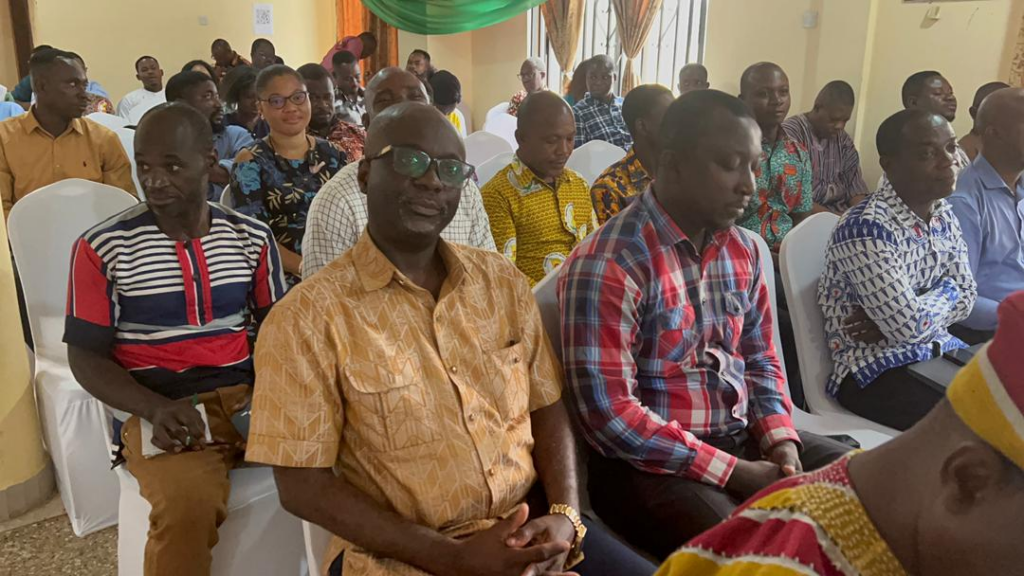
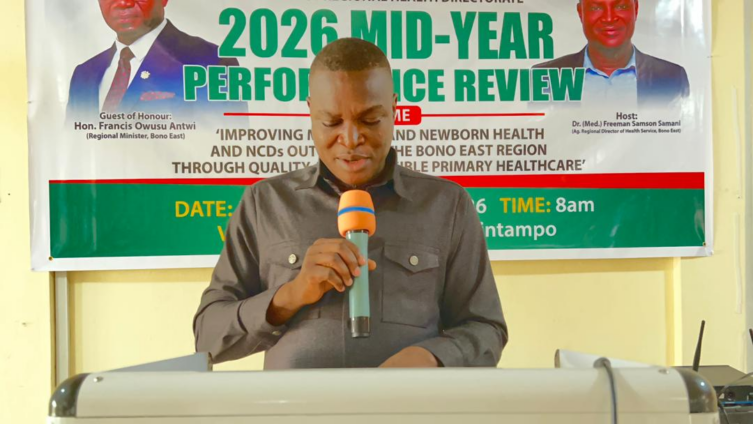
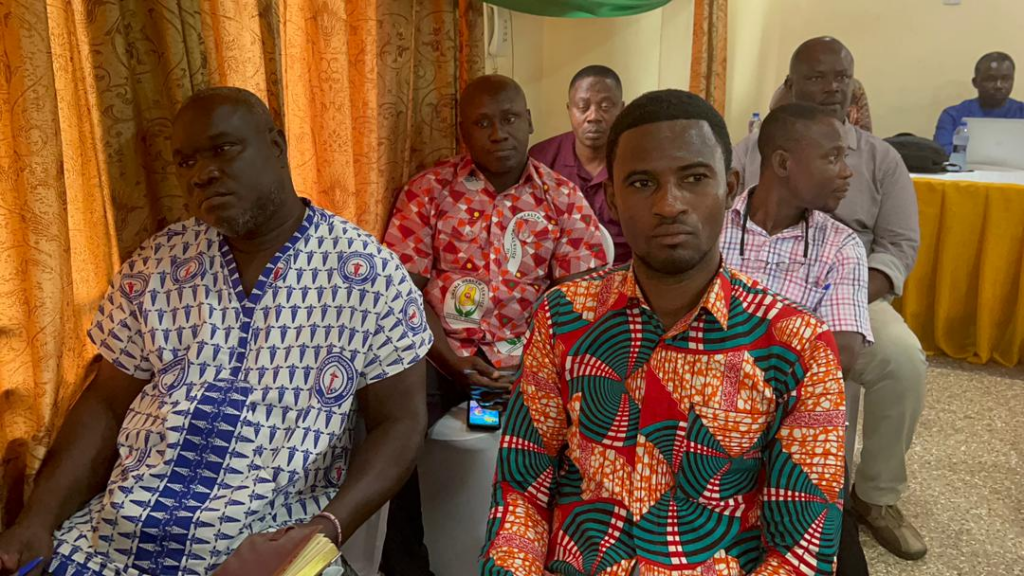
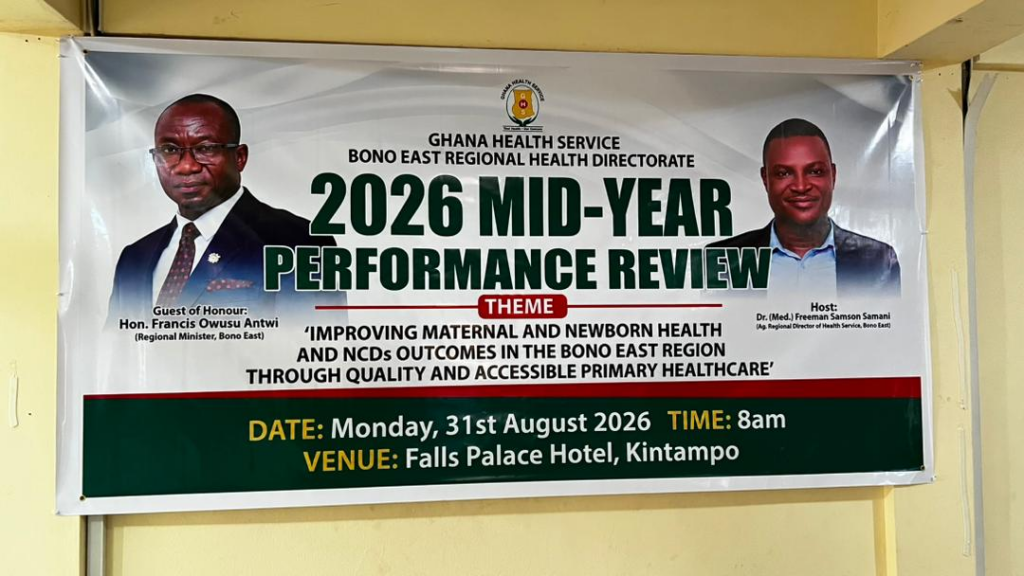
Speaking at the 2026 Mid-Year Performance Review meeting in Kintampo, the Bono East Regional Director of Health Services, Dr Freeman Samani, cautioned that impressive regional averages often conceal the plight of underserved districts.
He stressed that "regional averages may be green, but if some districts, facilities or communities remain red, then our work is not finished."
A Tale of Two Districts
The disparity is starkest in skilled delivery coverage. While the regional average stands at 67.6%, the picture is dramatically different on the ground. Sene East District recorded a meager 27.85%, while Techiman North followed closely with just 33.34%.
This means that in these districts, more than two out of every three women are giving birth without the assistance of a skilled birth attendant, a critical factor in preventing maternal and newborn deaths.
This gap is not a statistical anomaly. It is a direct consequence of a lack of basic health infrastructure. According to the Ghana Health Service, the Bono East Region has seven municipal/district hospitals, but four districts still lack a district hospital. Among these are Sene East, Techiman North, Nkoranza North and Pru West.
In the Sene East District, the situation is particularly dire. The district currently has no standard hospital, relying instead on just three health centers located at Bassa, Kajaji, and Kojokrom.
For emergency cases, pregnant women and critically ill patients must be referred to hospitals in Kwame Danso, Atebubu, or even the Krachi Government Hospital, journeys that are often hampered by poor road networks. The long-awaited Agenda 111 District Hospital project in Kajaji, which is meant to solve this crisis, remains incomplete.
Similarly, Techiman North lacks a district hospital. Residents, such as those in Akonkonti, are forced to travel to neighboring communities for medical care due to the absence of a clinic or CHPS compound.
The Human Cost of Inequality
The consequences of these gaps are fatal. Dr. Samani noted that the region has continued to record maternal deaths and stillbirths, with some facilities and districts carrying a "disproportionate burden."
The challenges are compounded by the region's difficult geography. The Bono East Region is characterized by sprawling landscapes and remote communities, making access to healthcare a significant challenge. In Sene East, the existence of numerous island communities further isolates residents from the few available health facilities.
Dr Samani emphasised that the goal of universal health coverage cannot be achieved while such glaring inequities persist. He stated, "Where a person lives should not determine whether they live or die."
The Way Forward
The Regional Health Directorate has identified the expansion of access to quality primary health care, particularly in underserved areas, as a top priority.
The rollout of the Free Primary Health Care policy is seen as a critical opportunity to address these gaps, with resources being channeled to strengthen service delivery at the community level.
However, the immediate need for functional hospitals in Sene East, Pru West and Techiman North remains urgent. The Regional Minister, Francis Owusu Antwi, has previously acknowledged the lack of standard hospitals in the region and called for the completion of the Agenda 111 projects.
As Dr Samani concluded, the figures discussed at the review represent real people: a pregnant woman in need of emergency care, a newborn deserving a healthy start, and a family depending on the health system.
The data is clear, and the call to action is urgent.
Latest Stories
-
Zimbabwean author denies using AI to write award-winning story
5 minutes -
GTEC’s letter directing public universities to reopen by October 16 is unprofessional – GAUA
6 minutes -
Suspect in viral video assaulting wife jailed for 3 months
6 minutes -
GAUA insists strike will end only after Fair Wages addresses market premium issue
6 minutes -
Kpemka seeks compensation as he sues BOST over alleged unlawful termination
10 minutes -
GES asks applicants to check status of 2026 promotion applications on October 15
34 minutes -
Kobe Boujee joins Olympics.com team for Dakar 2026 Youth Olympic Games
41 minutes -
Slaty egret’s shifting nesting sites offer clues to changing ecosystems
48 minutes -
First phase of arrears for promoted teachers to be paid on Friday – Haruna Iddrisu announces
51 minutes -
Caveman Watches partners with Mfantsipim School for 150th anniversary
1 hour -
We’ll pursue GH¢15m defamation suit against Sammy Gyamfi to its logical conclusion – Afenyo-Markin’s lawyers
1 hour -
Martin Kpebu urges Afenyo-Markin not to return to court over Sammy Gyamfi lawsuit
1 hour -
GRA submits preliminary report on drug shipment case to Mahama – Commissioner-General
2 hours -
Sammy Gyamfi using ‘procedural roadblocks’ to dodge defamation case? – Afenyo-Markin’s lawyers
2 hours -
The illusion of a good deal: Why some everyday money-saving habits may be costing you more
2 hours