

Audio By Carbonatix
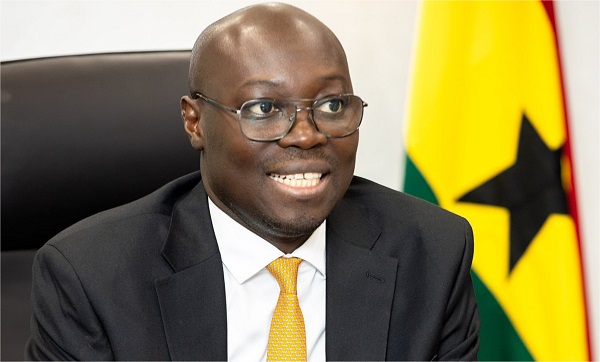
Finance Minister Dr Cassiel Ato Forson has sparked controversy in Parliament with the introduction of the Energy Sector Levy Amendment Bill under a certificate of urgency to impose new taxes on petroleum products.
The bill, submitted under a certificate of urgency, if approved, will impose fresh taxes on all petroleum products, which Finance Minister Cassiel Ato Forson says is necessary to clear an alarming US$3.1 billion energy debt as of the end of March 2025.
Crucially, Dr Ato Forson assured Parliament today, June 3, that, despite the increment, consumers would not immediately feel the impact at the pumps, attributing this cushioning to the robust performance of the Ghana Cedi.
The Minister detailed the dire financial state of the energy sector, revealing that the US$3.1 billion debt includes significant arrears owed to Independent Power Producers (IPPs), various State-Owned Enterprises (SOEs), and crucial fuel suppliers.
A major contributor to this crisis, he noted, was the non-payment of bills to key power providers like ENI and Karpowership.
This led to the complete drawdown of a US$512 million World Bank IDA guarantee and a US$120 million GNPC guarantee in 2024, leaving the government in urgent need of an additional US$632 million to restore these vital guarantees.
"To help raise additional revenue to fund the needs in the power sector, the government is proposing an increase in the ex-pump price of petrol, diesel and related products," Dr. Forson stated before Parliament.
However, the Finance Minister moved swiftly to allay fears of immediate cost escalation for consumers.
"Mr. Speaker, I repeat," he emphasised, "the impact will be absorbed by the gains made from the strong performance of the Ghana Cedi and this will mean that consumers will not have to pay extra for the price of petrol and diesel beginning today."
He further added, "Our simulations suggest that there will be no increase in the ex-pump price of petrol and diesel in the next window beginning today if the levy is imposed. This is because of a strong Ghana Cedi."
Dr. Forson clarified that the new levy is designed as a dedicated source of funding for the beleaguered power sector.
Proceeds from the levy will be specifically earmarked for the procurement of essential fuel necessary for consistent power generation.
This, he explained, is fundamental to ensuring Ghana enjoys a stable electricity supply, given that "the current electricity tariffs paid by consumers do not include the cost of fuel used for the power generation."
The decision to implement this levy on petroleum prices, according to the Minister, represents a strategic balance between ensuring an uninterrupted and reliable power supply for the nation and promoting the long-term financial sustainability of Ghana's energy sector.
Latest Stories
-
Judge extends White House access for CNN, MS NOW, Politico amid legal fight
6 minutes -
EU expands migration cooperation with eastern Libya through new funding
14 minutes -
Actress Selma Blair faces charges for kicking nurse and officer after plane incident
23 minutes -
Private political loyalties deserve scrutiny too in EC appointments – Osae-Kwapong
32 minutes -
EC safeguards must check partisan bias among commissioners – Osae-Kwapong
50 minutes -
Oil prices climb as traders weigh Saudi supply risk, Russian diesel flow
1 hour -
Zimbabwean author denies using AI to write award-winning story
1 hour -
Bank of America hit with $1.2bn fine for money laundering failings
1 hour -
Robot seized by German police after allegedly groping teenage girl
2 hours -
Subject EC appointment to ‘Akufo-Addo test’ – Kwapong
2 hours -
English football’s independent regulator would quit over Man City interference
2 hours -
Anthropic seeks rehearing of case over Pentagon’s security risk branding
2 hours -
Torrential rains in Libya’s Tripoli kill two
2 hours -
Guinea-Bissau says it has not approved hepatitis B vaccine trial in newborns
3 hours -
US Supreme Court to hear asylum fight involving Nigerian cook
3 hours