

Audio By Carbonatix
Rises in petrol, diesel and airfares pushed UK inflation up to its highest level in five months in the year to August.
Inflation accelerated to 3.1% from 2.9%, according to the Office for National Statistics (ONS).
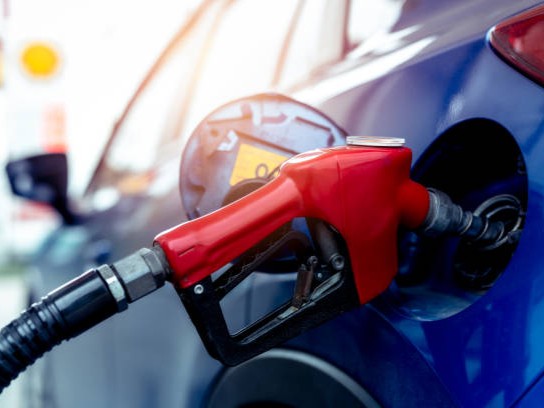
The cost of filling up a vehicle soared in August as the conflict in the Middle East continued to disrupt global oil supplies. Petrol prices jumped to their highest for nearly four years, the ONS said, while diesel also rocketed.
Meanwhile, the cost of flying jumped during the key month for summer getaways.
Overall, motor fuel prices rose by 23% compared to August last year.
Oil hit more than $91 a barrel as the US-Israel war with Iran went on. That compares to around $73 just before hostilities began earlier this year.
As a result, average petrol prices have continued to climb and between July and August, they rose by 9.1p to 161.3p per litre.
"This is the highest price recorded since November 2022," said the ONS. At that point, Russia's full-scale invasion of Ukraine had pushed up global energy costs.
Capital Economics said, at this point, the effect of higher oil prices has not spilled over into other areas such as food and drink, where the pace of inflation remained at 1.3% in the year to August.
But its chief UK economist, Paul Dales, said: "Everyone knows that bigger rises in inflation are on their way."
Grant Fitzner, chief economist at the ONS, said: "Rising crude oil and petrol prices increased both the annual cost of raw materials and the price of goods leaving factories respectively."
Dales estimates that a combination of higher oil and gas prices and "the eventual 'first-round' effect of businesses passing on some of their higher energy costs" will lead to inflation peaking at 4.2% in January.
'Things are down'

In addition to hitting drivers in the pocket, higher oil prices affect forecourts.
Goran Raven, owner of Essex petrol station RJ Raven, told the BBC: "Things are down. We've got lots of pressure on us at the moment. I'd say we're about 20% down on this time last year."
Raven said changes in the oil price have a "real-time impact on us".
In recent days, Brent crude, the global benchmark for oil prices, has surpassed $100 per barrel.
"We only have small tanks here, so we need a tanker almost every day at the moment and we have to pay a daily spot price," said Raven. "When the price goes up, we have to go up with it. There's no way around it.
"The margins here are wafer-thin on fuel. People like to think we're earning a lot on it. Unfortunately, we really aren't. It's single digits of pence we earn per litre."

The rise in inflation means it has moved further away from the Bank of England's 2% target.
The bank uses interest rates to control inflation.
The rate currently stands at 3.75% and the Bank of England is meeting on Thursday to decide whether to change it.
Prime Minister Andy Burnham said on Wednesday inflation is "a concern" but the underlying UK economy was resilient.
"The extent to which we've got inflationary pressure it's driven by the situation in the Middle East," he said.
The most recent figures showed that the UK economy expanded by 0.4% in July, boosted by investment in artificial intelligence.
But, for the second quarter between April and June, Britain's economic growth slowed to 0.4% from 0.6% in January to March.
Looking ahead to his first Budget, which will be delivered by Chancellor John Healey on 28 October, Burnham said: "We will take difficult decisions to make sure the economy remains on track."
Commenting on inflation, shadow chancellor Andrew Griffith said the government's "jobs tax and employment red tape are being passed on to consumers in the weekly shop and their mad energy policies are pushing up costs and leaving Brits exposed".
A Tory spokesperson said the energy policies Griffith is referring to include a commitment to reaching net zero carbon emissions by 2050 and a "refusal to drill in the North Sea".
The government is cutting VAT on household electricity bills from 5% to zero on 1 October, saving a typical household about £45 a year.
At the same time, the price cap on both electricity and gas bills will rise by 4%.
It means a home using a typical amount of gas and electricity will pay £60 more per year.
Yael Selfin, chief economist at KPMG, said the VAT cut will only partially offset the impact of higher gas prices, which have been rising due to the war in Iran and disruptions to global supplies, including liquefied natural gas.
"If gas prices remain around current levels, household energy bills could rise by a further double-digit amount from January, with an even larger increase possible if wholesale prices climb further," she said.
'Everything is extremely expensive'

Emma Ashfield, a nursery worker from Northern Ireland who is raising her eight-year-old daughter, said everything is already "extremely expensive".
"You are trying to keep food on the table, [buy] clothes, trying to provide for them," she said. "You would basically need a second job."
With winter approaching, she says energy costs are another worry: "I find electric very pricey… and it is costly trying to heat my apartment too.
"My wee girl is always wanting the heating on, so that's another thing."
Liberal Democrat Treasury spokesperson Daisy Cooper said: "Trump's illegal war - egged on by the Conservatives and Reform UK - is once again hitting British families hard. This must be a wake up-call for the government."
Latest Stories
-
Ghana begins review of 1999 National Land Policy, targets new framework by 2027
10 minutes -
Tiptoe Lane’s tech takeover: The story behind Ghana’s booming informal phone market
2 hours -
Abanga vows to use social media to counter NDC messaging ahead of 2028 elections
2 hours -
Okai Mintah seeks Sabah Zita Benson’s support for NDC National Youth Organiser bid
2 hours -
Okai Mintah vows to strengthen NDC campaign machinery ahead of 2028
2 hours -
Mother of four and Jasikan teacher among new Telecel M’ahitti Promo winners
2 hours -
International Youth Shakers Conclave 2026 set to bring global young leaders to London
2 hours -
Gov’t is committed to addressing teachers’ conditions of service, deprived-area allowance – Education Minister
2 hours -
GoldBod’s structure encouraging galamsey – Afenyo-Markin
2 hours -
Tullow starts selling Jubilee, TEN crude to Ghanaian refineries
2 hours -
Local Government Service authorises rationalisation, redistribution of staff
2 hours -
PURC assures consumers of working to ensure quality services in Northern Region
2 hours -
Ghana develops US$4.28bn water financing framework
2 hours -
Christian Council calls for protection of mission schools’ religious identity
2 hours -
Mahama holds discussions with India’s External Affairs Minister
3 hours