

Audio By Carbonatix
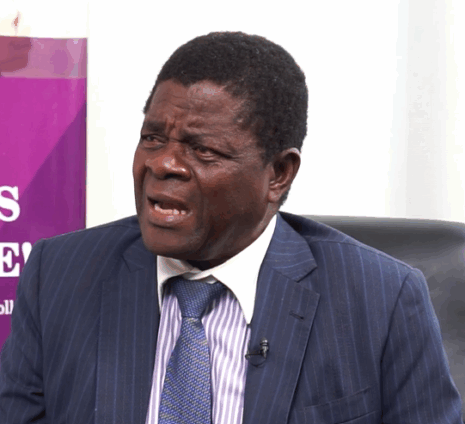
A former Director of the Ghana School of Law, Kwaku Ansa-Asare, has stated that the ongoing probe into the potential removal of the suspended Chief Justice, Gertrude Torkornoo, cannot be telecast live, as doing so would contravene provisions in the 1992 Constitution.
Speaking on JoyNews’ The Pulse on Thursday, May 22, Mr Ansa-Asare stated that Article 146, which outlines the procedure for the removal of a Chief Justice or a superior court judge, is explicit about the nature of the proceedings.
Read also: Suspended CJ Torkornoo is merely barking – Ansa-Asare on injunction to stop removal probe
“The probe may be telecast live, but as a lawyer, my take is that Article 146 of the 1992 constitution has provided a format; it says that the proceedings shall be held in-camera, it is not opened to the public, and therefore it cannot be telecast live,” he said.
His comments come after the suspended Chief Justice, Gertrude Torkornoo, as part of her legal challenge, has called for the proceedings to be broadcast live.
Prof Ansa-Asare argues that the framers of the Constitution clearly intended such hearings to remain private, and that any deviation would amount to an unlawful breach of due process.
“If the Constitution had contemplated that it could be done, they would have provided for it,” he noted.
"..By our public policy, certain matters are to be held in-camera, and where they are held in-camera, no one would be above the law."
Mr Ansa-Asare added that in judicial practice, where rules are established to govern court proceedings, they also determine whether hearings should be public or private.
In this case, he believes the law is clear.
"The law is no respecter of persons. There is only one law of equality. We are all equal before the law, so don’t let us try to bend the rules to favour," he said.
Mr Ansa-Asare added that Article 146 was crafted to uphold the dignity and independence of the judiciary, particularly the office of the Chief Justice.
"Article 146 has been designed to protect the Chief Justice because the office of the Chief Justice is one of the three pillars of the state, and therefore if there are certain matters that should not be in the public domain, in the wisdom of the framers of the 1992 constitution, don’t let the chief justice be marred in the full glare of the public," he said.
Latest Stories
-
Glut! Farmers count losses as prices crash, customers happy
20 minutes -
GSA postpones auction of unserviceable vehicles
22 minutes -
Man charged with attempted murder after stabbing
26 minutes -
World Cup visa scandal: Senyo Hosi says issue goes beyond calls for Sports Minister’s resignation
27 minutes -
Yaw Ampofo Ankrah hasn’t taken or received any money to facilitate visas – Lawyer insists
45 minutes -
World Cup visa scandal: Senyo Hosi urges focus on constitutional accountability
45 minutes -
La Beach demolition: Senyo Hosi condemns lack of consultation
57 minutes -
Russian glide bomb attack on Zaporizhzhia kills at least 15 people
1 hour -
Jinapor warns underperforming energy sector CEOs of consequences, says no protection for failure
1 hour -
Fire destroys head of tipper truck on Lower Volta Bridge
1 hour -
Palmer signs new Chelsea contract until 2034
1 hour -
World Cup visa scandal: Mahama will act on corruption allegations – Abass Nurudeen
1 hour -
Abass Nurudeen accuses Minority of ‘scandal scavenging’ over World Cup visa controversy
1 hour -
US Embassy recognised NSA, GFA and GTA as separate entities for visa applications – Sports Minister’s aide
1 hour -
Only 30% of Ghanaian teachers satisfied with their jobs – CAPCOE data reveals
2 hours