

Audio By Carbonatix
The tragic stampede that claimed six lives and injured several others during the Ghana Armed Forces (GAF) recruitment exercise on Wednesday, November 12, has triggered sharp political criticism aimed at the military’s application process.
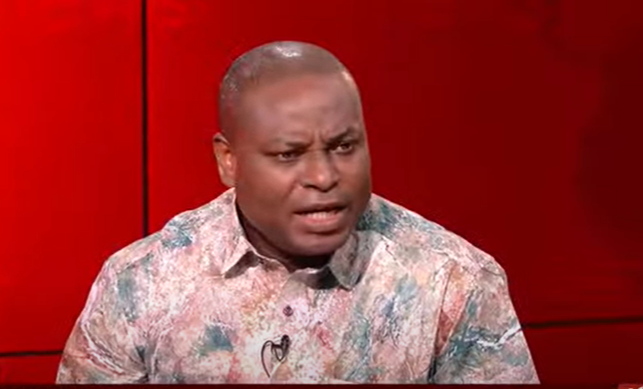
Richard Ahiagbah, the Director of Communications for the New Patriotic Party (NPP), has fiercely condemned the practice of requiring unemployed youth to pay for enlistment forms, labelling it as a systemic form of "exploitation" that is long overdue for reform.
Speaking on Channel One TV on Saturday, November 15, Mr. Ahiagbah argued that mandating fees for access to basic application forms places an unjust financial burden on thousands of young Ghanaians desperately seeking employment.
He emphasised that in a nation grappling with persistent unemployment rates—which, for the youth segment, hover significantly higher than the national average—the state should be eliminating, not creating, barriers to entry for public service.
“Has the payment of enlistment forms been part of their recruitment? Because that for me is an extortion that must not be allowed to continue,” he stated, making the NPP’s position unequivocally clear.
The GAF recruitment process, typically drawing tens of thousands of applicants for a limited number of slots, is already a high-pressure exercise. Charging for forms—often fetching between GH₵50 to GH₵100 per applicant across security services—generates a non-tax revenue stream potentially running into millions of Ghana Cedis, effectively "profiting from aspirants," a practice Mr. Ahiagbah insisted should not be tolerated.
The NPP Communications Director argued that linking the start of the recruitment process to a fee undermines the principle of meritocracy and transparency, which is paramount for a security service entry process.
Mr. Ahiagbah called for immediate action from the government and the GAF leadership, urging them to conduct a comprehensive review of the entire recruitment process. This review, he stressed, must focus on two key outcomes:
- Removal of Financial Barriers: Eliminating all application fees to ensure access is based purely on merit and eligibility.
- Enhanced Transparency and Safety: Implementing measures to prevent future risks, like the deadly stampede, and ensuring the process is free from any potential for exploitation or undue influence.
The public outcry and political pressure following the tragedy now demand that the Ministry of Defence and the GAF not only address crowd control failures but also overhaul the underlying fiscal model of their recruitment exercises. The question of whether the state should profit from the patriotism and job desperation of its youth now sits at the centre of the national security and employment debate.
Latest Stories
-
Spain’s huge pork industry seeks salvation from swine fever threat
37 minutes -
Trump declares victory after rescue but threats to US operation in Iran still loom
59 minutes -
US Secret Service investigates reports of gunfire near White House
1 hour -
Current account stability to mitigate pressure on cedi; currency to end year at GH¢11.40 to a dollar
1 hour -
Oil back above $110 after expletive-laden Trump threat to Iran
1 hour -
T-bills auction: Government records 32% undersubscription; interest rates rise again
1 hour -
Economy to remain relatively insulated from fallout of US–Iran conflict – Fitch Solutions
1 hour -
[Watch Live] Shatta Wale, Kofi Kinaata, and others ignite the grand finale of Gomoa Easter Carnival
4 hours -
DR Congo to receive ‘third-country’ deportees from the US under new deal
4 hours -
Four injured in robbery attack on Elshadai Enterprise at Akatsi
4 hours -
Two remanded for alleged attack, robbery at jewellery shop
5 hours -
Royals attend Windsor Easter Sunday service
5 hours -
Trump issues expletive-laden threat to Iran over Hormuz Strait blockage
5 hours -
Berekum Chelsea edge Aduana FC in Bono derby to boost survival hopes
7 hours -
‘They can’t control the team’ – Ernest Thompson doubts local coaches for Black Stars role
8 hours