

Audio By Carbonatix
A promise is a promise, especially when it becomes the foundation of hope for thousands of struggling Ghanaians.
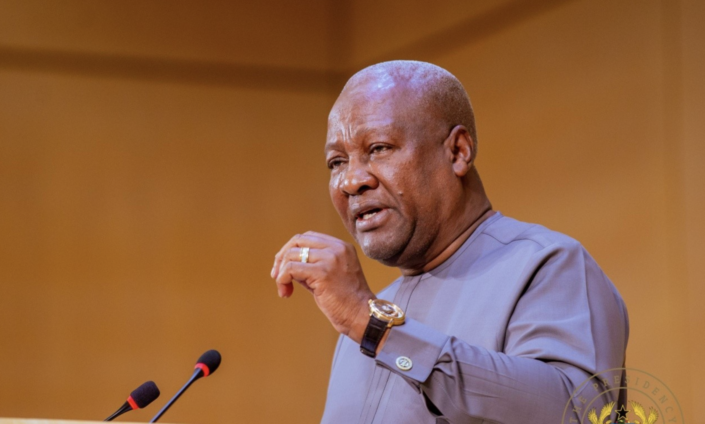
During the 2024 election campaign, then opposition leader John Dramani Mahama strongly criticised the handling of Ghana’s financial sector clean-up and repeatedly assured victims of collapsed banks and financial institutions that relief was coming under his leadership.
At the unveiling of his running mate in 2020, Mahama declared: “We shall, within one year of being in office, pay customers of the collapsed financial institutions all funds locked up.”
He went further and pledged: “I pledge on behalf of the NDC that we shall pay within one year all who have funds locked up with the collapsed financial institutions. Within one year. I promise!”
Those words resonated deeply with affected customers whose businesses collapsed, savings vanished, and livelihoods were destroyed during the banking sector clean-up.
Again in 2024, while campaigning for a return to power, Mahama doubled down on the issue. He promised to restore the licences of what he described as “wrongfully collapsed” financial institutions.
At another engagement, he reportedly assured owners of some collapsed banks:
“I’ll give your banks back to you.”
These were not vague political statements whispered behind closed doors. They were loud, public, emotional campaign promises repeated before cheering supporters across the country.
Today, nearly one and a half years into his administration, many victims say they are still waiting for action.
Speaking on PM Express, Finance Minister Cassiel Ato Forson appeared to pour cold water on expectations of immediate payment. According to him, the government cannot continue absorbing the liabilities of failed private institutions while critical sectors like health and education also demand funding.
For many affected customers, those comments felt like a painful contradiction to the confidence and certainty with which the promise was made in opposition.
This naturally raises serious questions:
Did the government fully understand the financial implications before making those promises? Was the pledge realistic from the beginning? Or was it simply politically convenient at the time?
Leadership is not only about winning elections with emotionally powerful promises. It is also about accountability, consistency, and keeping faith with citizens who believed your word.
The silence from President Mahama on this specific promise has become louder than the campaign applause that greeted it.
Thousands of affected customers are still watching. Still waiting. Still hoping that “Within one year. I promise!” was not just another campaign slogan.
Latest Stories
-
Power restoration fault suspected in Kumasi Central Market fire
4 hours -
The 7-foot giant of Ngleshie Amanfro: Seven-foot Ghanaian Ephraim Saawa dreams of joining the national basketball team
5 hours -
Government promises support for Kumasi Central Market fire victims
5 hours -
Vibes The Movie: Big Ghun’s Ghanaian film earns five nominations at 2026 REFFA
5 hours -
MamaCare CEO warns unresolved conflicts among health workers could undermine maternal and neonatal care
6 hours -
Health professionals urged to translate medical knowledge into practice to save mothers
6 hours -
Conflicts among care providers linked to maternal, neonatal deaths – Expert
7 hours -
GIS marks 10th TIME conference, champions improved teaching practices
7 hours -
BRICS Or Balance? What Ghana’s bid really means
8 hours -
GPRTU wants full TRAFFITECH-GH implementation to start in 2027
8 hours -
Mahama announces plans to import electric wheelchairs for PWDs
8 hours -
KGL U17 Colts 2026: Western beat Prempeh Elite Academy to set up final final with Greater Accra Region
8 hours -
Late Solanke strike salvages 10-man Spurs draw at Man United
9 hours -
Gender Ministry to monitor welfare of Nana Akua Addo’s children amid domestic violence case
9 hours -
Benedict Okyere Yeboah: Ghana’s football problem goes beyond sacking a coach
9 hours