

Audio By Carbonatix
The Executive Secretary of the National Peace Council, George Amoh, has urged journalists to be circumspect in their reportage on issues that have the potential to compromise the peace and security of the country.
He said that was also critical if the country was to prevent any attacks from violent extremist groups that were operating within the West African sub region.
“If you look at the sub region now, if you look at Mali, what has happened in our closest neighbour Burkina Faso, Gabon, you have to be very, very cautious in your reportage to keep this country from the attacks from insurgencies,” he said.
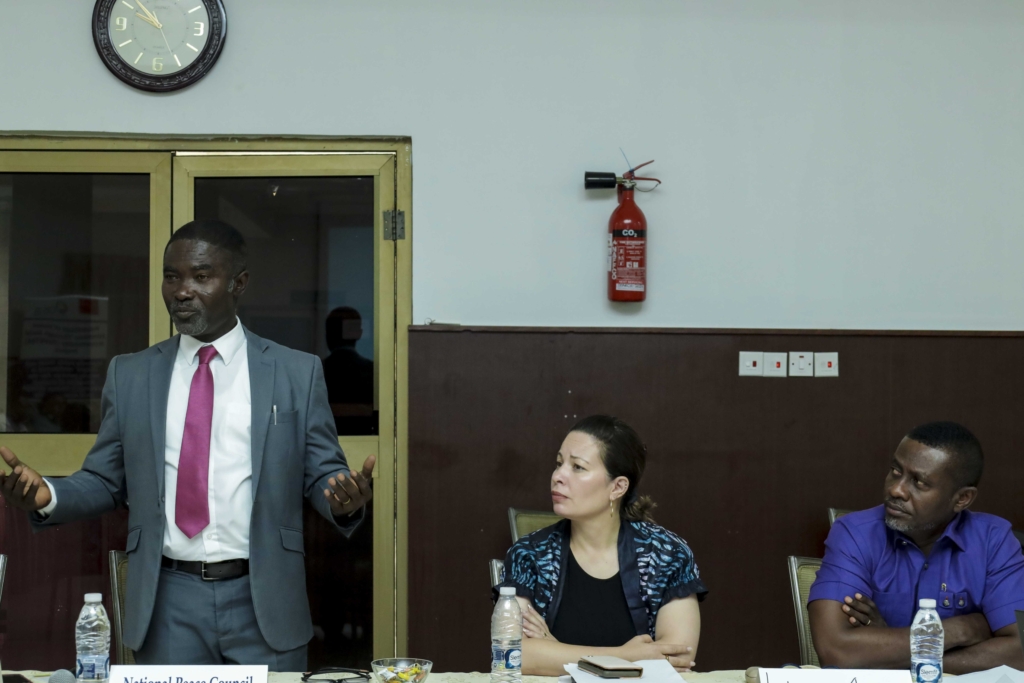
Mr Amoh gave the advice at a two-day training workshop on “Prevention of Violent Extremism” organised for some selected journalists in Accra.
The objective of the workshop was to deepen the understanding of the media on their role in the fight against violent extremism, and to enable them to be better prepared to report on the issue with sensitivity and accuracy.
Also, it aimed at strategically building consensus and trust to improve media-security agency relationship towards preventing violent extremism in Ghana.
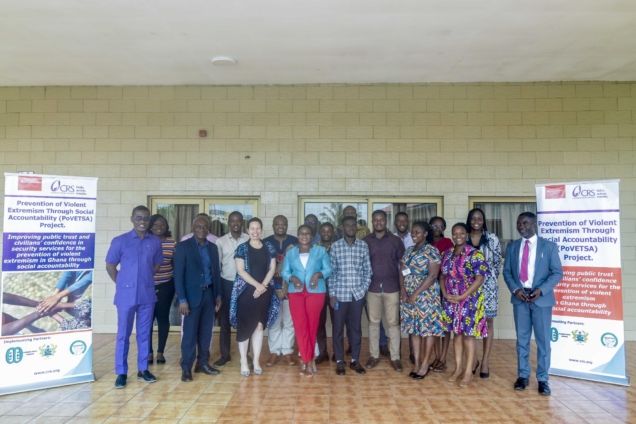
It was organised by the Catholic Relief Services (CRS) in collaboration with the National Peace Council and formed part of CRS' Prevention of Violent Extremism through Social Accountability (PoVETSA) project, with funding from the Embassy of the Netherlands.
The training covered areas such as the legal framework of Preventing and Countering Violent Extremism and Terrorism (PCVET), human rights and VET, media and VET and media support intelligence and PCVET.
Mr Amoh said the media had a major role to play in informing and educating the public on the activities of violent extremist groups, adding that, in doing so, the national interest must guide them.
“If you have the opportunity to travel within West Africa you will realise that Ghana is uniquely placed, and we have to do all we can to sustain the peace for our sake and for the children who will take over from us.”
“Please, when you take your pen and you want to write, whatever you want to put on a sheet, either in social media or in the print media or air, the question should be, is this going to protect the interest of this country?” Mr Amoh said.
The Director, Naval Intelligence of the Ghana Armed Forces, Commander Philip Odoi-Narh, urged the media to abreast themselves with the country's security strategy document to guide them in the discharge of their duty.
The national security strategy is a living document, which indicates how the government of the day intends to deal with identified security threats.
Commander Odoi-Narh also stressed the need for collaboration between the security agencies and the media, particularly in information sharing to help avert any possible attacks.
A Course Director with the Kofi Annan International Peacekeeping Training Centre (KAIPTC), Augustine Owusu, also emphasised the need for government to address the push and pull factors, including perception of corruption by State and multinationals, bad governance, economic hardship and marginalisation to avert the possibility of citizens recruitment by such groups.
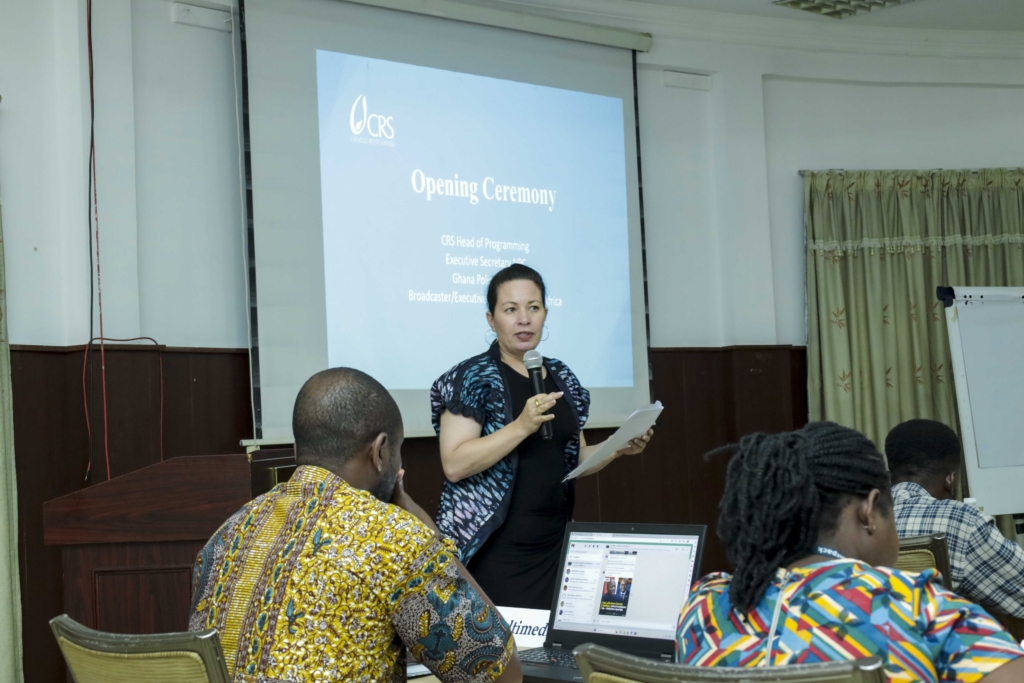
Head of Programming at CRS, Christina Gallagher, expressed the Organisation's commitment to peacebuilding efforts, particularly in the face of emerging threats of violent extremism in the region.
She indicated that the PoVETSA project sought to enhance a trust-building mechanism for Ghanaian national peace building institutions, Civil Society Organizations (CSOs), security services and civilians.
It is also centred on a vibrant peacebuilding infrastructure and civil society sector to empower a social contract that ensures an improved relationship between communities and the security services for the prevention of violent extremism.
“Since its inception in Ghana in 1958, CRS has carried out several interventions on peacebuilding. “The PoVETSA project is building on the gains of the Sahel Peace Initiative (SPI) which addresses the rising security crisis in West Africa’s Sahel Region,” Miss Gallagher added.
Latest Stories
-
The legal effect of the United Nations resolution declaring the Transatlantic Slave Trade the gravest crime against humanity
3 hours -
KNUST boosts petroleum engineering output with largest MSc cohort
3 hours -
E&P dispatches final batch of 30 dump truck buckets to Tarkwa site
3 hours -
NIB returns to profitability with over GH₵343M Profit After Tax – 2025 financial report
3 hours -
We knew it was weak – Resident says after deadly Accra New Town collapse
4 hours -
Government to borrow GH¢15.231bn via T-bills, bonds between March and June 2026
4 hours -
UN resolution just the beginning – Mahama on adoption of slave trade declaration
4 hours -
UN adoption of resolution declaring transatlantic slave trade gravest crime historic – Mahama
4 hours -
“This is a proud moment for Ghana, Africa” – Mahama after UN slave trade resolution
5 hours -
New Town building collapse: Two dead, 14 rescued so far as mission intensifies
5 hours -
Prolonged Middle East conflict poses significant risk to economy – BoG
5 hours -
Kafui Dey suggests seat fillers to fix late TGMA start
6 hours -
World Bank, GCEA provide FIDIC contract management training in Accra
6 hours -
T-bills auction: Government records 20.1% undersubscription; interest rates continue to surge
6 hours -
Scientists from Ghana, Brazil and UK gather in Kumasi to tackle biodiversity crisis with technology
6 hours