

Audio By Carbonatix
A private legal practitioner has clarified that properties acquired before marriage cannot be included in the list of properties to be distributed during a divorce.
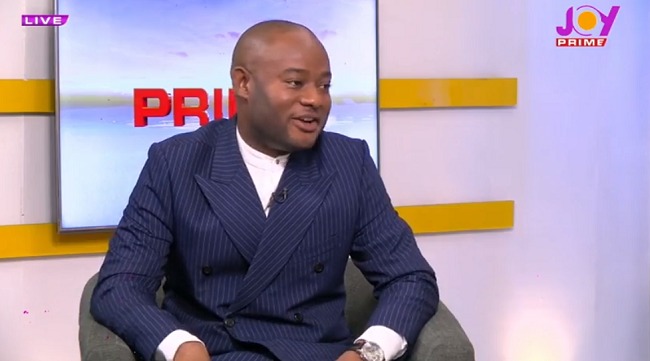
Sena Hotor explained that the court assumes properties that were acquired by one spouse before entering into marriage belong to that individual, and since the other party did not work or contribute to it, it cannot be added to the list of properties to be shared.
“The law is that any property you acquire before marriage does not form part of the spousal property, so when you’re in court for divorce proceedings as a man or a woman, the properties that you brought into the marriage will not be touched by the court in the splitting process.”
“Let’s say you acquire some properties as well when you were married together, during the splitting process, the court will ask themselves, at what point were these properties acquire.”
“If you’re able to prove and establish to the court that these properties were acquired before the marriage was contracted, the court will shift that property aside and focus on the ones that were acquired in the marriage,”he clarified.
Speaking on Joy Prime’s Prime Morning, Mr Hotor said that sometimes, certificates are needed to prove issues like these or someone who was present at the time of acquisition of those properties can testify in support of the spouse for those properties to be exempted.
He added that sometimes one’s spouse can even attest truthfully whether an asset was acquired before marriage or not.
“Sometimes even your spouse will attest, Ghanaians are very honest, people don’t want to lie in court. If you lie in court it amounts to perjury and you can go to jail for that, so that threat of potentially going to jail makes people tell the truth.”
“Another way is that, you say you’ve bought a house before you got married so you have papers, documentation, you have a site plan that has your name on it and so you can show it to the court, look at the date on it and look at the time we got married, these are some of the ways,” he added.
However, the legal practitioner said in cases where all properties were acquired before marriage and none was acquired during the marriage, the court can order that those properties be split and distributed for the other spouse to receive a share of it.
“If it happens that all your properties were acquired before marriage, the court has the power to order that some of your property that you acquired before marriage be given to your spouse.”
“It will not classify those properties as spousal properties but under Article 22, the court has the power to make those orders in the interest of the children that have become part of the family set up,” he explained.
Latest Stories
-
David Selassie Anthony declares bid for NDC Deputy National Organiser
40 minutes -
Amin Adam proposes 13 measures to strengthen Ghana’s debt transparency and market confidence
1 hour -
Mahama announces $2bn annual investment to accelerate industrialisation
1 hour -
Amin Adam urges monthly disclosure of Sinking Fund as Ghana prepares for DDEP repayments
1 hour -
Stronger banks will fuel business growth and jobs – ADB MD
1 hour -
Galamsey: ‘Rivers that fed our grandparents now run the colour of chocolate milk’ – Sam Jonah
1 hour -
We have been scammed by NDC, government is only doing PR – Abanga Fuseini
1 hour -
Republic Bank–JoyNews Habitat Fair opens in Ho today
1 hour -
BoG pledges stability to attract investment, urges stronger Africa–Asia partnerships
1 hour -
Amin Adam warns treasury bill dependence could expose Ghana to refinancing risks
1 hour -
Ghana better placed to withstand commodity price shocks – IMF
1 hour -
GAPTE intensifies efforts to increase bus availability for Aayalolo contra-flow
2 hours -
Amin Adam warns cedi depreciation could reverse Ghana’s debt relief gains
2 hours -
Fiscal discipline crucial for pension fund investments – Finance Minister
2 hours -
BoG Governor rallies IMF to back Africa’s digital sovereignty
2 hours