

Audio By Carbonatix
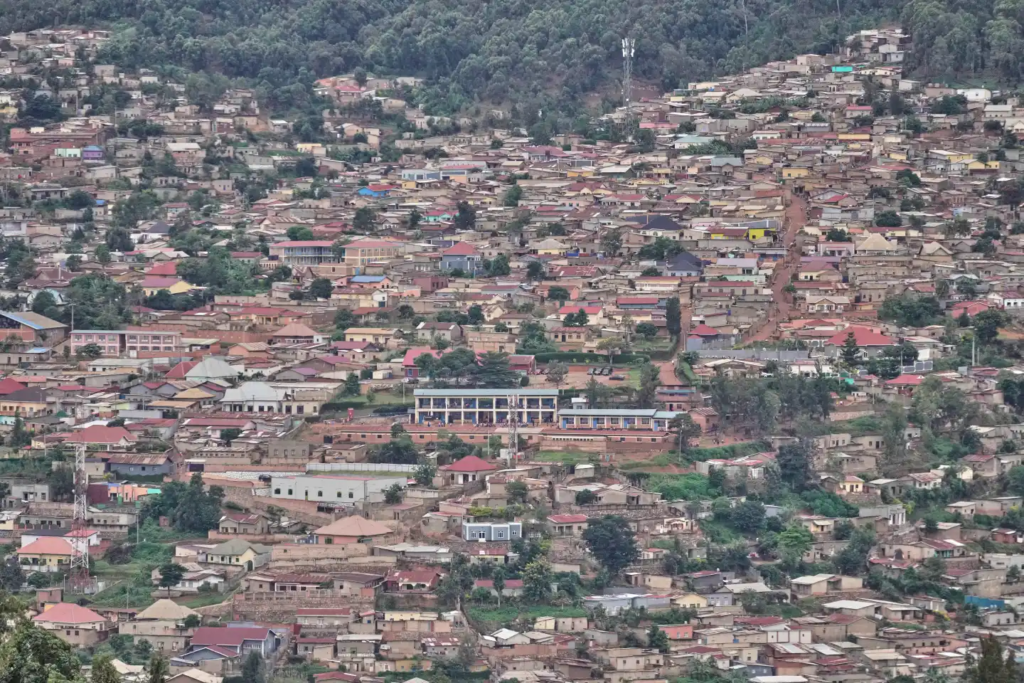
The rhythmic sounds of construction muffle the thud of farmers’ hoes on a chilly morning in Rwanda ‘s capital, where new efforts aim to protect remaining agricultural land from relentless development in Africa’s most densely populated country.
Eighty-four-year-old Mukarusini Purisikira had been a farmer before she fled the country to Congo during the 1994 Rwandan genocide against the Tutsis.
Upon returning, she said, her family’s land, which had stretched across the hills, had been taken away for construction. She gestured toward Kigali’s high-rise buildings.
Now she grows maize and sweet potatoes on a piece of land the size of a small cottage, which she said is barely enough to feed her.
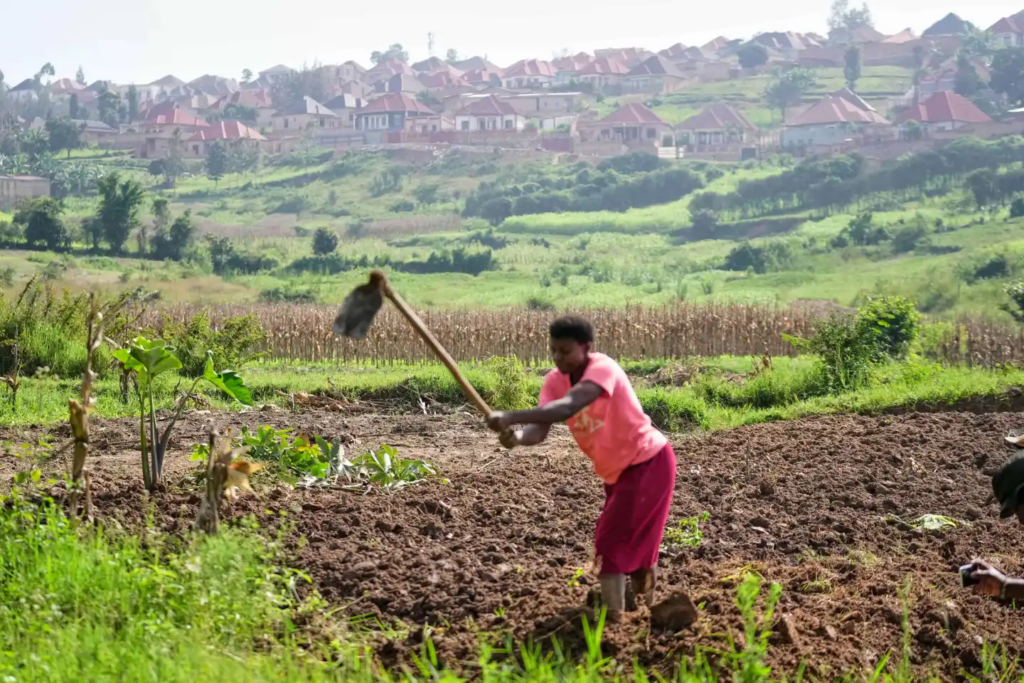
“It is all I have,” she said, looking warily at construction equipment on a ridge nearby.
Now she has a measure of protection. Since September, Rwanda’s government has been mapping agricultural land and using satellite imagery to track any development encroaching on farmlands and forests in a country where the population is expected to reach 22 million in a couple of years.
Rwanda is striving to ensure food security amid the latest global pressures on farm inputs like fertilizer, whose prices have been rising since the Iran war began.
The capital set aside nearly a quarter of land for farming
The government has imposed fines of up to $3,000 and jail terms of up to six months on developers found to be encroaching.
Some buildings in Kigali have been torn down, though people associated with them didn’t want to comment for fear of government retaliation. The government now plans to incorporate drones for better real-time monitoring.
Meanwhile, land use data from the mayor’s office shows that the Kigali master plan has dedicated nearly a quarter of land 22% to agriculture.
City authorities acknowledge that housing construction is attractive due to demand but say future projections show that “farming will be even more productive.” They say the demand for food is also rising and believe that, with innovation, it can be grown on smaller pieces of land.
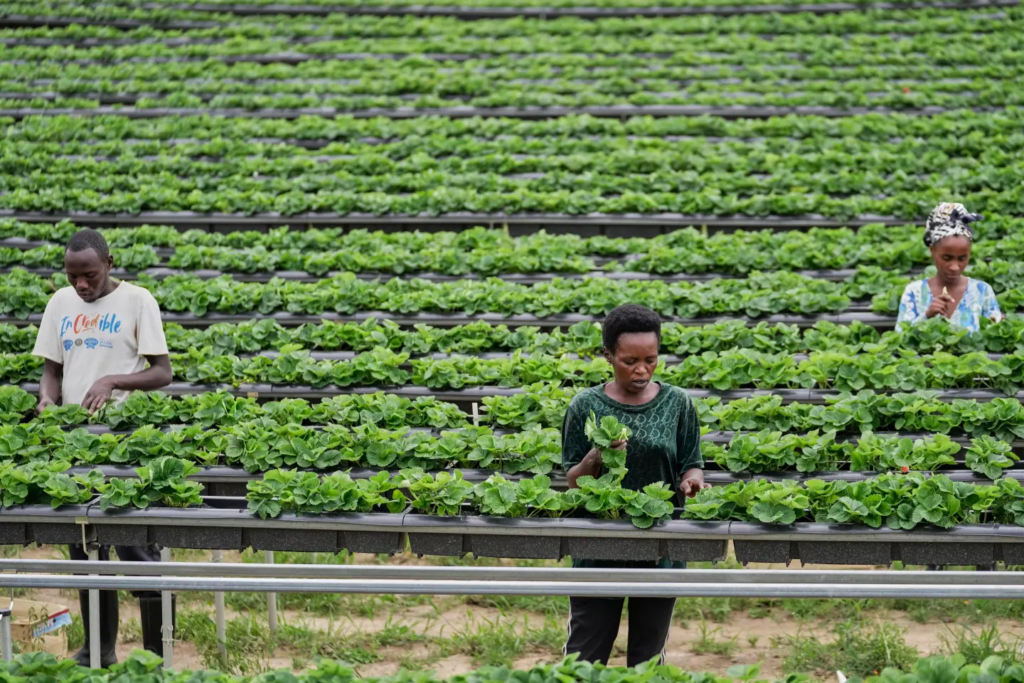
While most of the food consumed in Kigali comes from other districts in Rwanda, farmland in those areas is shrinking, too, a spokeswoman for the mayor’s office, Emma-Claudine Ntirenganya, told the associated press.
The government last year printed and displayed maps showing areas in districts across Rwanda that are designated for construction and reserved for agriculture.
Ntirenganya spoke of going into agriculture “in an urban way. We will be able to show Kigalians that they can also do agriculture and be productive.”
The city administration, which is setting up a greenhouse on its roof, requires developers seeking building permits to include green spaces and gardens in their designs.
Some explore vertical gardens and hydroponics
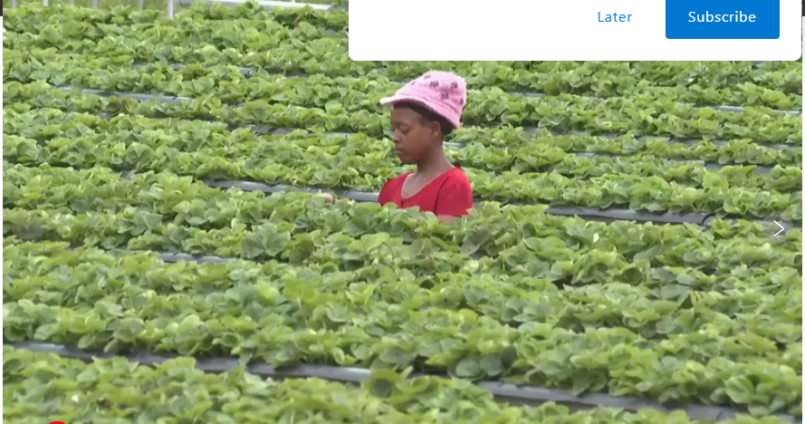
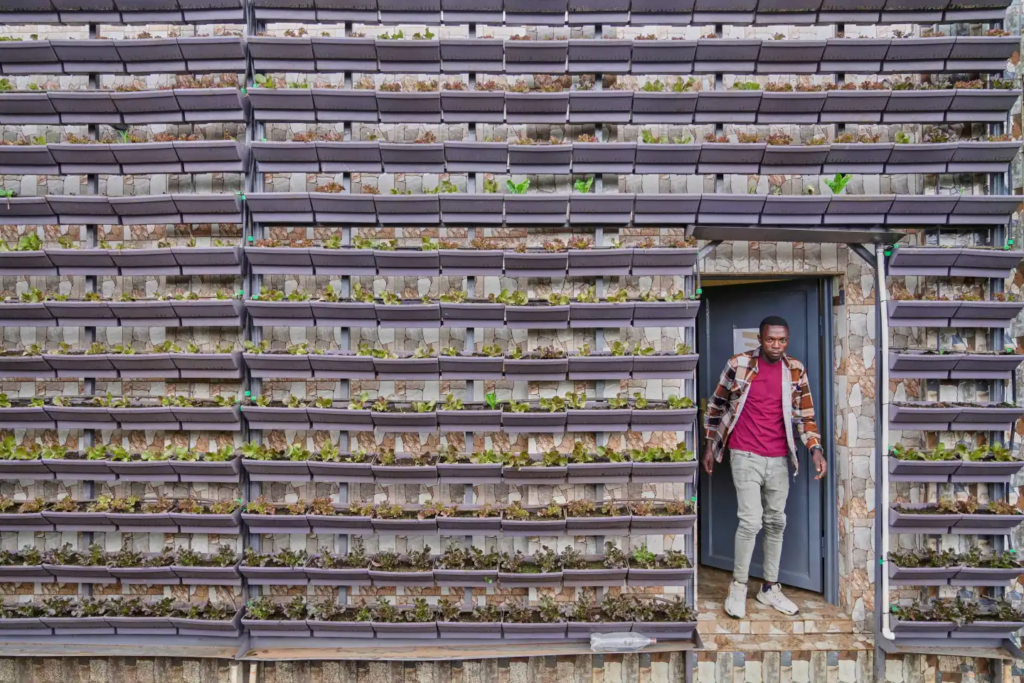
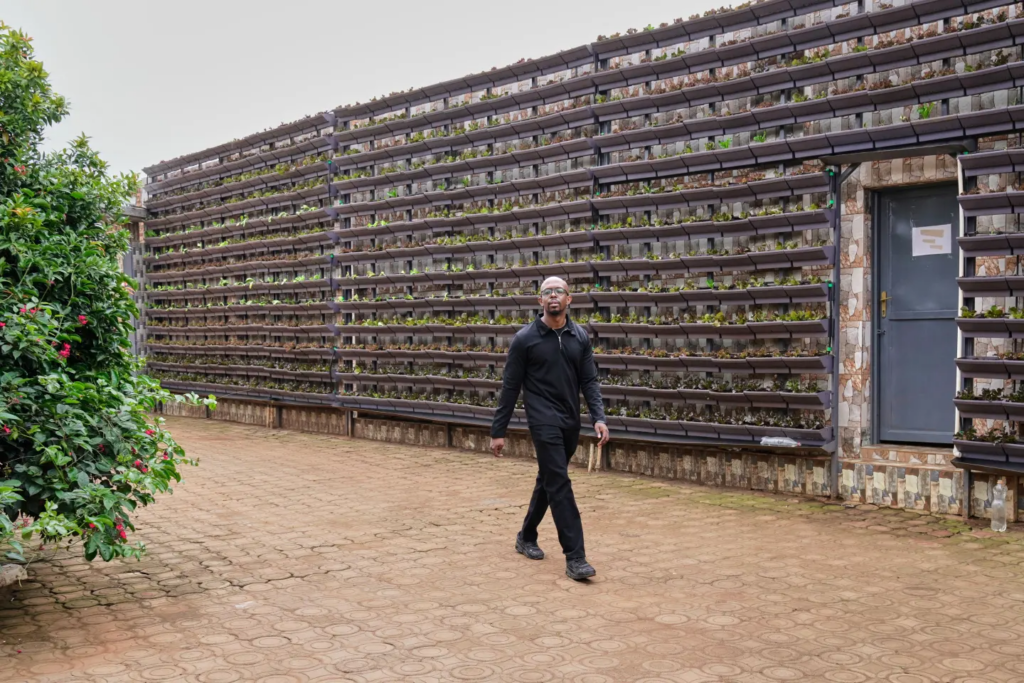
Other approaches in Kigali include vertical farms, where vegetables and fruits such as strawberries are grown in stackable plastic containers.
Christian Irakoze co-founded a local company, Eza Neza or “grow well,” that sets up vertical farms in the city and described them as scalable. The AP visited two of them at local homes and another that provides stocks to a grocery store. One grows 600 plants in vertical rows stretching about 50 meters (yards) along a perimeter wall.
Irakoze described his work as “a different way of thinking about farming, from traditional large-scale upcountry farming to something smaller, modular, and that anyone can really do.”
Through the use of locally available inputs such as manure and volcanic sediment in place of soil, Irakoze said farming should be adapted to lessen outside impacts.
“We really have to find ways to find our own solutions, whether through inputs like fertilizers or seeds. Some of these global events are always a reminder that we should definitely have some alternatives,” he said.
Elsewhere in Kigali, a group of young agronomists are training farmers to adopt technologies such as hydroponics to maximize productivity, using water instead of soil.
“The population is increasing, yet our land is not increasing. We make sure that we find solutions that can help farmers to overcome that, and then they produce more,” said one of the agronomists, Richard Bucyana.
Bucyana agreed that solutions such as Rwanda’s help to buffer from global events.
“African governments should start thinking how they can be self-sustainable,” he said.
Latest Stories
-
Ghana explores centre of excellence for hearing, communication and cochlear implant care
1 hour -
Schizophrenia-related disorders lead mental health cases recorded in Ghana
1 hour -
Dutch authorities enlist Ghana in hunt for fugitive drug lord Bolle Jos
2 hours -
Ghana housing finance conference adopts communiqué to improve affordable housing access
6 hours -
Special Initiatives Minister urges Wa Technical Institute to enrol more girls as EU-backed solar training lab opens
7 hours -
In the matter of my first year at the Bar
7 hours -
ActionAid Ghana calls for an end to child marriage, greater investment in girls’ rights
7 hours -
Newsfile to tackle World Cup visa scandal, beach demolitions, education strikes, BRICS bid
7 hours -
UK-Ghana Trade & Investment Summit: Trade Resource Centre to help businesses maximise UK-Ghana trade opportunities
8 hours -
Embassy of Denmark celebrates World Maritime Day
8 hours -
Linking LEAP to productive inclusion could cut extreme poverty by 2030 – UNICEF
9 hours -
Trade Ministry backs use of creative arts to rehabilitate prison inmates
9 hours -
Negotiations with government to continue despite strike suspension – GNAT
9 hours -
‘Ghana cannot afford to waste public resources; every cedi has a job’ – Ato Forson
9 hours -
Ghana expects economic boost as World Assemblies of God Congress brings 10,000 delegates to Accra
9 hours