

Audio By Carbonatix
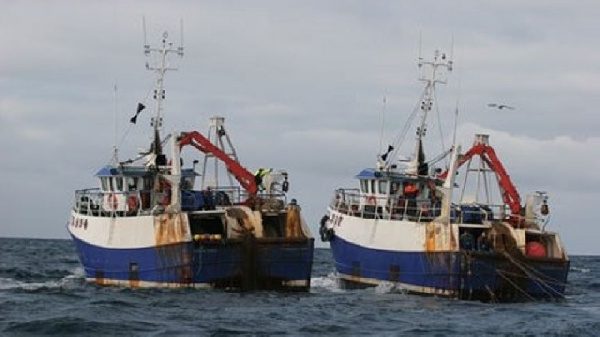
‘Saiko trans-shipments’ – where industrial trawlers transfer fish at sea to specially adapted canoes to be landed – are very clearly illegal under Ghanaian law, an analysis carried out by the Taylor Crabbe legal consultancy shows. The Environmental Justice Foundation (EJF), which commissioned the analysis, says it is publishing this to put the matter definitively to rest. The real issue, says EJF, is enforcing the law to bring an end to saiko, as the coronavirus spreads it is more important than ever that food security and livelihoods of coastal communities are protected.
‘Saiko’, a severely destructive form of illegal fishing, in 2017 alone it took around 100,000 tonnes of fish costing Ghana millions of dollars in revenue and threatening food security and jobs.
Industrial trawlers target fish specifically for saiko – not only the bottom-dwelling fish they are licensed to catch but also juveniles and small pelagic fish. The small pelagics are known as ‘the people’s fish’ in Ghana due to their importance to coastal communities – because of saiko, they are under severe threat. Unless ambitious action is taken, scientists estimate that these stocks are in imminent danger of collapse.
The full force of the law is needed to bring this criminal trade to an end; however, some public discourse has appeared to throw doubt over whether saiko is illegal.
For instance, the Ghana Industrial Trawlers Association (GITA) wrote to the Ministry for Fisheries and Aquaculture Development in November last year saying that it would “suspend [saiko] trans-shipment at sea until further notice”.
Yet the legal analysis shows clearly that the trans-shipment of fish from industrial trawlers to canoes (known as ‘saiko’) has been rendered illegal since the passing of the implementing rules to the 2002 Fisheries Act (Act 625) - the 2010 Fisheries Regulations (LI 1968).
The 2010 Regulations expressly prohibit the trans-shipment of fish at sea from industrial trawlers to canoes. According to the legal analysis, the Minister, in exercising their power under the 2002 Act to enact implementing regulations on trans-shipment has ensured:
“Where the form of transhipment is explicitly barred [by the Regulations] then the [fisheries] commission and council are precluded from authorising or supervising such transhipments”
As such, the announcement from the trawl industry association to suspend saiko amounts to an effective admission of criminality by its membership. In addition, GITA cannot claim to have control over the situation. Since its declaration that it would “suspend” the already-illegal practice in November, almost 200 saiko canoes have landed at Elmina, according to monitoring by EJF.
In the 2020 budget statement, the government announced that it would stop saiko as part of efforts to save the fishing industry, committing to banning all domestic and international vessels found to be engaging in saiko from operating in Ghanaian waters. It must keep this vital pledge, says EJF, as well as immediately investigating all suspected cases of saiko fishing and prosecuting cases transparently through the court process.
EJF’s Executive Director Steve Trent said: “The world is facing a pandemic, and while it is absolutely vital that the government create a clear strategy for coronavirus, saiko cannot be allowed to continue while attention is diverted. These coastal communities need good nutrition and stable livelihoods more than ever in the face of threats such as coronavirus.
Saiko is a serious threat to Ghana’s economy, driving poverty, hunger and unrest. Ghana’s ‘people’s fish’ is on the brink of collapse. We do not have time to waste discussing whether something that has been illegal for a decade is illegal – it is and all parties know this. This watertight legal analysis shows that saiko is illegal beyond all doubt. Now let us get on with the real, crucial action of eradicating this criminal trade once and for all.”
Latest Stories
-
The 7-foot giant of Ngleshie Amanfro: Seven-foot Ghanaian Ephraim Saawa dreams of joining the national basketball team
11 minutes -
Government promises support for Kumasi Central Market fire victims
17 minutes -
Vibes The Movie: Big Ghun’s Ghanaian film earns five nominations at 2026 REFFA
48 minutes -
MamaCare CEO warns unresolved conflicts among health workers could undermine maternal and neonatal care
1 hour -
Health professionals urged to translate medical knowledge into practice to save mothers
1 hour -
Conflicts among care providers linked to maternal, neonatal deaths – Expert
3 hours -
GIS marks 10th TIME conference, champions improved teaching practices
3 hours -
BRICS Or Balance? What Ghana’s bid really means
3 hours -
GPRTU wants full TRAFFITECH-GH implementation to start in 2027
4 hours -
Mahama announces plans to import electric wheelchairs for PWDs
4 hours -
KGL U17 Colts 2026: Western beat Prempeh Elite Academy to set up final final with Greater Accra Region
4 hours -
Late Solanke strike salvages 10-man Spurs draw at Man United
4 hours -
Gender Ministry to monitor welfare of Nana Akua Addo’s children amid domestic violence case
4 hours -
Benedict Okyere Yeboah: Ghana’s football problem goes beyond sacking a coach
5 hours -
GPL 2026/27: Darkwah Wiafe’s winner sees All Blacks beat Kotoko
5 hours