

Audio By Carbonatix
The plan
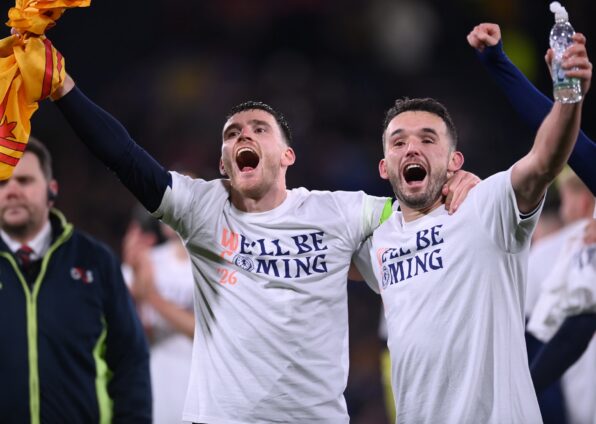
Scotland qualified for the World Cup in dramatic circumstances that absorbed almost three decades of frustration. This marks a first appearance in the event since 1998 and it was achieved on a spine-tingling Hampden Park occasion when Denmark were eventually vanquished 4-2. Scott McTominay scored with a stunning overhead kick and Kenny McLean wrapped up the win from the halfway line in added-time.
The intervening months have proved tricky. Defeats without scoring against Japan and Cote d’Ivoire, added to audible frustration from Steve Clarke over his contractual scenario, seemed to dampen the Tartan Army’s mood. Earlier, there was euphoria. “The number of people that come up to you and just want to shake your hand to say ‘thank you and well done’, it's pretty special to feel that,” Clarke recalled. “You're walking through the airport and every second person wants to shake your hand.”
Now for the trickier part. Clarke has an ageing squad which is light on goal threat if midfielders – primarily John McGinn and Scott McTominay – do not contribute. The goalkeeping position has been a problem for a concerted spell now. At centre-back, the Scots are adequate rather than strong, having operated with a back three or four. McGinn, McTominay, Andy Robertson and Che Adams are the manager’s go-to men when fit. Umpteen others have been alongside Clarke for a number of years; this is a Scotland squad high on cap numbers.
Clarke is pragmatic in approach but it will be a shock if he does not start with two strikers for game one against Haiti. Victory there and Scotland have a genuine chance of progression from the first round for the first time. There is also a lingering reason for Clarke to at least appear bold; he was castigated by supporters for negative tactics in a must-win match against Hungary at the last Euros.
A more defensive style is likely and understandable against Morocco and Brazil, who simply put are better teams than Scotland. Clarke’s team can be useful in such a situation; they are excellently drilled and carry a counter-attacking threat.
The coach
Scotland were in the doldrums, with tournament participation supposedly an unattainable dream, when Steve Clarke took on the position in 2019. History will look very favourably upon the former Chelsea player, given he has taken his nation to three out of four finals. Clarke is rarely expressive in public, which can count against him, but retains huge respect from his squad. He takes a hands-on training ground approach and has a menacing side which players are acutely aware of. Clarke’s speech to Scotland’s team before that make-or-break qualifying tie against Denmark made a massive impact. “It is up there with the best I have ever heard before a game,” said Andy Robertson.
Star player
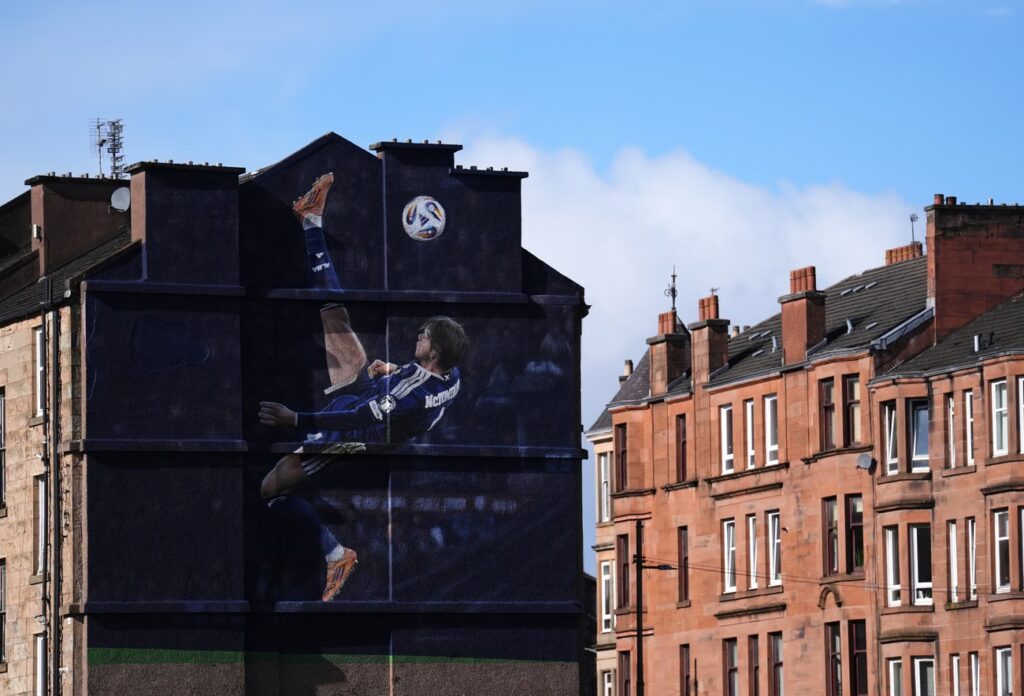
Scott McTominay has evolved from bit-part player at Manchester United to a hero in Naples. He has grown in stature and significance for Scotland while reviving his club career and his overhead kick in the Denmark win is etched in history as one of the finest goals ever witnessed at Hampden Park. Alex McLeish’s second tenure is regarded by many as unmemorable but it was Clarke’s predecessor who convinced this English-born midfielder to declare for Scotland. McLeish’s gift to his nation with that move alone proved a significant one. Scotland rely heavily on McTominay’s game-changing talent.
One to watch
Ben Gannon-Doak’s switch from Liverpool to Bournemouth has been disrupted by injury but the winger still gets pulses racing among Scottish fans. Gannon-Doak’s directness and pace mean he is different to those alongside him. Clarke has urged caution among media and fans, wanting the 20-year-old to be given space to develop, yet the nature of his game is such that the noise is understandable. Gannon-Doak memorably reduced Josko Gvardiol to a quivering wreck when Scotland faced Croatia in Glasgow. He will absolutely relish the World Cup stage.
Unsung hero
Bournemouth’s Ryan Christie has quietly established himself as a player with a good Premier League career and is closing in on 75 caps. The midfielder is technically impressive, carries energy and offers a goal threat. Yet the Inverness-born player often seems overlooked when praise is being issued to those within Clarke’s squad. One obvious explanation for that is that two of those routinely deployed alongside him, McTominay and McGinn, are Scotland’s main stars. At 31, this may not be Christie’s last World Cup but it will unquestionably prove the only one of his prime. It would be no shock to see him make valuable contributions.
What to expect from fans at games?
It is no exaggeration to suggest Scotland’s support might outshine the players. The Tartan Army will travel en masse and in fine spirits. They have earned a reputation for their good nature, regardless of results. A World Cup return after 28 years means scores of people who have never sampled this environment before booked up instantly, regardless of whether they were likely to source match tickets. Expect colour, kilts, bagpipes and a level of alcohol consumption that will make an enormous contribution to the GDP of the United States.
This article is part of JoySports' collaboration with The Guardian. The cooperation enables readers to access team news, previews, and more from all 48 teams that qualified for the FIFA World Cup 2026.
Latest Stories
-
US seeks changes to rejected $109m health compact with Ghana – Mahama
52 seconds -
Nine dead in mass shooting at Pennsylvania home
18 minutes -
‘Time for Ukraine to get new president,’ says Trump after Zelensky condemns diesel deal
21 minutes -
Hincapie injury adds to Arsenal issues after Guimaraes rescue act
30 minutes -
Henderson scores twice as Chelsea thumb Bournemouth
39 minutes -
Photos: Mentapulse Africa convenes health and labour summit to address talent retention
51 minutes -
Mahama inspects Nkokɔ Nketenkete plant, eyes Bechem as chicken capital
58 minutes -
Ghana not seeking full BRICS membership, applying as Partner Country – Ablakwa
59 minutes -
Woman injures three people in third Poland school knife attack in a week
1 hour -
Ghana should join BRICS as partner, not member – NPP Bono East Regional Secretary
1 hour -
Ghana High Commission warns nationals in South Africa over protests in Johannesburg, Durban
1 hour -
Mahama praises Roads Minister for keeping Big Push contractors on their toes
1 hour -
World Cup Visa Scandal: ‘My client has not collected money for visas’ – Ampofo Ankrah’s lawyer
1 hour -
US immigration officials defend ICE agents who shot man in same car as child
1 hour -
Commentator Katie Zacharia picked as new White House press secretary
2 hours