

Audio By Carbonatix
South Korea's president has been removed from office after the Constitutional Court voted unanimously to uphold his impeachment.
Yoon Suk Yeol was suspended from duty in December after being impeached by parliament, following his failed attempt to impose martial law.
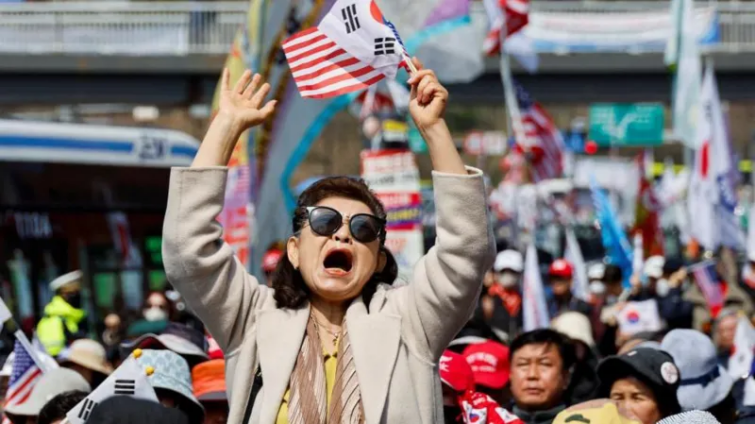
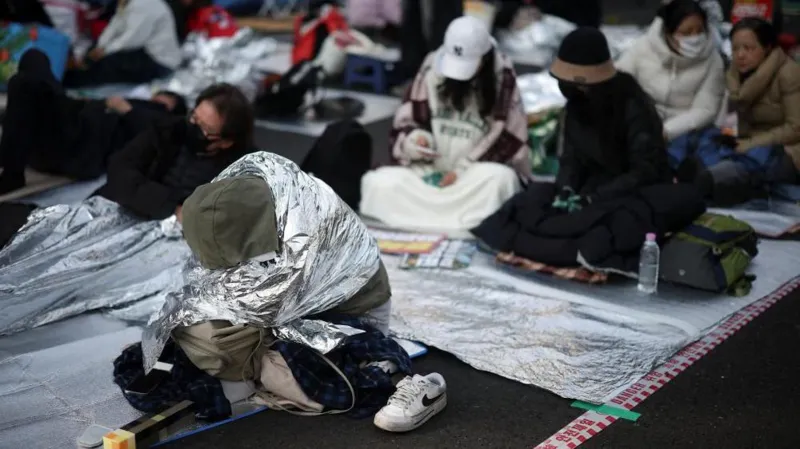
The ruling on Friday was met with tears of joy and sadness among Yoon's critics and supporters, who had gathered in various parts of Seoul to watch the verdict live.
A snap election to vote for Yoon's replacement must be held by 3 June.
What next for South Korea?
After months of anxiously waiting, South Koreans have some badly needed closure. The country can now start to repair and move forward, the first step being to elect a new leader.
But the crisis Yoon has unleashed is far from over. Although his military takeover only lasted six hours, the political fallout has only intensified with each month that has passed.
The night of 3 December, when Yoon ordered troops to storm parliament, changed something in South Korea's psyche. It reawakened the ghosts of the country's violent, dictatorial past, showing people that martial law was not, as most had assumed, consigned to history.
Many are still upset by what happened that night, and afraid that the threat of martial law could be brandished again by future zealous politicians.
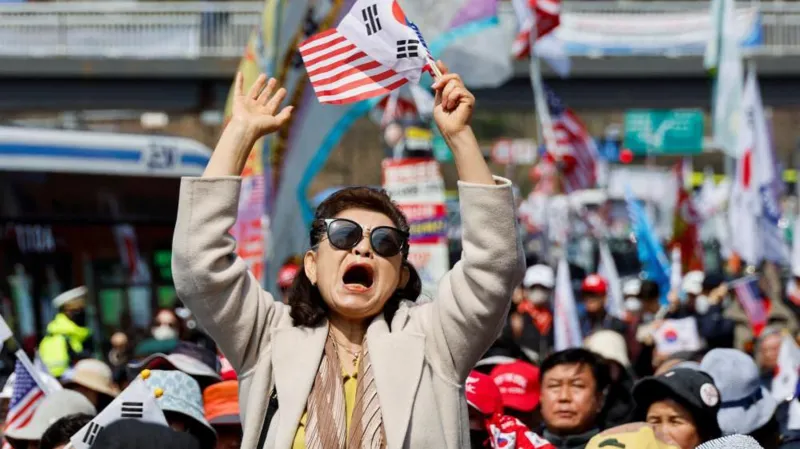
Today's verdict therefore came as a relief to most, who cheered on the streets of Seoul as the verdict was read out. It is a victory for South Korea's democracy, that for a while looked as if it was on dangerous ground.
The constitutional court was damning in its criticism of Yoon's authoritarian power grab, as all eight judges voted to remove him from office.
In upholding his impeachment, Moon Hyung-bae, acting president of the eight-men bench, said Yoon's short-lived military takeover was not justified, and that he had "[gone] against the people he was supposed to protect".
He added that the implementation of martial law "damaged people's basic political rights" and "violated the principles of the rule of law and democracy".
Already, there are serious calls to change South Korea's constitution – to strengthen its institutions and limit the powers of the president - to guard against this happening again. However, it will take a particularly patriotic future president to sign off on reducing their own authority.
South Korea more polarised than ever
As Yoon leaves office, he leaves behind not just a shaken country, but a divided one. In the aftermath of that shocking December night, South Koreans were mostly united in their disgust for the president and what he had attempted to do.
But Yoon showed no remorse. He dug in, fought his trial at every step, and continued to dangle the same unsubstantiated conspiracy theories that he used to justify his military takeover.
He claimed that the country and his political opposition had been infiltrated by North Korean and Chinese spies, and that these "anti-state forces" had rigged past elections.
Gradually more and more people believed him. Through his belligerence, Yoon has turned himself into a political martyr for many – the victim of an establishment that has been overrun by "communists".
His conspiracy theories have firmly taken root, and far-right extremism is flourishing. Thousands protest every week in the centre of Seoul. They were on the streets on Friday, and will be there again Saturday, claiming the country's politicians and judges are corrupt and elections are rigged.
And these are not fringe views.
More than a third of people now say they do not trust the Constitutional Court while delivered Yoon's verdict; more than a quarter do not trust the voting system.
Within this climate of distrust, South Korea must head to the polls. Yoon's successor needs to be chosen in the next 60 days. These days are sure to be fraught and even more divisive. Many may not to accept the result that comes.
Yet South Korea urgently needs a new leader who can advocate for the country as whole, having been without one for months.
It quickly needs to figure out how to deal with President Trump, having started on the backfoot. His 25% tariffs on cars and steel have dealt Seoul, and its ailing economy, an early a blow, but many believe worse is coming; that it is only time until Mr Trump turns his gaze to the Korean peninsula, and when he does he will try to force South Korea to pay more for its defence and cut a deal with Seoul's arch enemy, Kim Jong Un.
Yoon's legal team has accused the court of politicising the ruling.
"The whole process of this trial itself was not lawful and unfair," said one of his lawyers, Yoon Gap-geun.
"I feel regrettable that this completely is a political decision," he said.
But politicians are calling for unity, asking everyone to accept this verdict, so South Korea can at least start to move on.
Yoon's political party, the PPP, has conceded, but Yoon himself has not. In a statement he apologised to his supporters for his "shortcomings" without mentioning the ruling.
"I am truly sorry and regretful that I could not live up to your expectations," he said.
"It has been a great honor to serve the Republic of Korea. I am deeply grateful to all of you who supported and encouraged me, despite my many shortcomings," he said.
He cannot appeal, as the decision was made by South Korea's top court. But, having repeatedly vowed to fight to the end, he could still refuse to go quietly.
Latest Stories
-
Ghana Psychological Association calls for greater involvement of people with lived experience in mental health care
31 minutes -
Ablakwa says Ghana could evacuate more citizens from South Africa if the situation worsens
59 minutes -
Violence against girls must be tackled through individual responsibility – Gender advocate
1 hour -
Ghana’s BRICS bid must be guided by national interest – International Affairs Analyst
1 hour -
Journalists look back on a decade of breast cancer reporting in Ghana
2 hours -
President Mahama ends Resetting Ghana tour of Ahafo Region
4 hours -
African negotiators seek delivery of climate commitments at COP31
4 hours -
BoG develops AI rules for financial sector
4 hours -
‘Big Push’: Government assures contractors of prompt payments
4 hours -
Court fines miner for breaking into gold buying shop
4 hours -
Tarkwa court jails labourer for three years over GH¢123,000 theft
5 hours -
GAEC must retain nuclear scientists for Ghana’s nuclear ambitions – Minister
6 hours -
Man reportedly mistaken for game and shot by hunter dead in forest
6 hours -
19-year-old mason jailed 15 years for defiling seven-year-old pupil
6 hours -
Ghana’s banking sector assets rise 20.47% to GH¢500.2bn – BoG Governor
6 hours