

Audio By Carbonatix
Eighty-year-old Steven Awuah has farmed cocoa all his life in the small town of Adepena in the Bia West District of the Western North Region.
Before his farm was affected by the Cocoa Swollen Shoot Virus, he was harvesting over 300 bags every season.
"I have lost almost everything I have worked for all these years due to this disease but for my two wives I would have died by now," he said.
Initially, when it started I was not sure of what the problem was, in fact, myself and other farmers were very confused, at a point we thought our land has been curse he said.
"Even officers from the agriculture extension office couldn't tell us the course, very surprising," he lamented.
A few years ago, Adepena was a cocoa boomtown, recording 1,000 tons of cocoa every year.
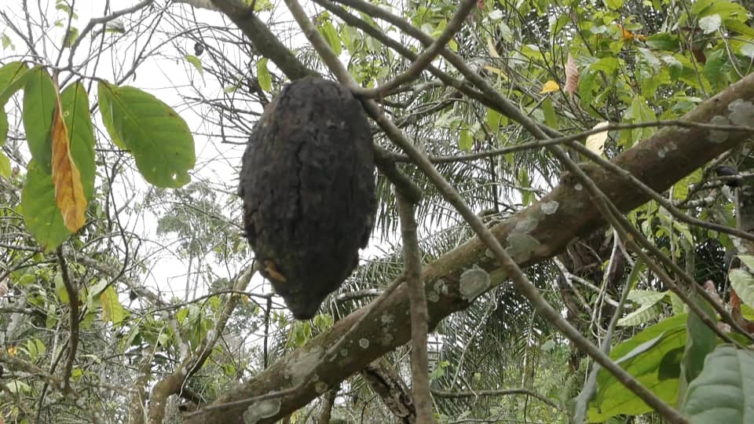
Now, the trees are doomed and infected by the deadly swollen shoot disease even a distance away.
Two years ago, I was in this village. Today, as I travel through the swathes of cocoa farmlands, the trees are withered and covered with weeds. It was not like this when I first came here.
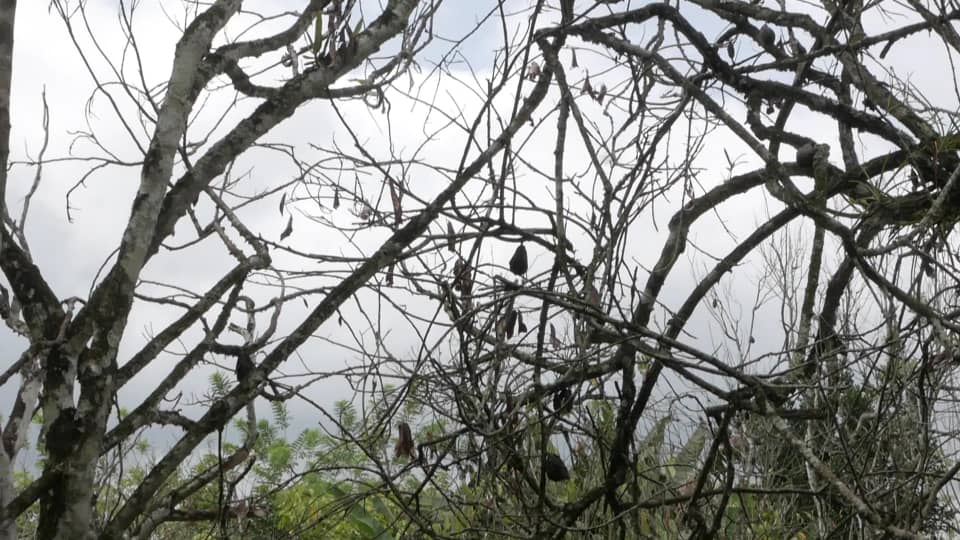
A 2018 survey by Cocobod on 256 thousand hectares of farms in the Western North Region showed 69 per cent have been affected by the Cocoa Swollen Shoot Virus Disease.
In 2018, farmers produced 64 thousand bags of cocoa last year, they only had 30.
Confirming the statistics a Farmer said he uses to harvest 10 bags of cocoa from every acre of land but today he cant boost of a single bag from the same land.
Regional Manager of Cocoa Health and Extension Division, Kwame Owusu Ansah explains the disease is spreading rapidly.
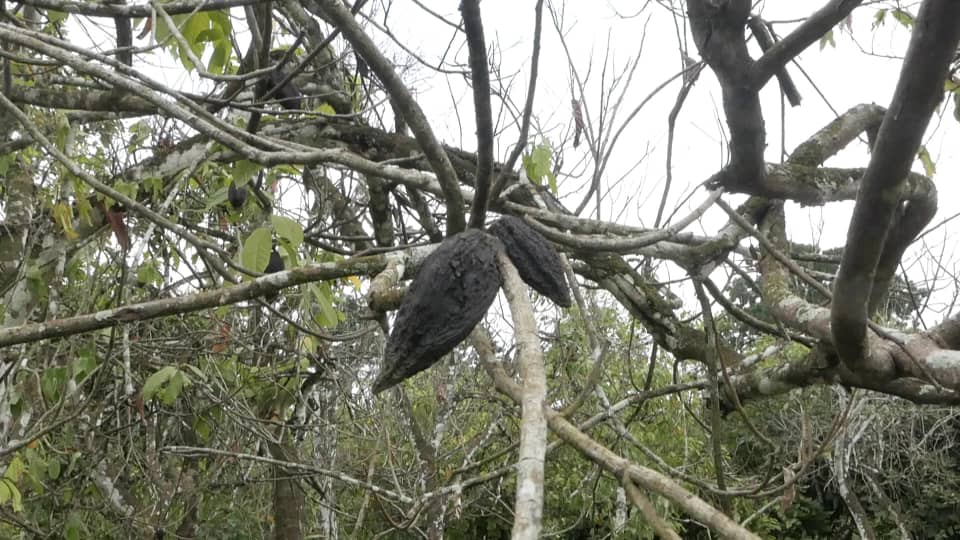
"The situation is not too good, very alarming and as a country, we need to stand up and find a solution to this menace," he said.
From one community to the other, in this area, farmers say the battle against this disease is slipping through their fingers.
"Most of my colleague farmers have fled away because they have lost everything life gave them, I can show you hundreds of empty cottages on the stretch," he narrated.
There is no chemical to control the Cocoa Swollen Shoot Virus. The only option is to cut down the cocoa tree and replant.
In a bid to ensure that the disease is controlled Cocobod has introduced the Cocoa Rehabilitation Program
According to a Principal Public Affairs officer at Cocobod, Benjamin Teye Larweh, though the Rehabilitation is a national program, Cocobod has begun in the Western-North and Eastern Regions due to the magnitude of destruction on the farmlands.
Ghana is still hoping to make cocoa production levels back to the 2011 highs of a million tonnes per year.
Latest Stories
-
Brandon Asante and Coventry all but promoted to Premier League despite Sheffield Wednesday draw
21 minutes -
GPL 2025/26: Late Kwartemaa strike downs Hearts in Tema
27 minutes -
Ghana Faces Sierra Leone Moment as Prosecutorial Powers come under strain
37 minutes -
Don’t consume fish or seafood from Tema Shipyard until further notice – FDA warns
42 minutes -
Why volunteering might be Africa’s most underrated career accelerator
48 minutes -
ActionAid Ghana raises concern over gender gaps in Feed Ghana Programme
50 minutes -
Windstorm wreaks havoc in Gushegu, displacing nearly 2,000 residents and damaging schools
53 minutes -
Friends of Bridget Bonnie Marks her 35th birthday with donation to Kasseh Model Health Centre
2 hours -
From Ekumfi Kokodo to the Pulpit Stage: Essi Donkor’s gospel journey takes shape
2 hours -
Landfilling waste management creates no value, it’s an economic waste
2 hours -
Photos: Speaker Bagbin Commissions MPs constituency office under parliamentary decentralisation programme
2 hours -
Black Stars technical advisor Winfried Schäfer sacked as GFA shakes up backroom staff
2 hours -
Wenchi water project almost complete, critical to gov’t agenda – GWL MD
3 hours -
Anti-LGBTQ+ bill not part of government’s legislative agenda – Inusah Fuseini
3 hours -
Anti-LGBTQ Bill: Forget the rumour mongers, I’m a man of action, and will pass the bill – Speaker
4 hours