

Audio By Carbonatix
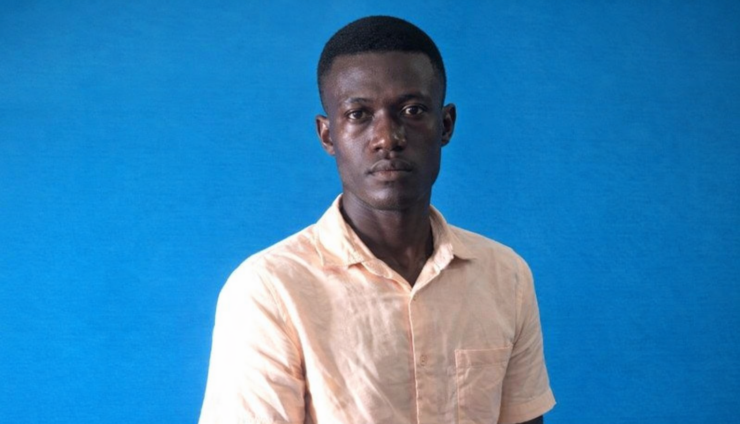
An Accra High Court has sentenced Richard Appiah, a footballer, to life imprisonment for the murder of two boys at Abesim in the Bono Region.
The convict was found guilty by a seven-member jury on two counts of murder.
The court heard that on August 20, 2021, Appiah murdered Stephen Sarpong, 15, and Louis Agyemang, 12, at his residence in Abesim.
The case began at the Kaneshie District Court, now the Adabraka District Court, where committal proceedings were held before it was transferred to the High Court in Accra.
The prosecution, led by Nana Ama Adinkra, a Senior State Attorney, called five witnesses, while the defence team, led by Faustinus Yirilabuo, called two witnesses.
According to the prosecution, the complainant, a driver and father of Louis Agyemang, resided in the same community as the accused.
On the day of the incident, Appiah allegedly lured Louis Agyemang, his half-brother, to his residence. When the boy could not be found later in the evening, a relative, Mr Akwasi Boateng, questioned the accused about his whereabouts.
The accused joined the search, after which a report was filed with the police.
Mr Boateng later went to the accused’s residence and, through a window, saw the victim lying motionless in a room. The police were alerted and forced open the locked room, where they made further discoveries.
The remains of both victims were subsequently conveyed to the Police Hospital for preservation and investigation.
During the investigation, the accused led police to another location, where additional evidence was recovered. A brown envelope containing GHC7,960 was also found in his room.
Appiah was charged with two counts of murder and pleaded not guilty.
In his defence, he expressed condolences to the families of the deceased and claimed he was suffering from severe depression and hallucinations at the time of the incident.
His lawyers urged the jury to return a verdict of guilty but insane, arguing that he was mentally unstable and therefore not criminally responsible.
The defence maintained that their client acted under delusion and did not have the mental capacity to appreciate the consequences of his actions.
However, the prosecution argued that the accused was aware of his actions and took steps to conceal evidence, indicating that he knew the difference between right and wrong.
The State further argued that insanity was an exception to criminal responsibility and must be strictly proven.
The jury returned a unanimous verdict of guilty.
Following the judgment, defence counsel, Theophilus K. Dzimegah, indicated that the legal team would appeal the decision in the coming days.
Latest Stories
-
I do not see myself as better than anyone – NPP’s 1st Vice Chair Kojo Bamba
27 minutes -
Police blur the line between invitations and arrests – Reindorf Twumasi Ankrah
1 hour -
Turning invitations into arrests is making citizens reluctant to assist police – Twumasi Ankrah
2 hours -
The Traffitech-GH SMS spot-fine system: The good, the sad, and the funny – Bright Simons writes
2 hours -
Hawa Koomson pledges experienced and mature leadership of NPP women’s wing
3 hours -
Young woman found dead at Kasoa Peace Town
3 hours -
Playback: The Law examined lawful arrest in Ghana
4 hours -
Mahama urges African governments to treat healthcare as an investment, not budget cost
4 hours -
Bawumia congratulates John Boadu and new NPP executives, pledges support ahead of 2028
4 hours -
Aksa Energy delegation pays courtesy call on GRA Commissioner-General
4 hours -
‘No talent should be left out’ – Bawumia pledges inclusive NPP campaign for 2028
5 hours -
Prof. Mike Oquaye recounts how he blocked the Special Prosecutor’s attempt to arrest Bawku Central MP
5 hours -
Make health sovereignty a priority for Africa – Mahama
5 hours -
Dorimon Naa, Wa West DCE lead massive clean-up exercise; threaten sanctions against recalcitrant residents
5 hours -
Photos from Adom FM Y2K Jam
5 hours