

Audio By Carbonatix
A former CEO of the National Pensions Regulatory Authority (NPRA) has warned that taxpayers will ultimately bear the cost of the state’s decision to halt prosecution in the case involving Dr. Kwabena Duffuor and seven others after reaching a 60% recovery threshold.
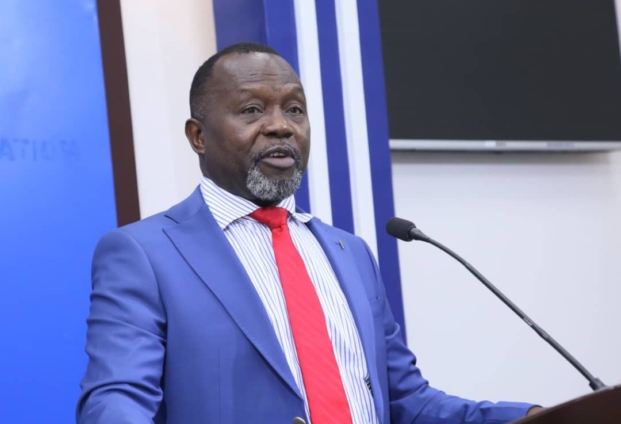
Dr. Daniel Seddoh, speaking on JoyNews’ PM Express on Tuesday, said he wasn’t surprised by the announcement from the Office of the Attorney-General.
The office, in collaboration with EOCO and other state agencies, recently disclosed that it had recovered 60% of the over GH¢5 billion allegedly lost and would reconsider prosecution.
“I wasn’t surprised, because this case took us how many years, between seven to eight years,” Dr. Seddoh said.
“We have a legal system that is very slow and very painful. We’ve lost lives because of this whole thing.”
He acknowledged that some may see the 60% recovery as better than nothing, but disagreed.
“Some people will tell you it’s better than nothing, but I have deeper questions to ask than telling me it’s better than nothing,” he said.
Dr. Seddoh explained that banks operate not with their own money, but with funds entrusted to them by depositors and other stakeholders.
“Banks have no money of their own. They leverage on depositors and other people’s money to work,” he explained.
“The depositors put money in the bank with the understanding that it’s a relationship of trust… that anytime they go for their money, they will get it.”
But that trust was broken, he argued, when depositors could not access their money and no one came to their aid.
“What has happened has created a situation where the depositors could not get their money, and there was nobody to come to the air rescue.”
Referring to the state’s recovery efforts, he questioned: “When you take 60% and you can get 40%, who is going to finance that 40%? Because ultimately, the money belongs to depositors. Ultimately. So who is going to finance that?”
He added that the chosen path to resolve the crisis may not have been the wisest. “We use a certain approach to resolve the issue, and it just comes back to bite us. Probably this is not the most efficient approach.”
Dr. Seddoh suggested that a better route would have been to bring in investors and turnaround experts to revive and eventually sell the troubled banks.
“We should have probably used approach of an investment… get people in, put money in, get stronger hands to manage the bank and get it out of the hole, turn it around, sell it and get your money out.”
Instead, he lamented, “The approach we have used is to throw money at it as an expense which will never come back. And that ultimately, falls on the taxpayer, which includes the depositor.”
Latest Stories
-
Leeds say boos during Ramadan pause ‘disappointing’
39 minutes -
Premier League deletes Vicario social media post
50 minutes -
Real Madrid beaten at home by Getafe for second successive loss
59 minutes -
‘Clubs refused to look at me after my crash’ – Antonio on Qatar move
1 hour -
Mayweather to fight kickboxer before Pacquiao rematch
1 hour -
India and Canada reset ties with ‘landmark’ nuclear energy deal
1 hour -
Mahama should equally credit NPP for economic stability – Economist
2 hours -
Mbappe has knee sprain with no surgery planned
2 hours -
Interior Ministry releases funds to settle 2025 rent allowance arrears for security services
2 hours -
Ghana evacuates diplomatic staff from Iran; embassy shut indefinitely — Ablakwa
2 hours -
France to boost nuclear arsenal and extend deterrence to European allies
3 hours -
Chinese community in Ghana marks ‘Year of the Horse’ with grand new year festival
3 hours -
When regional instability becomes national risk: Ghanaian tomato traders killings
3 hours -
Photos: President Mahama meets Tanzania President Suluhu Hassan
3 hours -
Mahama calls for cessation of Iran-US-Israel conflict, urging return to dialogue
4 hours