

Audio By Carbonatix
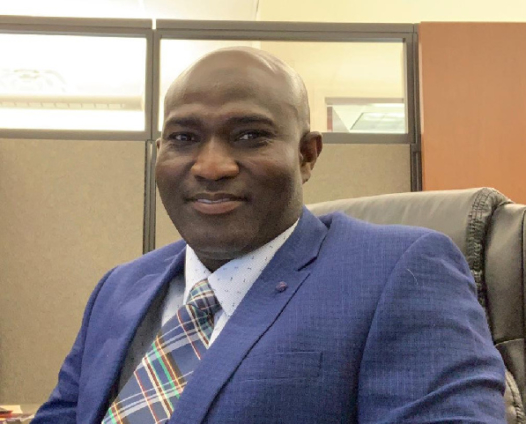
An Economist with the Louisiana Economic Development in the United States, Dr Sa-ad Iddrissu, is warning against a looming banking crisis in Ghana.
According to him, the crisis will be inevitable unless the government secures the $1.5 billion stability fund it expects by July this year.
“For the bonds that resulted in all this cleanup, already some of us spoke against the Domestic Exchange Programme, and I even said it was going to lead to a banking crisis.
“People called me a pessimist… But fast forward, that is exactly what we are seeing now. We are heading into a banking crisis,” he said on JoyNews’ AM Show on Thursday.
At the World Bank Spring Meeting in April 2023, the Finance Minister, Ken Ofori-Atta, announced that a process was underway to establish the Ghana Stability Fund.
According to him, the fund was a measure to help deal with the expected challenges that will hit the financial sector due to the Domestic Debt Exchange Programme (DDEP).
But Dr Iddrissu says the banking sector is already experiencing the impact of the DDEP. He says players in the financial sector were aware of the crisis, but have kept silent due to the fear of political labeling.
He noted that most banks are struggling to make profits due to the ailing economy. He attributed this to the decline in the rate at which customers deposit money in the banks.
The Economist, therefore predicted the possibility of some banks shutting down some of their branches if the government fails to intervene to assist the sector.
“If government is not able to help by July, gradually we'll get into a situation whereby some of the banks will start closing down branches…
“They may not end up collapsing entirely, but gradually it will hit them because a lot of them had their investment in these bonds,” Dr Iddrissu indicated.
He says eventually some banks will collapse without government's support.
“If government is not able to get that 1.5 billion stability fund set up by the July deadline, we should expect that some of these banks will start collapsing.
“They will start laying their workers off because they wouldn't be able to keep paying the salaries of these workers without getting the investment that they did in those bonds.”
On December 5, 2022, the government launched a Domestic Exchange Programme to protect the economy and enhance the nation's capacity to service its public debts effectively.
The programme was an invitation for the voluntary exchange of approximately GH¢137 billion of the domestic notes and bonds of the Republic, for a package of new bonds that were to be issued by the republic.
The Exchange included the E.S.L.A. and Daakye bonds, but excluded Treasury bills and notes and bonds held by individuals when it was first introduced.
Following the implementation of the programme, most banks have suffered adverse effects, especially those that depended on government bonds.
Latest Stories
-
Power restoration fault suspected in Kumasi Central Market fire
2 hours -
The 7-foot giant of Ngleshie Amanfro: Seven-foot Ghanaian Ephraim Saawa dreams of joining the national basketball team
3 hours -
Government promises support for Kumasi Central Market fire victims
3 hours -
Vibes The Movie: Big Ghun’s Ghanaian film earns five nominations at 2026 REFFA
4 hours -
MamaCare CEO warns unresolved conflicts among health workers could undermine maternal and neonatal care
4 hours -
Health professionals urged to translate medical knowledge into practice to save mothers
4 hours -
Conflicts among care providers linked to maternal, neonatal deaths – Expert
6 hours -
GIS marks 10th TIME conference, champions improved teaching practices
6 hours -
BRICS Or Balance? What Ghana’s bid really means
6 hours -
GPRTU wants full TRAFFITECH-GH implementation to start in 2027
6 hours -
Mahama announces plans to import electric wheelchairs for PWDs
7 hours -
KGL U17 Colts 2026: Western beat Prempeh Elite Academy to set up final final with Greater Accra Region
7 hours -
Late Solanke strike salvages 10-man Spurs draw at Man United
7 hours -
Gender Ministry to monitor welfare of Nana Akua Addo’s children amid domestic violence case
7 hours -
Benedict Okyere Yeboah: Ghana’s football problem goes beyond sacking a coach
7 hours